


Opuntia Polycantha 'Orange glory' - Cold Hardy
Opuntia Polycantha 'Orange glory' - Cold Hardy
Couldn't load pickup availability
Description
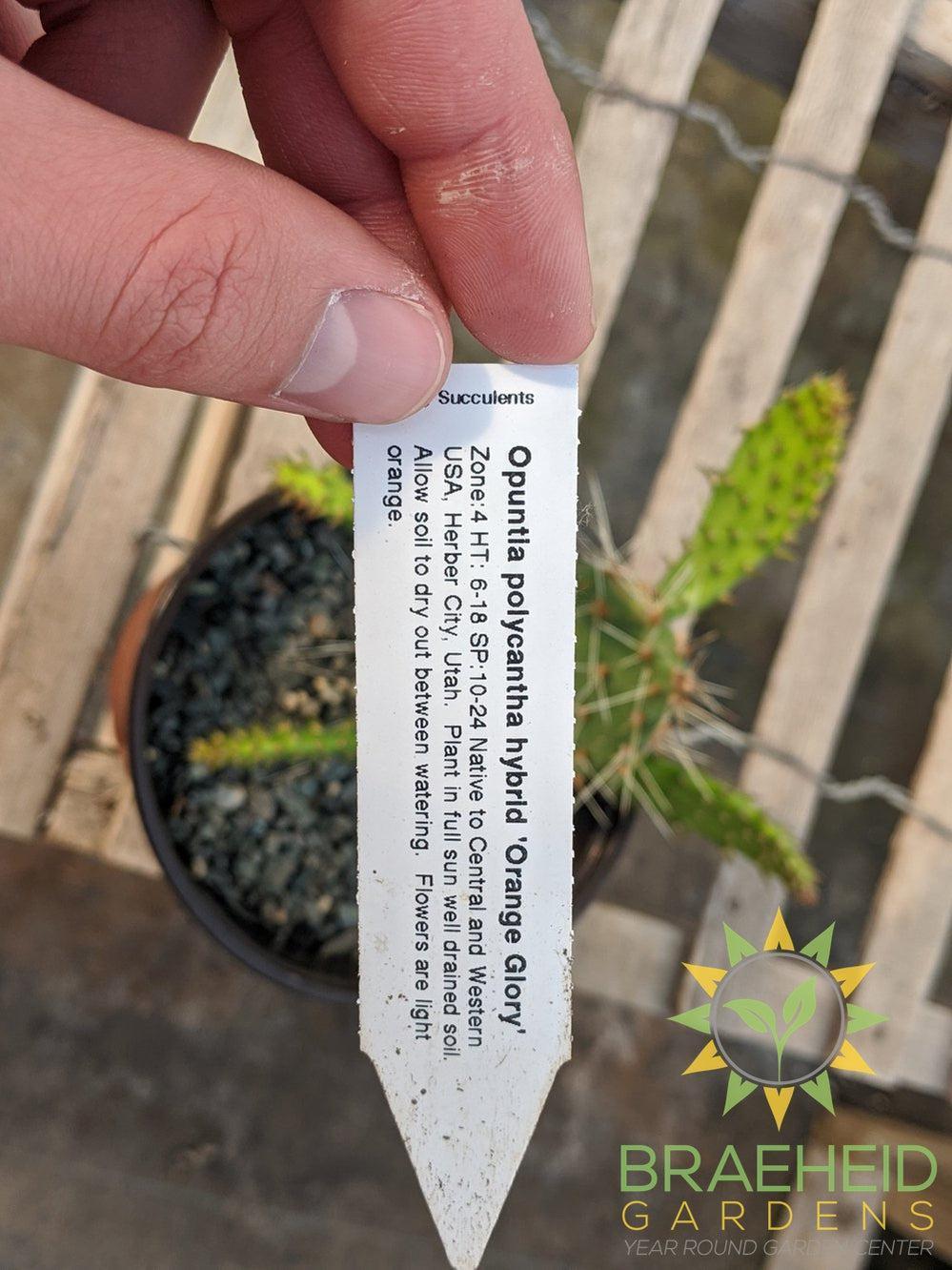
This listing is sold as Opuntia polyacantha 'Orange Glory' (the title spells it Polycantha). Like other Opuntia, it is a cactus in the cactus family (Cactaceae). NC State Extension describes Opuntia (prickly pear) as a large group of pad-forming cacti that may be grown as ornamental houseplants or outdoors as shrubs, depending on the species.
What it is: This listing is sold as Opuntia polyacantha 'Orange Glory' (the title uses the spelling Polycantha, which we have left as written). NC State Extension and the Royal Horticultural Society describe this species as a low, spreading many-spined or Panhandle prickly pear with magenta or yellow flowers. Flower colour can vary, and a plant may or may not be in bloom when you receive it.
Light: Give it full sun and a very well-drained mix such as our succulent and cacti soil. NC State Extension recommends full sun (or full sun to partial shade for bunny ears) and a fast-draining cactus potting mix, and notes that as houseplants these cacti need well-drained soil and plenty of sunshine; high light and cooler winter temperatures help them flower. In our dark northern Alberta winters, a grow bulb in a lamp helps if you are keeping the plant indoors.
Watering & care: Let the mix dry out completely between waterings (NC State Extension). Empty any saucer so the pot does not sit in water; wet or soggy soil can cause root rot (NC State Extension). The Royal Horticultural Society, writing about potted Opuntia polyacantha, suggests allowing the compost to dry before watering in spring, summer and early autumn, and withholding water in winter when the plant is dormant. The same dry-between-waterings approach is the safe starting point for other potted prickly pears.
Humidity: They prefer dry, low-humidity conditions (NC State Extension). Average household air is usually fine; you do not need to raise humidity around these cacti.
Temperature: The Royal Horticultural Society lists Opuntia polyacantha as native to Canada, the USA and Mexico. NC State Extension notes that the genus as a whole can be hardy in USDA zones 3b to 11b, and describes this species as a low, spreading prickly pear. Local winter survival depends on drainage, snow cover and the clone; we are not promising it is hardy in every Alberta garden.
Winter indoors: If you keep it in a pot indoors for winter, give it full light, water very little, and keep it off cold glass. The Royal Horticultural Society recommends withholding water and fertiliser in winter when dormant, and a grow bulb helps in our dark months.
Expected indoor size: NC State Extension notes Opuntia polyacantha can grow up to about 12 inches tall and spread 6 to 9 feet. The Royal Horticultural Society gives a similar picture: low mats about 0.1–0.5 m (roughly 4–20 inches) tall and 1.5–2.5 m (about 5–8 feet) across, with stem segments up to about 40 cm tall. A plant in a pot will usually stay smaller than a landscape clump.
Feeding: Feed sparingly during the growing season with our Cactus Fertilizer. The Royal Horticultural Society suggests a balanced liquid fertiliser three or four times during the growing period for potted Opuntia polyacantha, and withholding fertiliser in winter. This listing already offered a blooming additive, our Gaia Green Power Bloom, used according to the label.
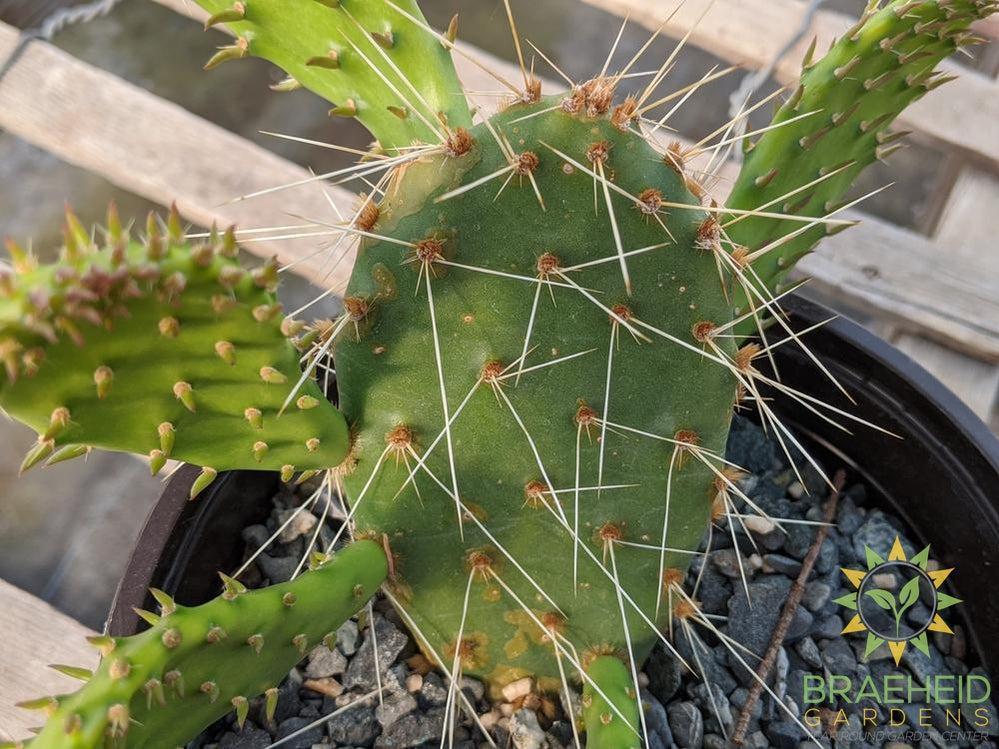
Pets & pests: The ASPCA lists Tree Cactus (Opuntia species) as non-toxic to dogs, cats and horses. NC State Extension also tags the genus as non-toxic for cats, dogs and horses. Spines and tiny barbed glochids can still irritate skin, mouths and paws and can cause contact dermatitis, so wear gloves when you handle the plant and keep it out of reach of children and pets (NC State Extension). It is still a plant, not a snack, and any plant material can upset a pet's stomach. Watch for mealybugs, scale and cochineal (NC State Extension); overwatering can cause rot.
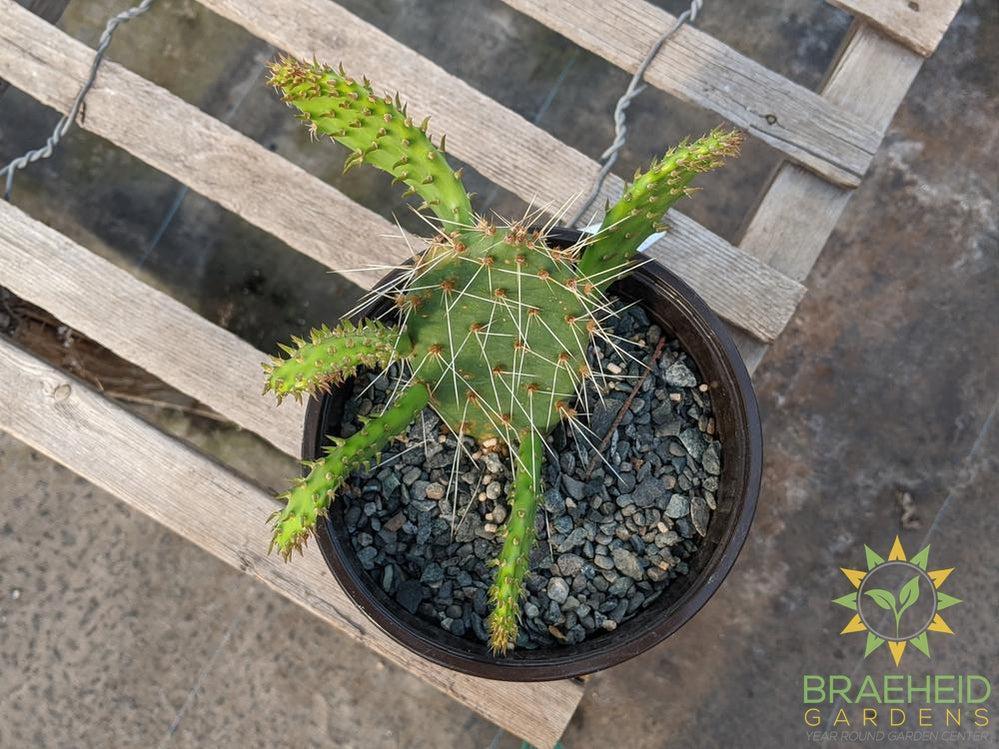
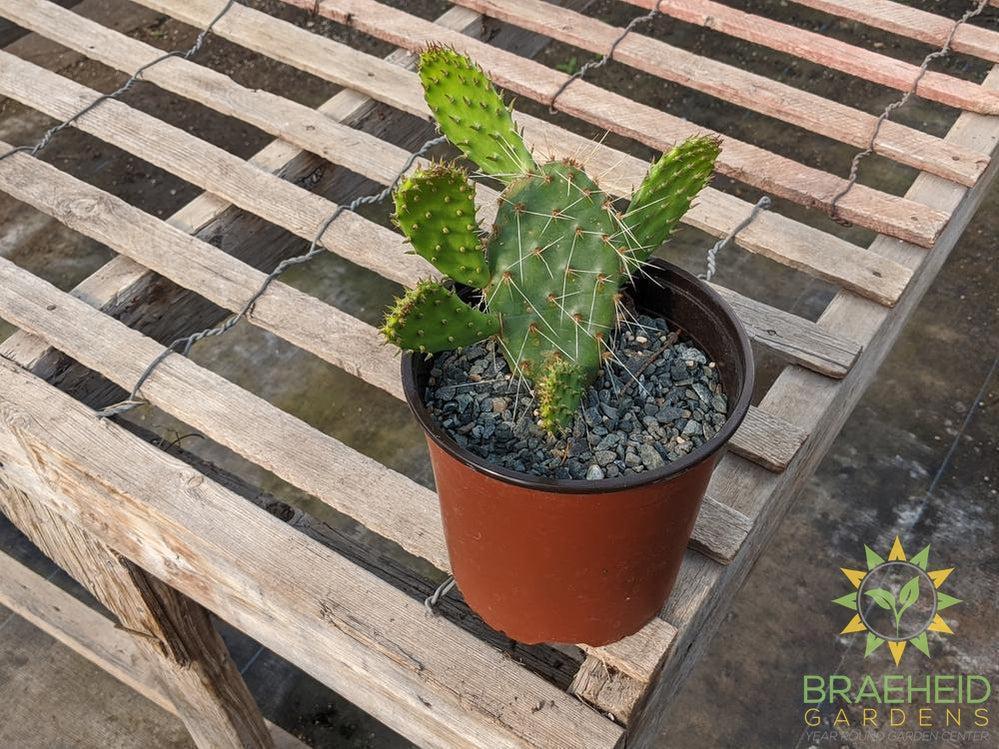
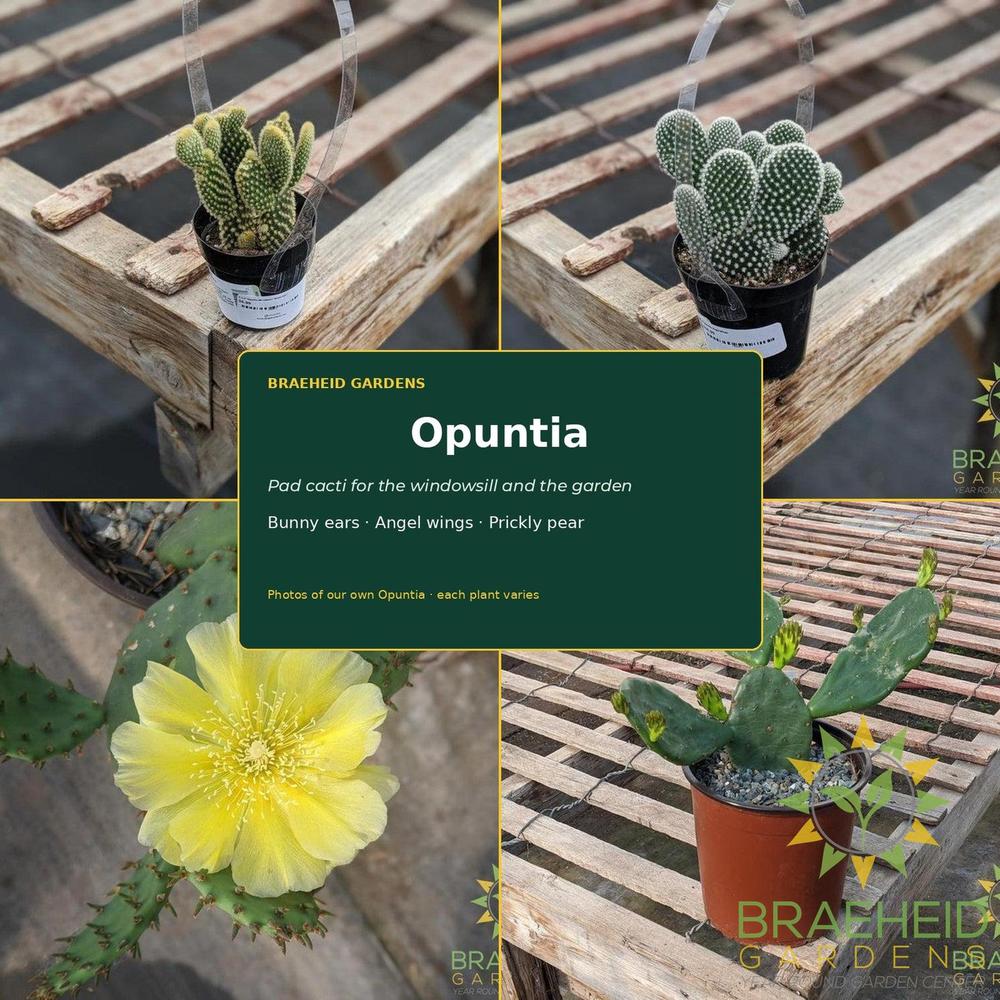
About your plant: Every plant is a little different. Size, fullness and leaf count vary from plant to plant and change with age and light, so we can't promise a particular pad count, pad size or appearance. The options listed (1 Gallon) refer to the pot or container size, and to any colour choices in this listing. They do not guarantee an exact pad count, pad size, glochid colour or overall plant size. Photos show typical plants from our greenhouse, not the specific plant you will receive. The shared gallery image shows other Opuntia as inspiration.


This product qualifies for Tree / Shrub Planting
Braeheid Gardens is happy to plant for you! Place your order online and simply give us a call to arrange for delivery and planting services!