Watermelon Dischidia Hanging Basket
Watermelon Dischidia Hanging Basket
Couldn't load pickup availability
Description
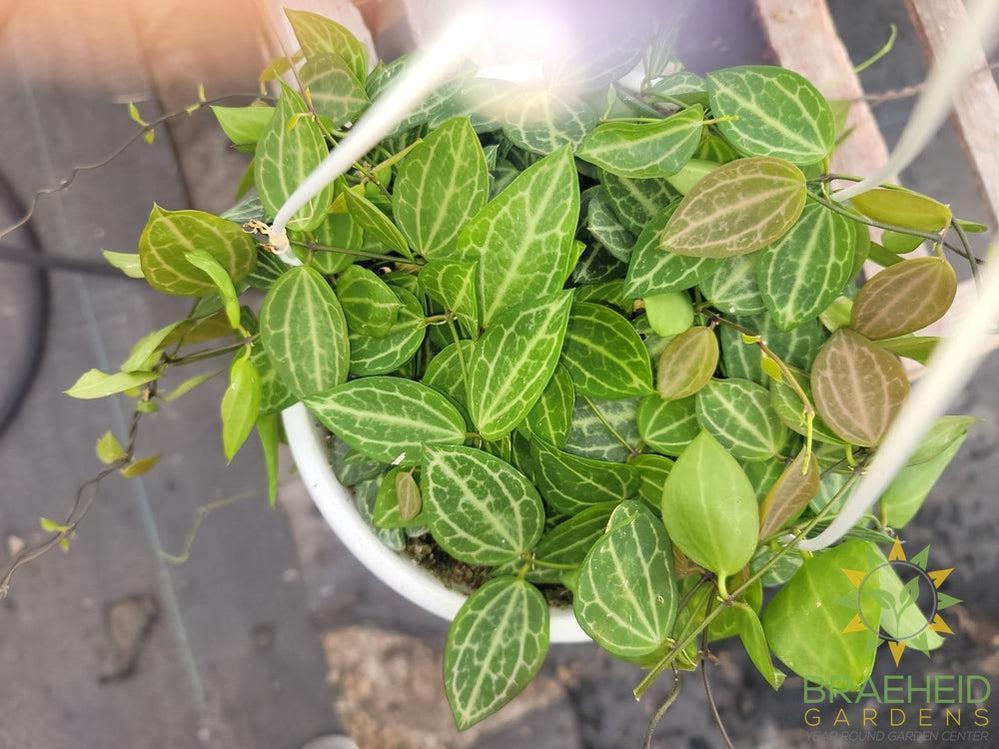
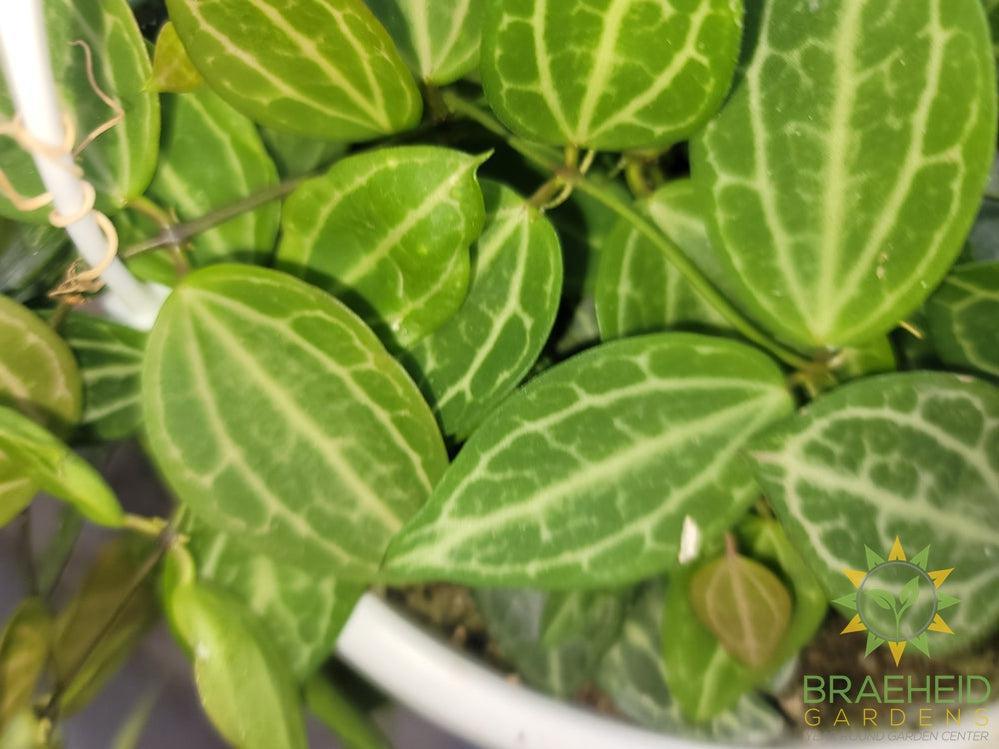
This Watermelon Dischidia hanging basket trails thick, waxy leaves striped in green and silver. Like other Dischidia, it is a trailing or climbing epiphyte in the dogbane family (Apocynaceae), closely related to Hoya (NC State Extension).
What it is: This listing is a hanging basket of watermelon dischidia (Dischidia ovata). NC State Extension describes watermelon dischidia as a small, delicate cascading vine with thick, waxy, oval green leaves marked with silvery stripes like a watermelon rind; the leaves may take on a pinkish-red tinge in brighter light. This one is grown in a hanging basket.
Light: Give it bright, indirect light (NC State Extension). Direct sunlight will scorch the leaves (NC State Extension). In our dark northern Alberta winters, a grow bulb in a lamp helps.
Watering & care: Use a moist but well-drained, porous mix with good air around the roots — NC State Extension suggests adding perlite, vermiculite, coconut husk or sphagnum moss. Water when the mix has started to dry, and don't leave it sitting wet; Dischidia is very sensitive to overwatering (NC State Extension). The Royal Horticultural Society likewise advises letting the mix almost dry between waterings and not allowing waterlogging. Hanging baskets dry out faster, so check them more often.
Humidity: Dischidia likes humid, well-ventilated air; NC State Extension suggests about 60–80% humidity for watermelon dischidia. Our winter indoor air is often drier than that, so a humidifier helps. A pebble tray only gives a small boost right around the pot.
Temperature: NC State Extension suggests about 18–29 °C (65–85 °F), and to avoid drafts and sudden temperature changes. Keep it off cold windows. It can't take frost.
Winter indoors: In winter, water a little less often, keep it off cold glass, and give it your brightest spot or a grow light.
Expected indoor size: NC State Extension describes watermelon dischidia as growing about 5–8 cm (2–3 in) tall and spreading 0.6–0.9 m (2–3 ft). How large yours gets depends on light, pot size and care.
Feeding: Feed with our Schultz All Purpose Plant Food at half strength about once a month from March to September; stop in winter.
Pets & pests: Toxic: NC State Extension lists watermelon dischidia (Dischidia ovata) as low-severity toxic. Its milky sap can irritate skin or eyes, and if eaten it may cause mouth burning, vomiting and diarrhea in pets; wear gloves when handling it and keep it out of reach of pets and children (NC State Extension). Dischidia is not listed on the ASPCA toxic or non-toxic plant lists, so we are not making a broader pet-safety claim for the genus. Watch for mealybugs, spider mites and scale (NC State Extension), and aphids (Royal Horticultural Society).
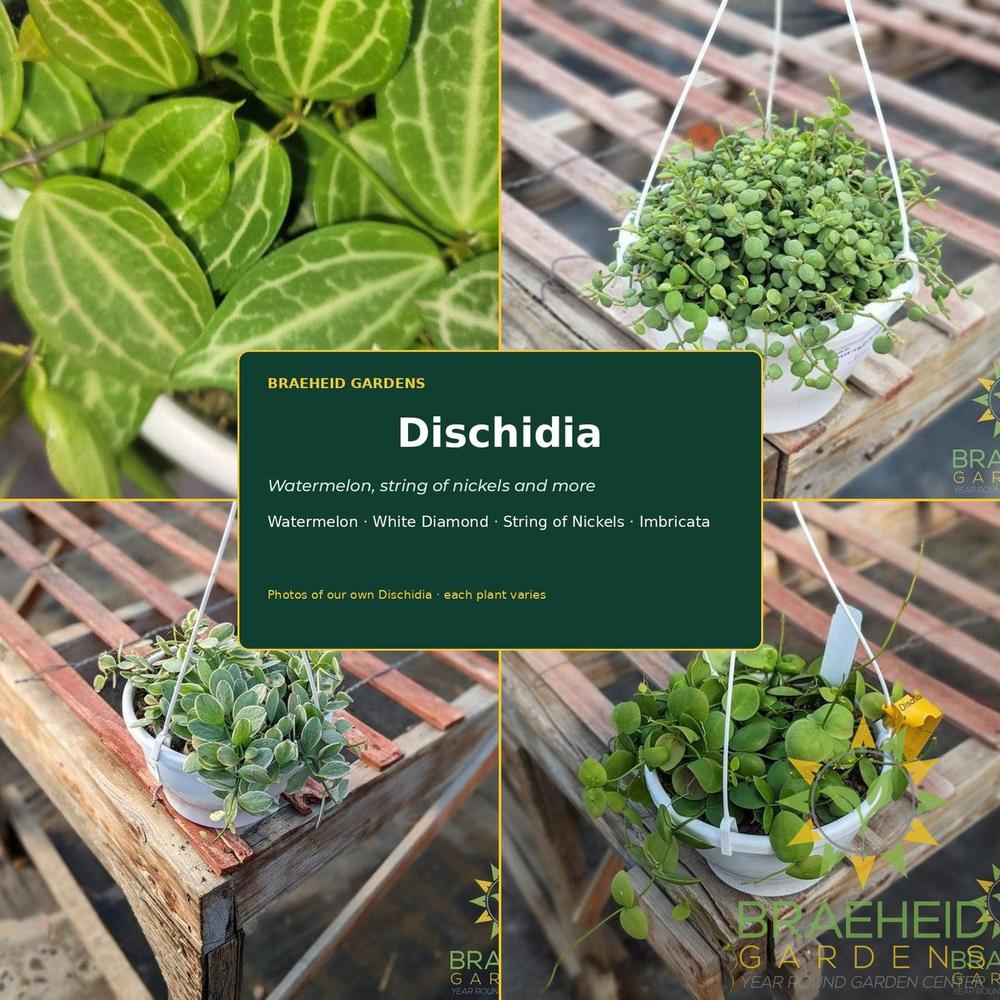
About your plant: Every plant is a little different. Size, fullness, leaf count and variegation or colouring vary from plant to plant and change with age and light, so we can't promise a particular trail length, fullness, leaf count or variegation. The size option (8") refers to the hanging basket diameter. It does not guarantee an exact trail length or fullness. Photos show typical plants from our greenhouse, not the specific plant you will receive. The shared gallery image shows other Dischidia as inspiration.