Tillandsia Cyanea (Volcano plant)
Tillandsia Cyanea (Volcano plant)
Couldn't load pickup availability
Description
Tillandsia Cyanea, the volcano plant or pink quill, is a potted Tillandsia with a pink bract. Like other Tillandsia, it is an air plant: an epiphytic bromeliad in the pineapple family (Bromeliaceae) that takes in water and nutrients through scales on its leaves (NC State Extension).
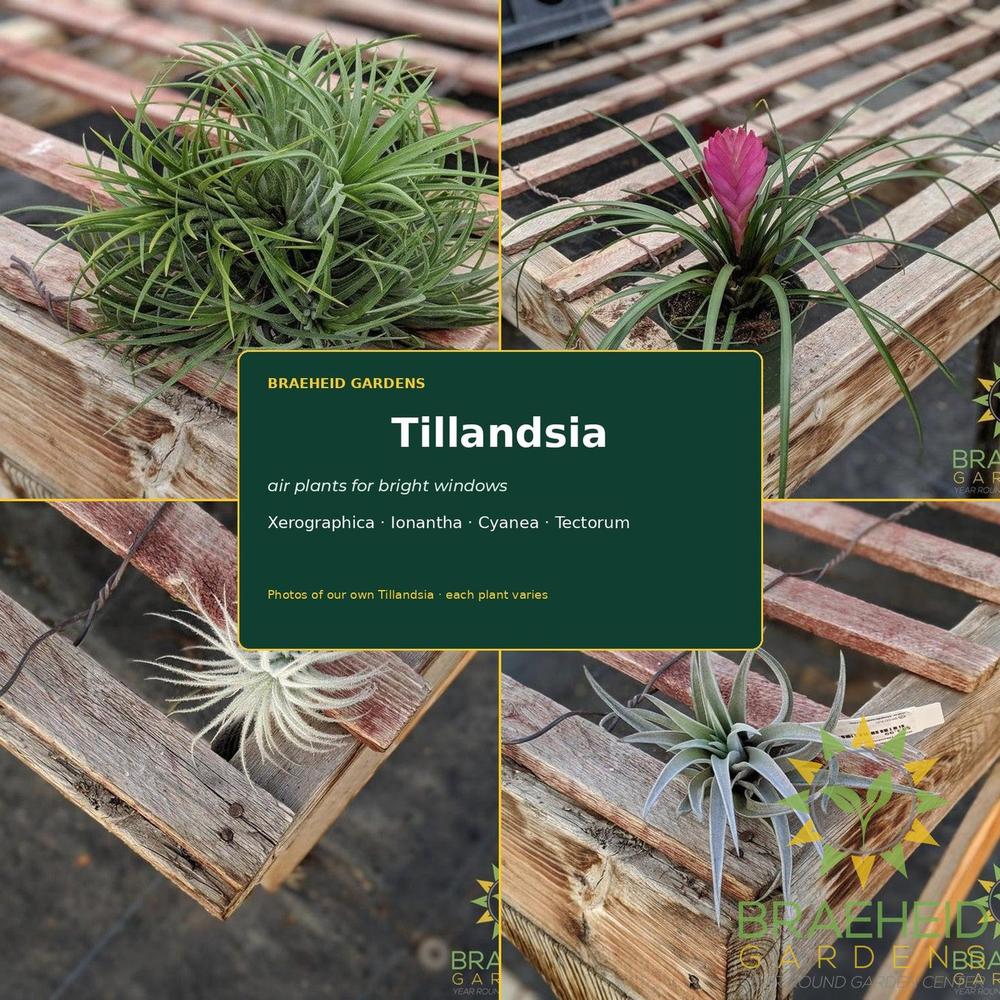
What it is: This listing is Tillandsia cyanea, sold potted. Our listing notes purple flowers that appear from the pink bract. Our photos show a potted rosette with a pink flower spike.
Light: Air plants need bright light. NC State Extension notes most species are easy houseplants but need high light levels, especially to flower, and that the sunniest window in a home is usually not too much sun for most of them. A grow bulb helps through dark northern winters.
Watering & care: This one is sold potted. Water the potting mix lightly when it starts to dry and let it drain well; never leave it soggy, since crown rot is a common problem for Tillandsia (NC State Extension).
Humidity: Air plants like humidity, and dry indoor winter air means they may need water more often. A bright bathroom or a well-ventilated terrarium can help; good air circulation lets them dry between waterings.
Temperature: Tillandsia are tropical or warm-temperate plants (NC State Extension). Keep them in ordinary warm rooms, away from cold windows and drafts, and protect them from frost.
Winter indoors: In winter, move it to your brightest spot or add a grow light, keep it away from cold glass and heating vents, and check it more often, since dry indoor air dries it out faster.
Expected indoor size: Air plants grow slowly indoors. Most of the small rosette types we sell stay small enough for a shelf, terrarium or mount, and many slowly form a clump as they make pups (NC State Extension). How large yours gets depends on light, watering and humidity.
Feeding: Feeding is optional. A light feed made for epiphytes, such as our Epiphyte Delight, can be used in spring and summer while it is growing; follow the label.
Pets & pests: We couldn't find Tillandsia on the ASPCA toxic or non-toxic plant lists. The ASPCA lists related bromeliads such as Neoregelia and Guzmania as non-toxic to dogs and cats, but chewing any plant can upset a pet's stomach, so keep air plants out of reach of pets and children. Watch for mealybugs and scale (NC State Extension).
About your plant: Every plant is a little different. Size, fullness and leaf count vary from plant to plant and change with age and light, so we can't promise a particular size, shape or colour. The size option (2-1/2", 4") refers to the pot diameter. It does not guarantee an exact plant height or leaf count. Photos show typical plants from our greenhouse, not the specific plant you will receive. The shared gallery image shows other Tillandsia as inspiration.