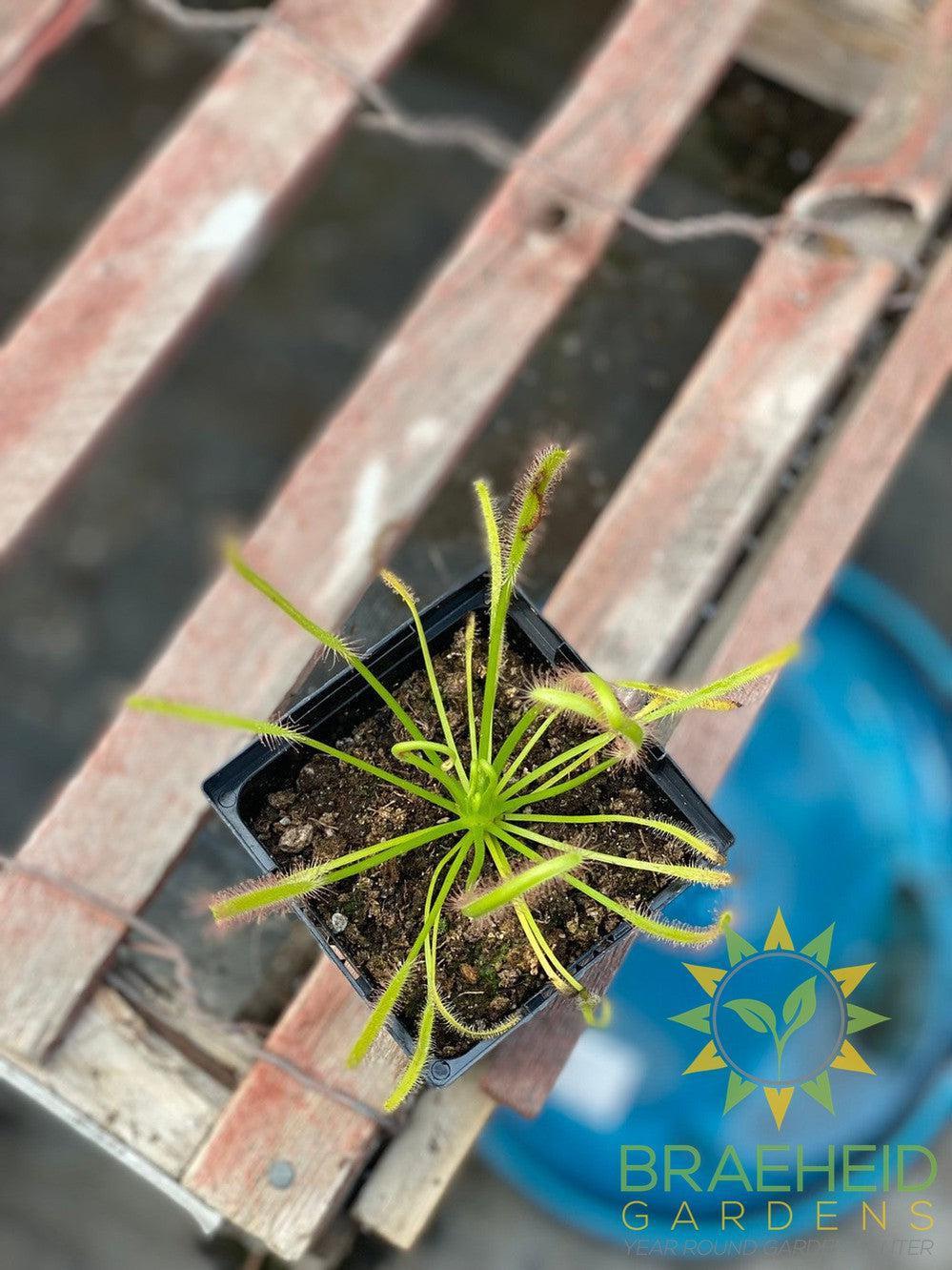
Sundew - Drosera Capensis Alba Cape
Sundew - Drosera Capensis Alba Cape
Couldn't load pickup availability
Description
This listing is sold as a white Cape sundew, Drosera capensis Alba. Like other Carnivorous Plants, they are sold in our Carnivorous Plants collection. They are not all one genus. Venus flytraps belong to the sundew family (Droseraceae). Tropical pitcher plants (Nepenthes) belong to the Nepenthaceae. Sundews are also in Droseraceae. Hardy North American pitcher plants (Sarracenia) belong to the Sarraceniaceae, and butterworts (Pinguicula) belong to the bladderwort family (Lentibulariaceae).
What it is: This listing is sold as Drosera capensis Alba, a pale or white-haired form of Cape sundew. The Royal Horticultural Society lists related selections such as 'Albino'; we have not assigned this listing to a specific named cultivar. Care follows the species.
Light: Give it full sun, or bright light with shade from hot midday sun (Royal Horticultural Society). A grow bulb helps in our dark winters. Use a nutrient-poor peat-and-sand or specialist carnivorous mix; do not use ordinary fertilized potting soil (NC State Extension).
Watering & care: Keep the mix continually moist in the growing season by standing the pot in a tray of rainwater or other lime-free water such as distilled or reverse-osmosis water; do not use tap water (Royal Horticultural Society). NC State Extension likewise says to use rainwater or distilled water and to keep the mix moist year-round for most species.
Humidity: A humidifier helps in our dry indoor winter air, especially when indoor heating is on.
Temperature: Treat it as a houseplant or conservatory plant here. The Royal Horticultural Society rates several of these sundews H3 in the UK, but still recommends growing them under glass in frost-prone areas. That is not a promise of outdoor winter survival in Alberta. Keep it off cold glass.
Winter indoors: The Royal Horticultural Society recommends keeping Cape sundew continually moist, standing the pot in a saucer of rainwater, even under glass. Keep it bright and frost-free in winter, or under a grow bulb.
Expected indoor size: The Royal Horticultural Society lists a maximum height and spread of 0.1–0.5 m (about 4 to 20 inches), reached in about 1–2 years. A potted plant is often in the lower part of that range.
Feeding: Do not apply fertilizer at any time of year (Royal Horticultural Society). NC State Extension also says not to fertilize sundews.
Pets & pests: We do not have an ASPCA listing for sundews, so we are not calling them pet-safe. It is still a plant, not a snack. The Royal Horticultural Society generally lists these as pest- and disease-free.
About your plant: Every plant is a little different. Size, fullness and leaf count vary from plant to plant and change with age and light, so we can't promise a particular trap or pitcher size, leaf count or colour. The options listed (3.5") refer to the pot or container size. They do not guarantee an exact trap or pitcher size, leaf count or colour. Photos show typical plants from our greenhouse, not the specific plant you will receive. The shared gallery image shows other Carnivorous Plants as inspiration. Our existing listing noted that this plant can help with fungus gnats, ants and fruit flies. These plants do trap small insects as food; that is not a promise they will clear a pest problem.