Ripple Leaf Jade Succulent (Crassula arborescens undulatifolia)
Ripple Leaf Jade Succulent (Crassula arborescens undulatifolia)
Couldn't load pickup availability
Description
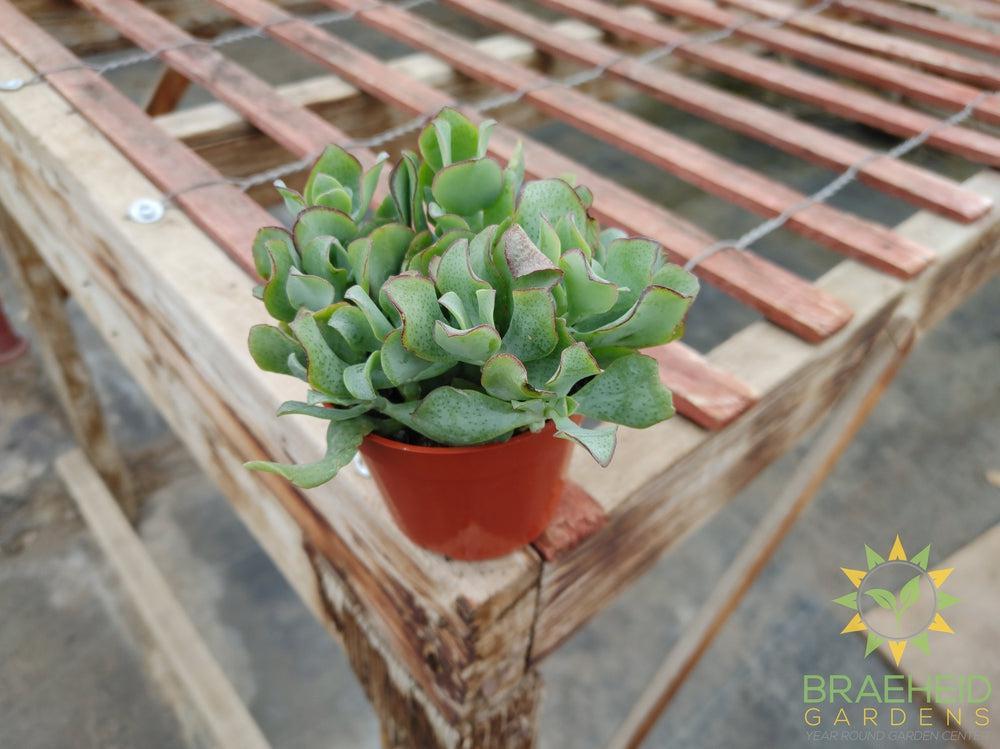
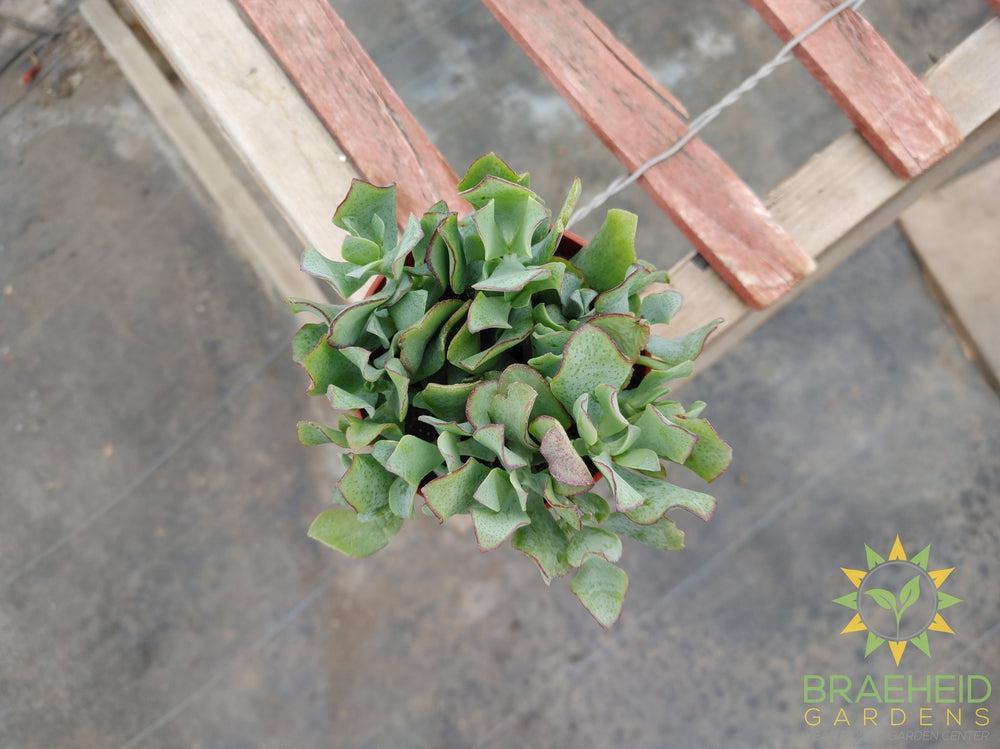
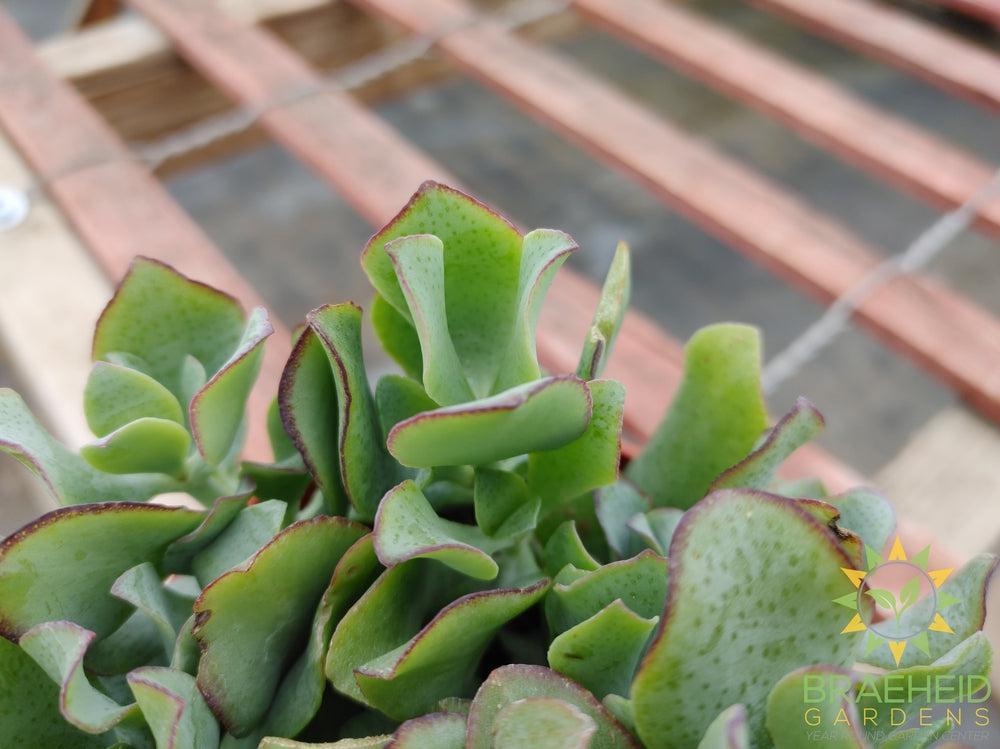
Ripple-leaf jade has wavy, blue-green leaves, different from the smooth, egg-shaped leaves of common jade. Like other Crassula, it is a succulent in the stonecrop family (Crassulaceae), a group of mostly South African plants that are popular, long-lived houseplants (NC State Extension; Clemson Cooperative Extension).
What it is: This listing is ripple jade (Crassula arborescens subsp. undulatifolia).
Light: Clemson Cooperative Extension suggests full sun or the bright, filtered light of a south-facing window, with four or more hours of direct sun a day when you can give it. NC State Extension also calls for bright light, with a little afternoon shade. In our dark northern Alberta winters, a grow bulb in a lamp helps. Too much harsh midday sun can scorch the leaves (NC State Extension).
Watering & care: Plant it in a very well-drained mix such as our succulent and cacti soil. Clemson Cooperative Extension says to keep the mix moist but not wet while the plant is growing in spring and summer, then let it dry between waterings in winter; letting it go bone-dry for too long can cause leaf drop. Water thoroughly, then wait until the mix has dried. Overwatering or a heavy mix can cause root rot (Clemson Cooperative Extension). NC State Extension likewise advises watering when the soil is dry and cutting back from fall to late winter. Try not to splash the leaves (Clemson Cooperative Extension).
Humidity: Average household humidity is fine. NC State Extension notes that jade is not fond of high humidity, so the usual issue is overwatering rather than dry air.
Temperature: Clemson Cooperative Extension suggests about 18–24 °C (65–75 °F) during the day and cooler nights around 10–13 °C (50–55 °F). Keep it away from drafts and don't let the foliage rest on cold window glass, especially in winter (Clemson Cooperative Extension). It can't take frost.
Winter indoors: In winter, water less often and let the mix dry between waterings (Clemson Cooperative Extension). Keep it off cold glass, out of drafts, and in your brightest window or under a grow light.
Expected indoor size: NC State Extension describes ripple jade, grown as a houseplant, as able to reach about 1.2 m (4 ft) tall. How large yours gets depends on light, pot size and care.
Feeding: Feed with our Cactus Fertilizer during the growing season; Clemson Cooperative Extension suggests feeding a jade about once every three to four months. Ease off in winter. Prune to encourage a bushier shape.
Pets & pests: Toxic: The ASPCA lists Chinese jade (Crassula arborescens) as toxic to dogs, cats and horses; signs can include vomiting, drunkenness in cats, and rarely tremors. NC State Extension lists it as low-severity poisonous, with the same signs. Keep it out of reach of pets and children. Watch for mealybugs and fungal problems from overwatering (NC State Extension).
About your plant: Every plant is a little different. Size, fullness and leaf count vary from plant to plant and change with age and light, so we can't promise a particular plant size, fullness or leaf count. The size option (2", 4") refers to the pot diameter. It does not guarantee an exact plant size or fullness. Photos show typical plants from our greenhouse, not the specific plant you will receive. The shared gallery image shows other Crassula as inspiration.