Rex Begonia Tiger Eyes
Rex Begonia Tiger Eyes
Couldn't load pickup availability
Description
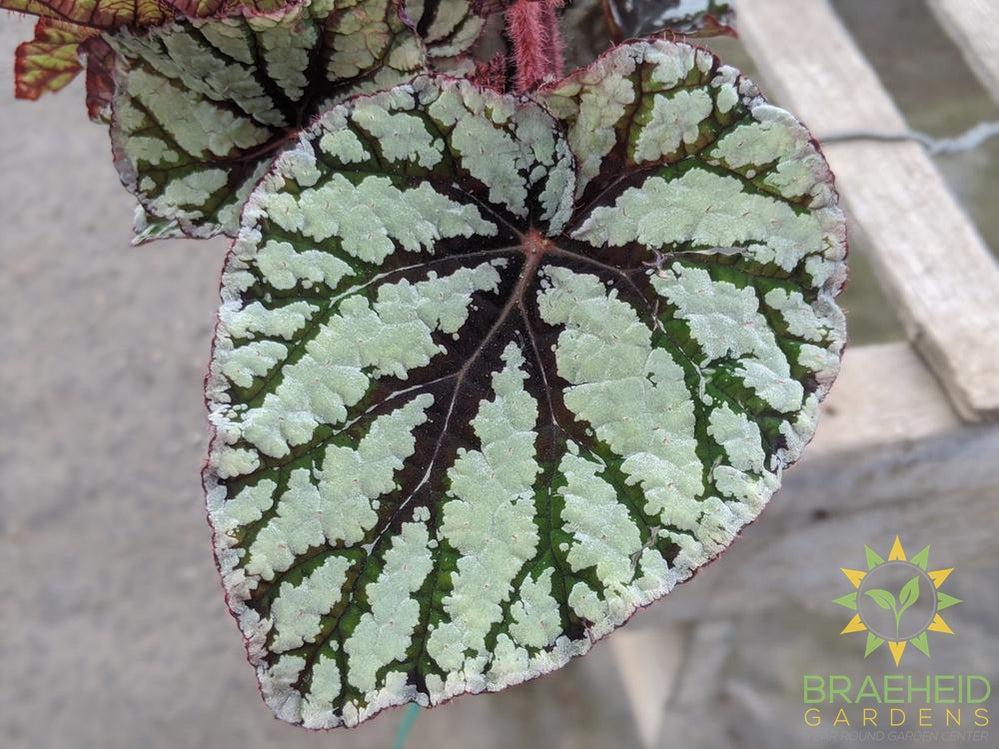
Tiger Eyes is a rex begonia with bold eye-like leaf markings. Like other Begonia, it belongs to the begonia family (Begoniaceae).
What it is: This listing is a rex begonia sold as Tiger Eyes. This care follows rex begonia guidance. Our photos show boldly marked leaves.
Light: Bright, indirect light suits rex begonias; keep them out of harsh direct sun (NC State Extension; Clemson HGIC). A grow bulb can help in dark winters. No light level guarantees how bold the spots, silver or coloured markings on new leaves will stay.
Watering & care: Keep the mix evenly moist but never soggy; allow it to dry only slightly between waterings and reduce watering in winter (Clemson HGIC). Avoid misting the leaves; raise humidity with a pebble tray or by humidifying the room instead (NC State Extension; Clemson HGIC). Overwatering invites root rot and fungal problems (NC State Extension).
Humidity: Rex and many foliage begonias like higher humidity; bathrooms and kitchens with bright light can help, or use a pebble tray (NC State Extension; Clemson HGIC). Do not mist the leaves.
Temperature: Clemson HGIC suggests about 19–23 °C (66–73 °F) for foliage begonias, with nights not below about 13 °C (55 °F). Keep them away from cold drafts.
Winter indoors: In winter, keep away from cold windows and heating vents, water less often as growth slows, and still check the mix before watering. Avoid wet foliage in cool rooms.
Expected indoor size: As a houseplant, NC State Extension lists rex begonias about 30–45 cm (12–18 in) tall with a dense habit. How large yours gets depends on light, warmth, humidity, pot size and care, and we can't promise a particular leaf size, shape or pattern.
Feeding: While it is in active growth, feed with a balanced liquid fertilizer at half strength at alternate waterings (Clemson HGIC); our Schultz All Purpose Plant Food works at a light dilution. Ease off in winter.
Pets & pests: Begonia is toxic to dogs, cats and horses if chewed or eaten; the underground parts are especially concerning (ASPCA; NC State Extension). Sap can irritate skin (NC State Extension). Keep it out of reach of pets and children. Watch for mealybugs, whiteflies, spider mites, thrips and scale (Clemson HGIC; NC State Extension).
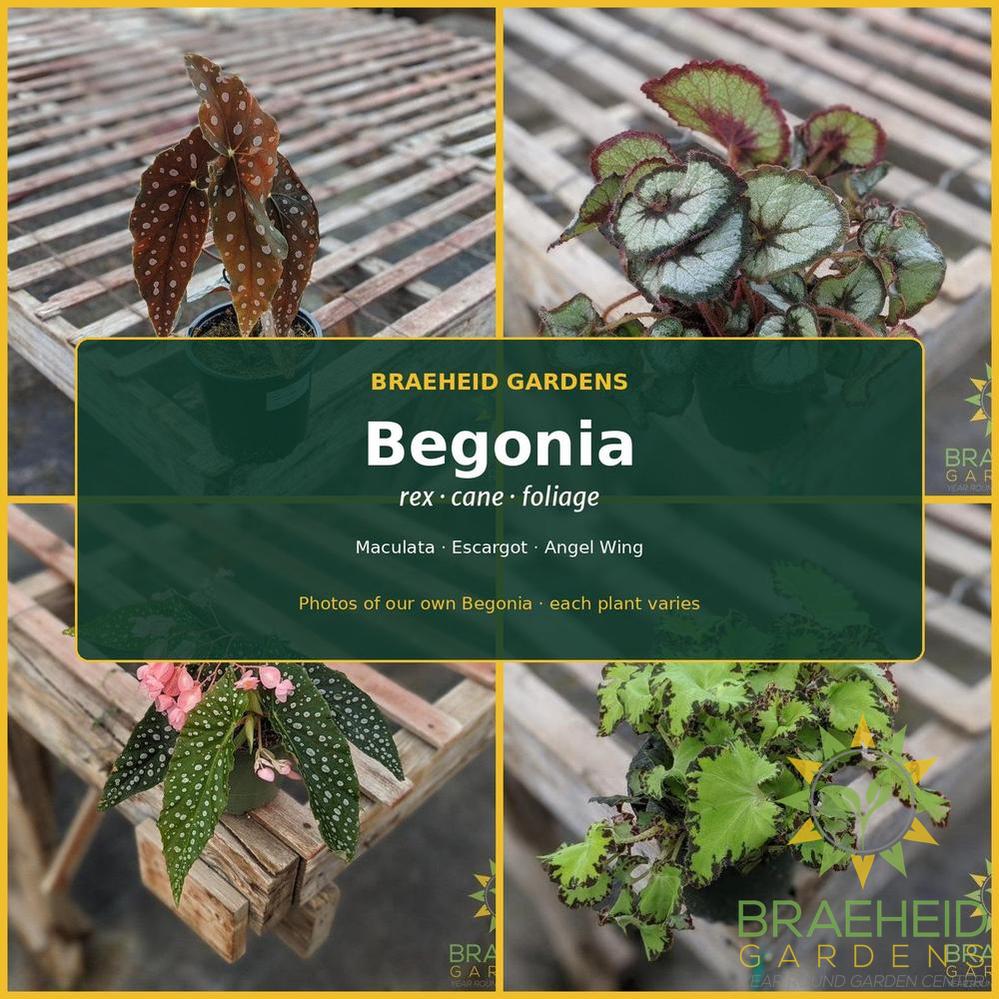
About your plant: Every plant is a little different. Size, fullness, leaf count and variegation vary from plant to plant and change with age and light; young plants may not yet show mature leaf features, so we can't promise a particular leaf size, shape or pattern. The size option (4") refers to the pot diameter. It does not guarantee an exact plant height or leaf count. Photos show typical plants from our greenhouse, not the specific plant you will receive. The shared gallery image shows other Begonia as inspiration.