Pork & Beans Sedum (Jellybean)
Pork & Beans Sedum (Jellybean)
Couldn't load pickup availability
Description
Pork and beans, or jellybean sedum, is a small-leaved succulent (Sedum × rubrotinctum) grown as a houseplant. Like other Sedum, it is a succulent in the stonecrop family (Crassulaceae). NC State Extension describes Sedum as a large group of fleshy-leaved plants grown as houseplants, ground covers or garden plants; many of the taller border kinds have been moved to the genus Hylotelephium.
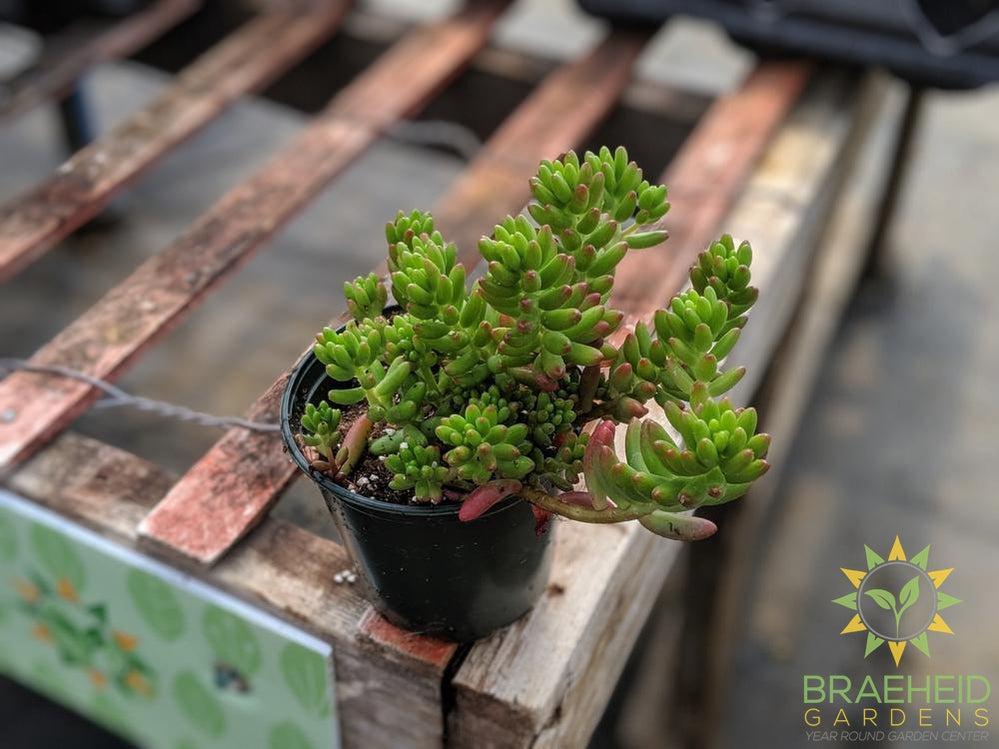
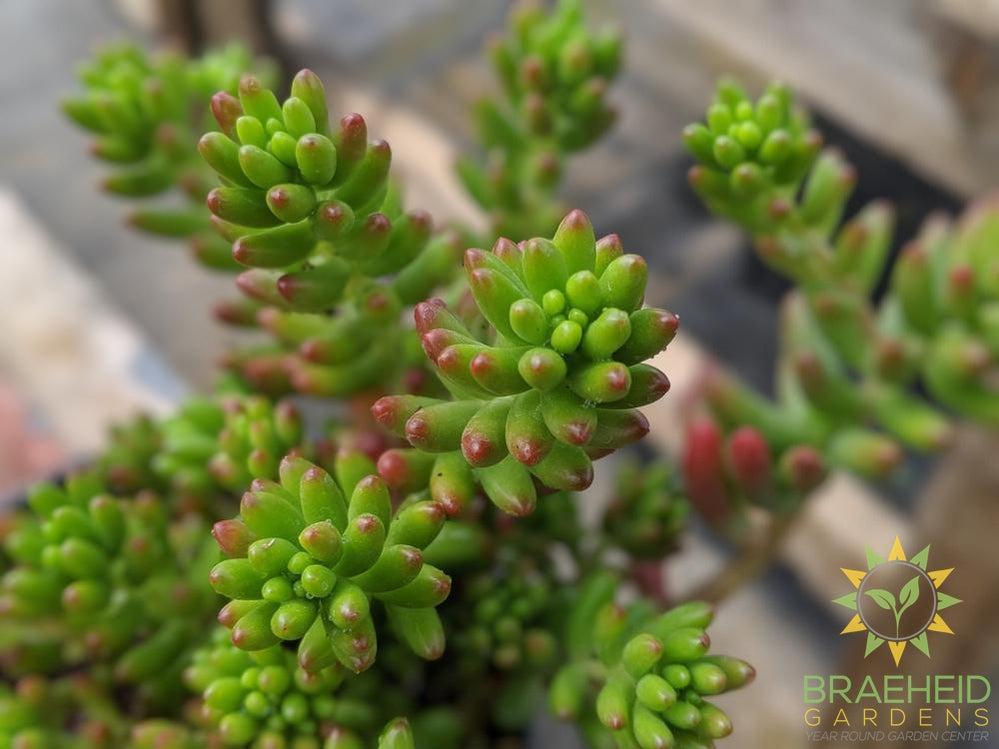
What it is: This listing is the jellybean or pork-and-beans sedum. The Royal Horticultural Society lists Sedum × rubrotinctum as jelly bean plant, also called pork and beans, banana cactus or Christmas cheer, with glossy green, banana-shaped leaves that often have red tips.
Light: Give it bright, direct light from a sunny window, or a grow bulb; NC State Extension says sedums are easy to grow indoors with bright direct light from a window or a grow light, and most kinds want sun to part sun outdoors. Use a coarse, well-drained cactus mix such as our succulent and cacti soil (NC State Extension).
Watering & care: Allow the mix to dry out between waterings, and avoid wet or poorly drained conditions, which can cause rot (NC State Extension). Empty any saucer so the pot does not sit in water. In winter, water less often, especially on tender houseplant kinds.
Humidity: Average household air is usually fine. These succulents tolerate dry soil and do not need extra humidity (NC State Extension).
Temperature: Treat jellybean sedum as a houseplant or summer patio plant in our climate. The Royal Horticultural Society rates it H3 in the UK, which is not a promise of outdoor winter survival here; keep it frost-free and off cold glass.
Winter indoors: The Royal Horticultural Society suggests watering sparingly in winter for plants grown under glass. Keep it in bright, frost-free light, or under a grow bulb, and off cold glass.
Expected indoor size: The Royal Horticultural Society describes Sedum × rubrotinctum as a low-growing succulent to about 20 cm (8 inches) tall, with a maximum height and spread of 0.1–0.5 m (about 4–20 inches). Leaf colour (green with red tips, sometimes deeper bronze in summer) varies with light.
Feeding: The Royal Horticultural Society suggests a half-strength liquid fertiliser monthly in the growing season for plants grown under glass; our Cactus Fertilizer used lightly is a good starting point. Water sparingly and ease off feeding in winter.
Pets & pests: We do not have an ASPCA listing for Sedum × rubrotinctum, so we are not calling it pet-safe. NC State Extension notes that Sedum stems and leaves are not considered poisonous, though eating them in quantity can cause stomach upset. Watch for mealybugs, scale and vine weevil, and for crown or root rot in poorly drained mix (Royal Horticultural Society).
About your plant: Every plant is a little different. Size, fullness and leaf count vary from plant to plant and change with age and light, so we can't promise a particular stem length, leaf count or leaf colour. The options listed (4") refer to the pot or container size. They do not guarantee an exact stem length, leaf count or leaf colour. Photos show typical plants from our greenhouse, not the specific plant you will receive. The shared gallery image shows other Sedum as inspiration.