Philodendron Red Sun
Philodendron Red Sun
Couldn't load pickup availability
Description
Red Sun is a self-heading philodendron sold for its colourful new growth. Like other Philodendron, it belongs to the arum family (Araceae).
What it is: This listing is a plant sold as Philodendron Red Sun. This care follows general Philodendron guidance for self-heading types.
Light: Most philodendrons prefer bright, indirect light and will tolerate lower light; avoid harsh direct sun, which can scorch the leaves (NC State Extension; Clemson HGIC). A grow bulb in a nearby lamp can help through dark winters.
Watering & care: Keep the mix evenly moist but never soggy, and never leave the pot standing in water (Clemson HGIC). Use a moist, well-drained mix rich in organic matter (NC State Extension). Overwatering can cause root rot (NC State Extension; Clemson HGIC). Water less in winter as growth slows (NC State Extension).
Humidity: Philodendrons prefer higher humidity but usually adapt to average home air (NC State Extension; Clemson HGIC). If your indoor air gets very dry, especially in winter, grouping plants together or running a room humidifier can help; a pebble tray gives only a small, local boost.
Temperature: Room temperatures of about 18–29 °C (65–85 °F) suit them best; they are sensitive to cold, so keep them away from drafts (NC State Extension).
Winter indoors: In winter, keep it away from cold windows, drafts and heating vents, and check the mix before watering rather than watering on a schedule. Growth slows in short, dark days, so water less often.
Expected indoor size: How large it gets indoors depends on light, warmth, pot size and care. Young and mature leaves can look different, so we can't promise a particular leaf size or shape. Self-heading types grow upright from a clump rather than trailing (Clemson HGIC).
Feeding: Feed regularly during spring and summer with a dilute water-soluble houseplant fertilizer (Clemson HGIC); our Schultz All Purpose Plant Food works at the label dilution. Ease off in winter while growth is slow.
Pets & safety: All parts of philodendrons are toxic if eaten, and the sap can irritate skin; keep them out of reach of pets and children (NC State Extension; Clemson HGIC). Monitor for aphids, mealybugs, scale and spider mites (NC State Extension; Clemson HGIC).
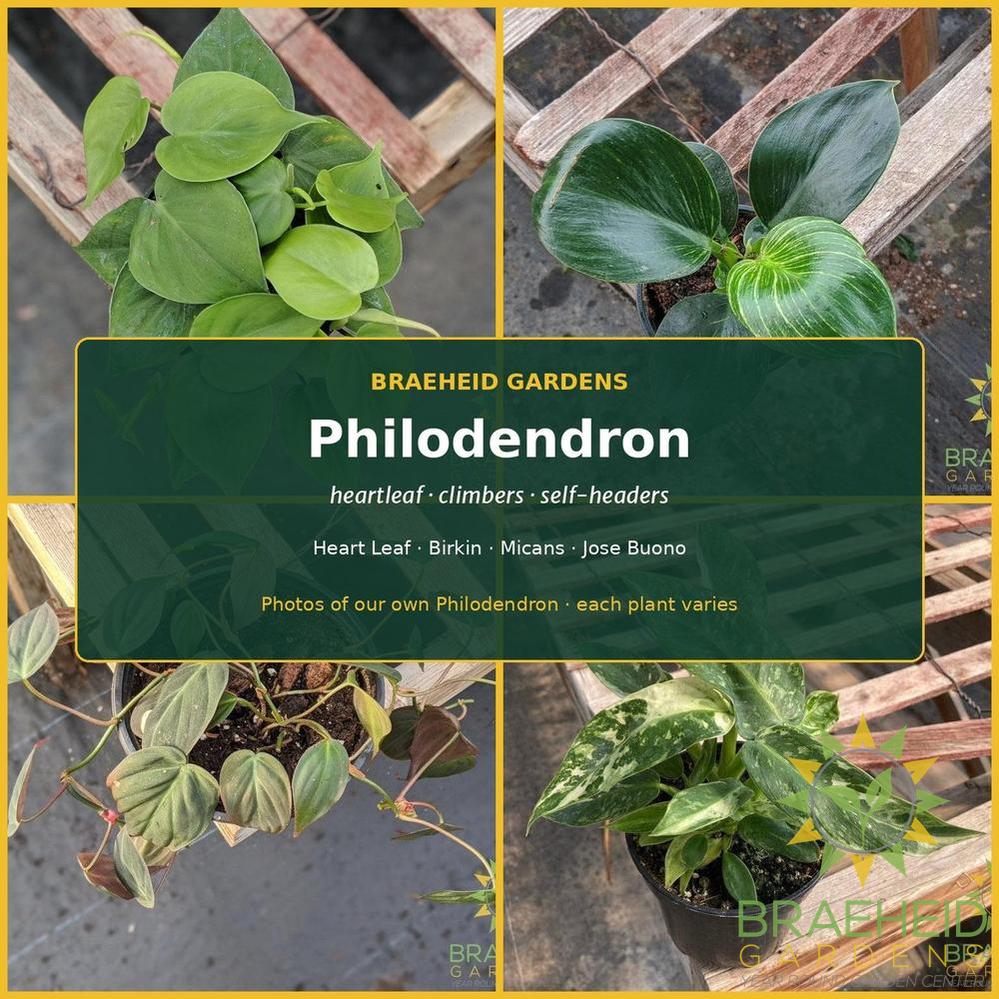
About your plant: Every plant is a little different. Size, fullness and leaf count vary from plant to plant and change with age and light; young plants may not yet show mature leaf features, so we can't promise a particular leaf size or shape. The size option (4") refers to the pot diameter. It does not guarantee an exact plant height, trail length or leaf count. We don't have our own photos of this plant yet. The gallery image is a shared Philodendron graphic for inspiration only; it does not show this plant.