Aloe vera - medicinal
Aloe vera - medicinal
Couldn't load pickup availability
Description
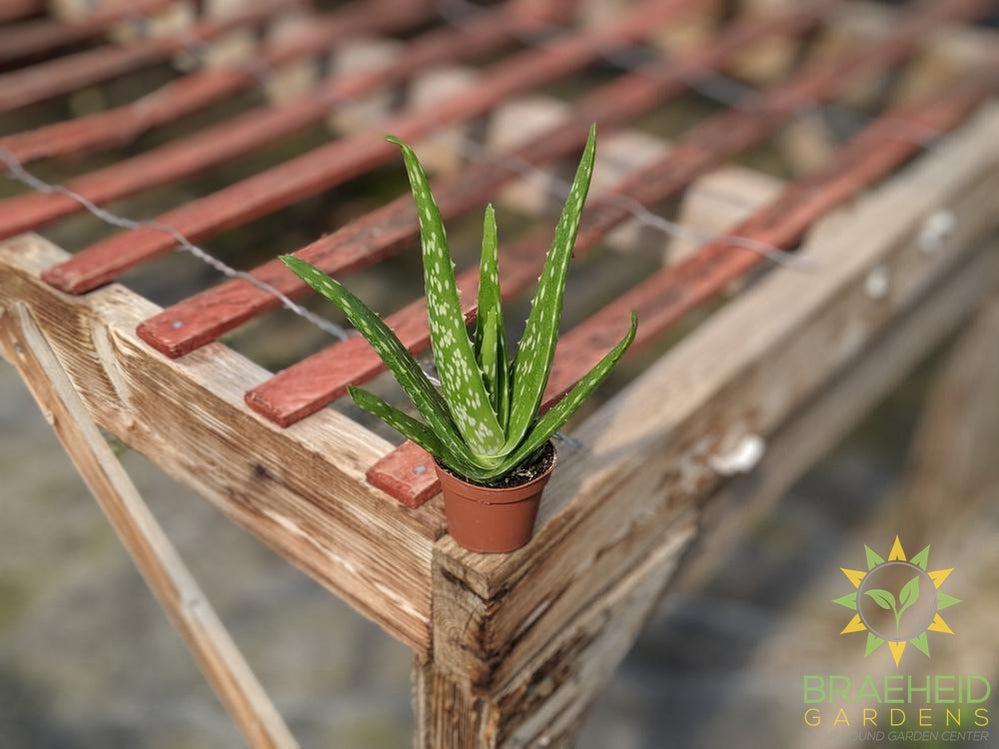
Aloe vera is a familiar succulent with thick, toothed leaves that hold a clear gel. Like other Aloe, it is a succulent in the daylily family (Asphodelaceae). Aloe vera, the best-known species, is often grown as a houseplant (NC State Extension).
What it is: This listing is aloe vera, also called medicinal aloe (Aloe vera). NC State Extension notes that the clear leaf gel has long been used on the skin (for example on minor burns or cuts) after the bitter outer leaf is removed, and recommends testing a small patch of skin first. This listing is sold as a houseplant, not as a medicine, and the plant can be irritating or toxic if eaten.
Light: Give it full sun to partial shade, in a very well-drained mix such as our succulent and cacti soil (NC State Extension). A clay pot with drainage holes is a good choice (NC State Extension). In our dark northern Alberta winters, a grow bulb in a lamp helps.
Watering & care: Allow the mix to dry out completely between waterings, and water less often in winter (NC State Extension). Overwatering can cause root rot (NC State Extension). The Royal Horticultural Society likewise suggests watering moderately while the plant is growing and very sparingly in winter for potted aloes.
Humidity: Average household humidity is fine.
Temperature: Keep it in typical indoor temperatures and off cold windows. It is not a frost-hardy houseplant; NC State Extension treats aloe vera as an outdoor perennial only in very warm climates (about zone 10 and warmer).
Winter indoors: In winter, water less often and keep it off cold glass, in your brightest window or under a grow light.
Expected indoor size: NC State Extension describes aloe vera as a houseplant that grows about 0.6–0.9 m (2–3 ft) tall and spreads by offsets; the same profile's dimension table lists about 0.3–0.6 m (1–2 ft) tall and 0.3–0.75 m (1–2.5 ft) wide. How large yours gets depends on light, pot size and care.
Feeding: Feed with our Cactus Fertilizer during the growing season; the Royal Horticultural Society suggests a general liquid feed monthly from May to August for potted aloes. Ease off in winter.
Pets & pests: Toxic: The ASPCA lists aloe (Aloe vera) as toxic to dogs, cats and horses; signs can include vomiting, lethargy and diarrhea (the clear leaf gel is described as edible, but the rest of the leaf is not a pet treat). NC State Extension lists it as low-severity poisonous if eaten or if the latex irritates skin; symptoms can include abdominal cramping, diarrhea, red urine and skin irritation. Keep it out of reach of pets and children, and wash your hands after handling it. Watch for mealybugs and aphids, and for leaf spot or rot from overwatering (NC State Extension).
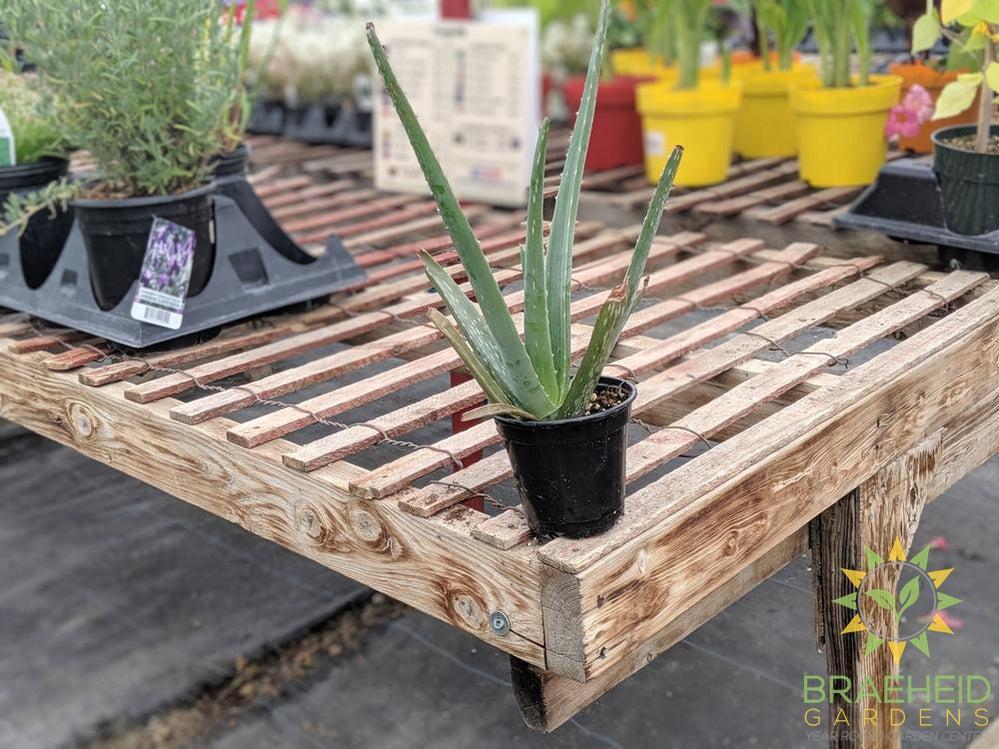
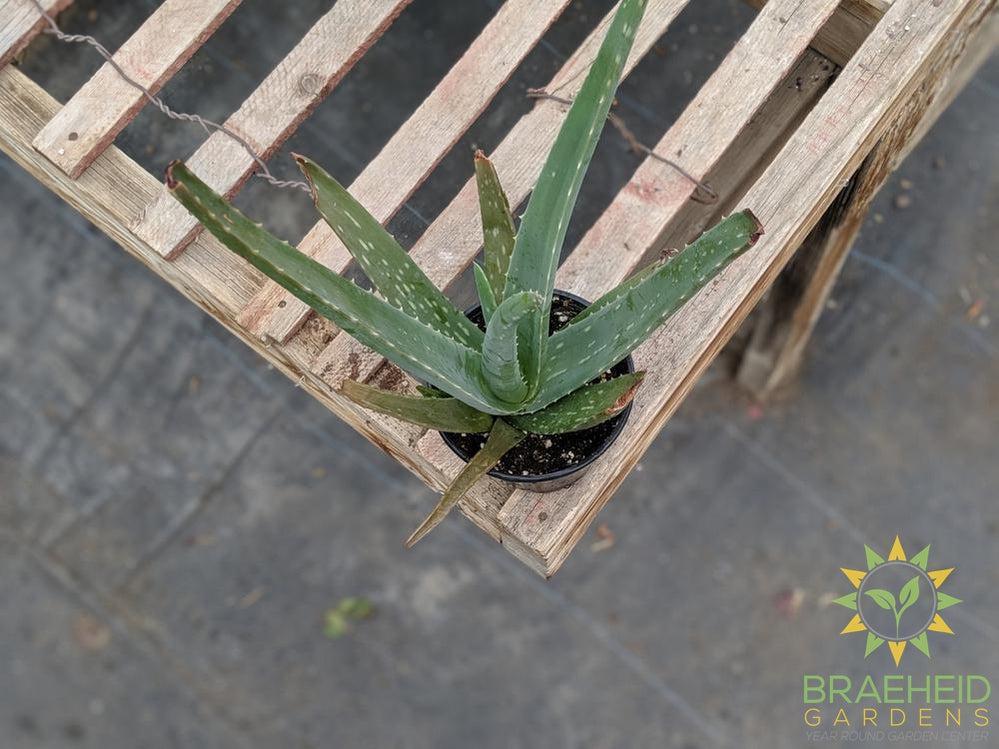
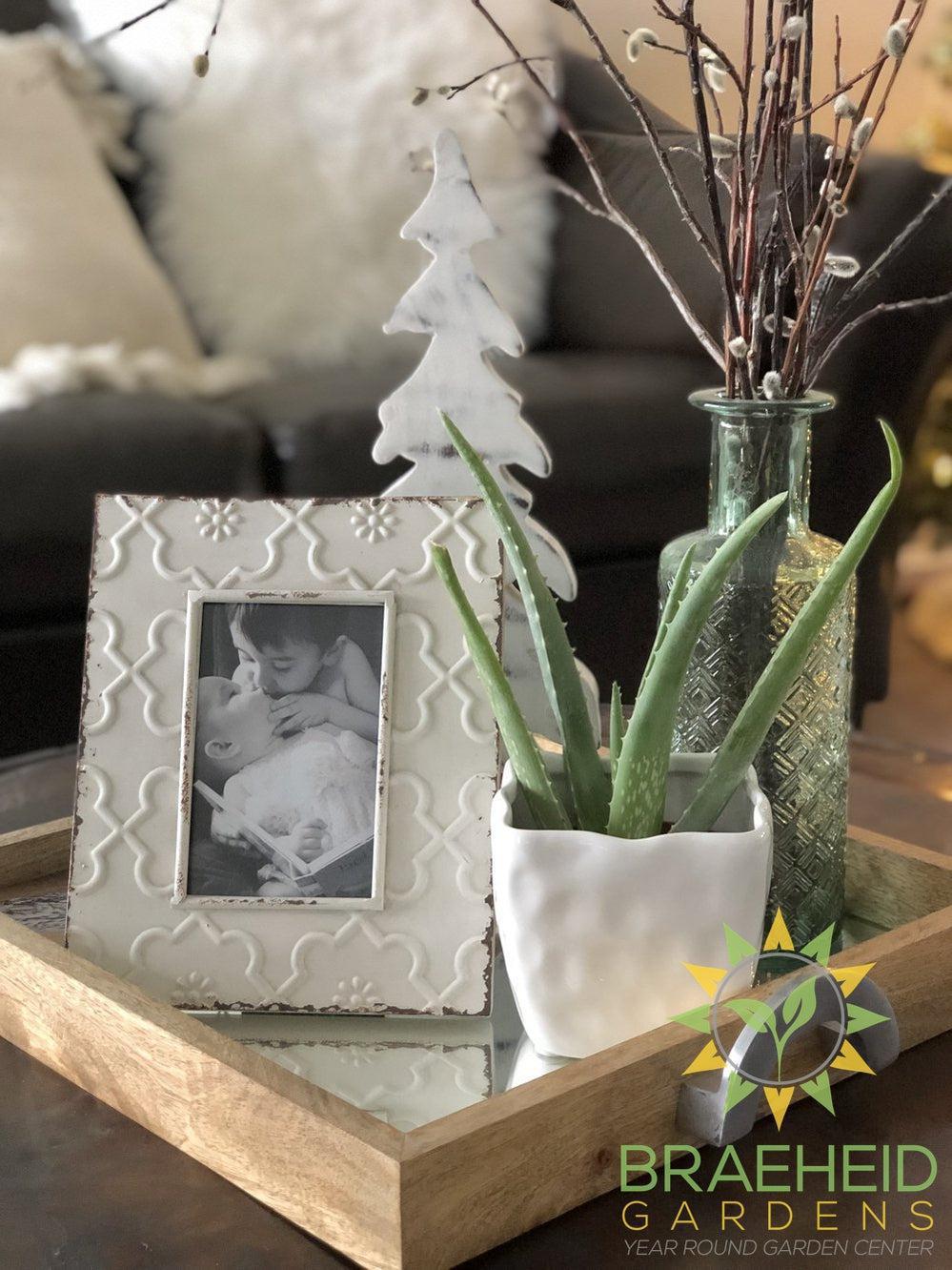
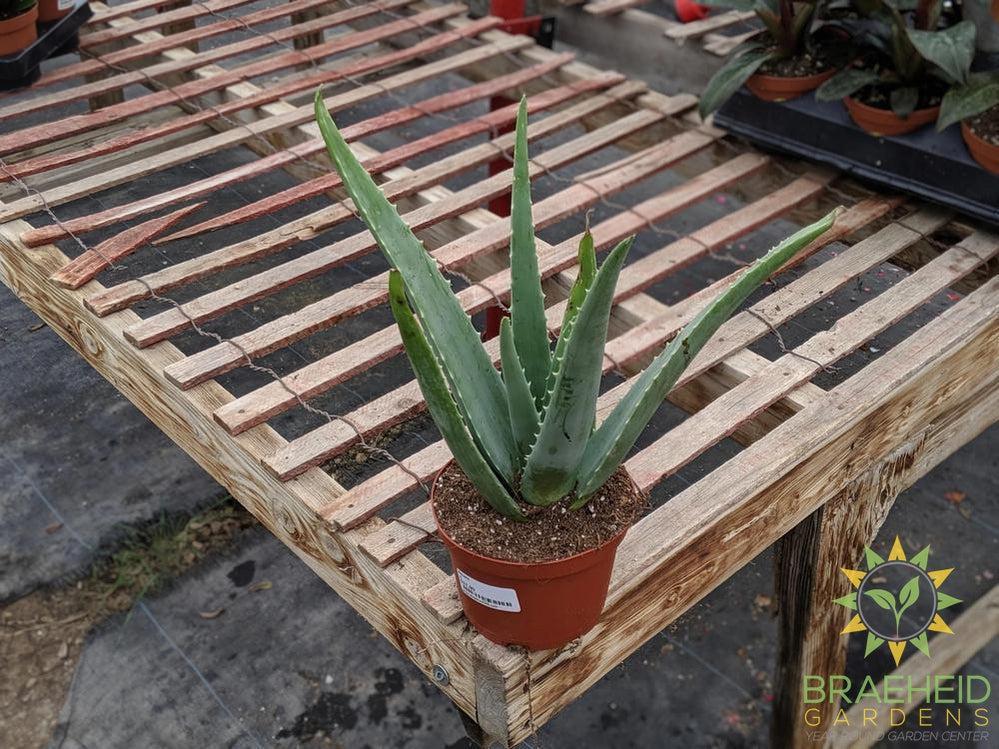
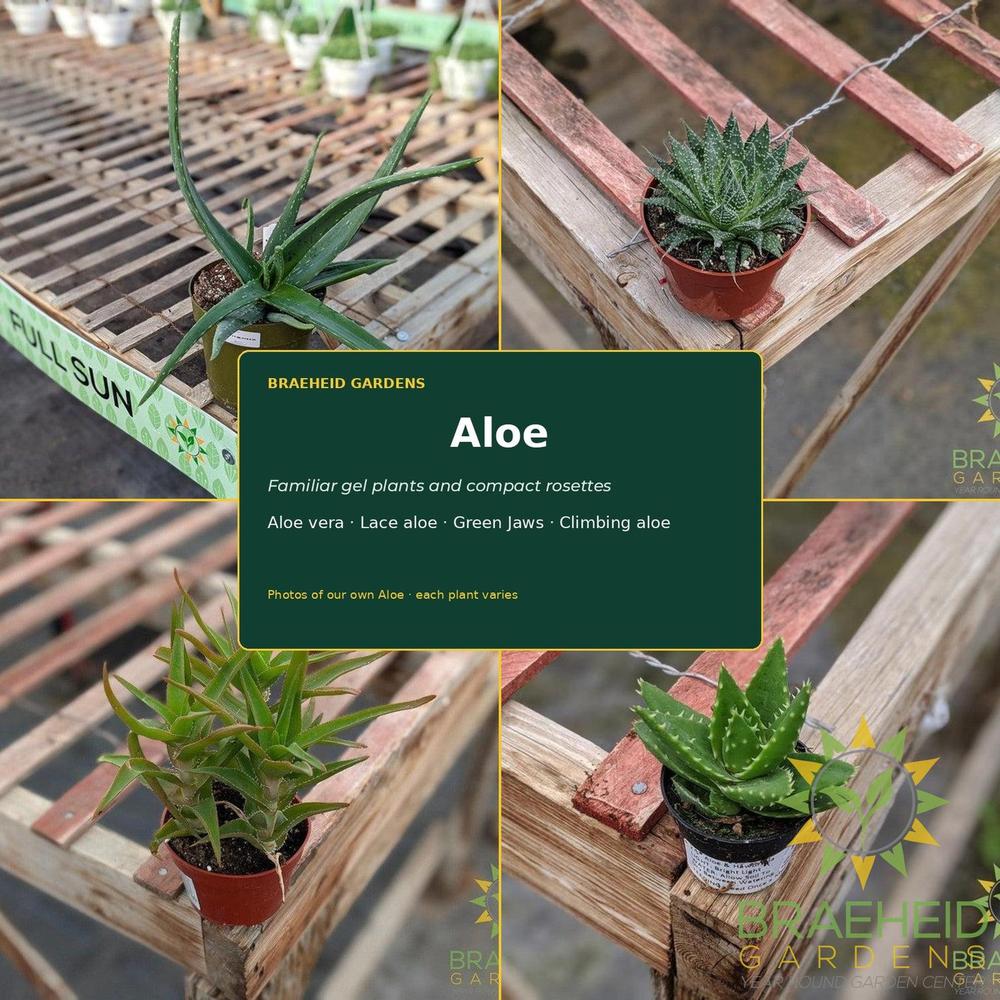
About your plant: Every plant is a little different. Size, fullness and leaf count vary from plant to plant and change with age and light, so we can't promise a particular plant size, leaf length or fullness. The size option (2-1/2", 4", 6") refers to the pot diameter. It does not guarantee an exact plant size or leaf length. Photos show typical plants from our greenhouse, not the specific plant you will receive. The shared gallery image shows other Aloe as inspiration.