Euphorbia Trigona Variegated
Euphorbia Trigona Variegated
Couldn't load pickup availability
Description
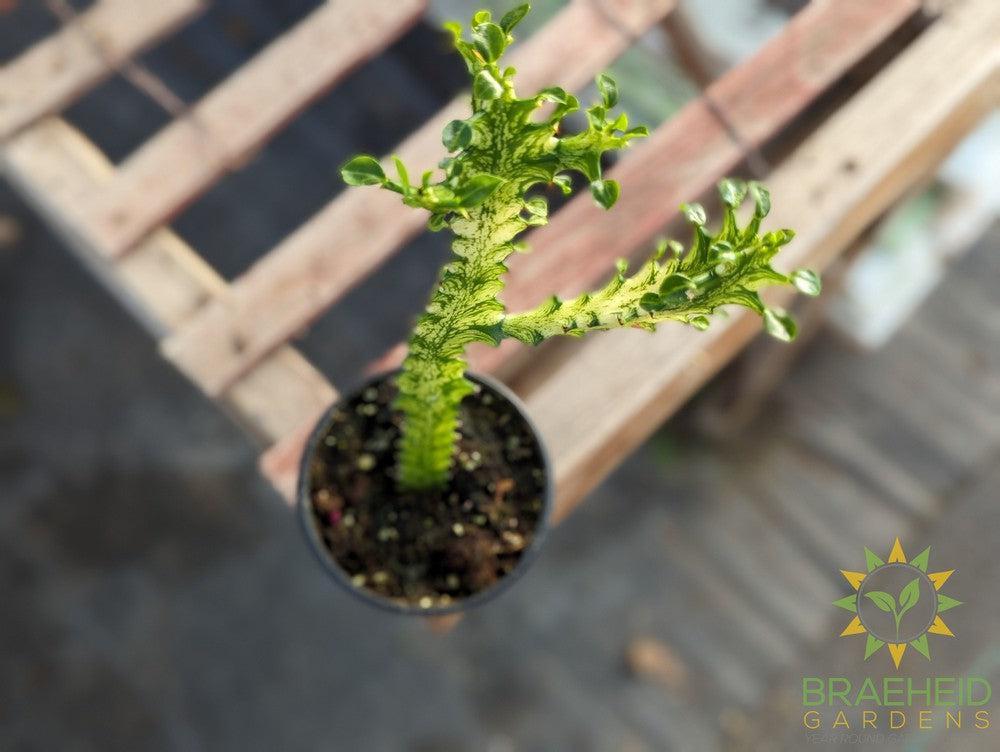
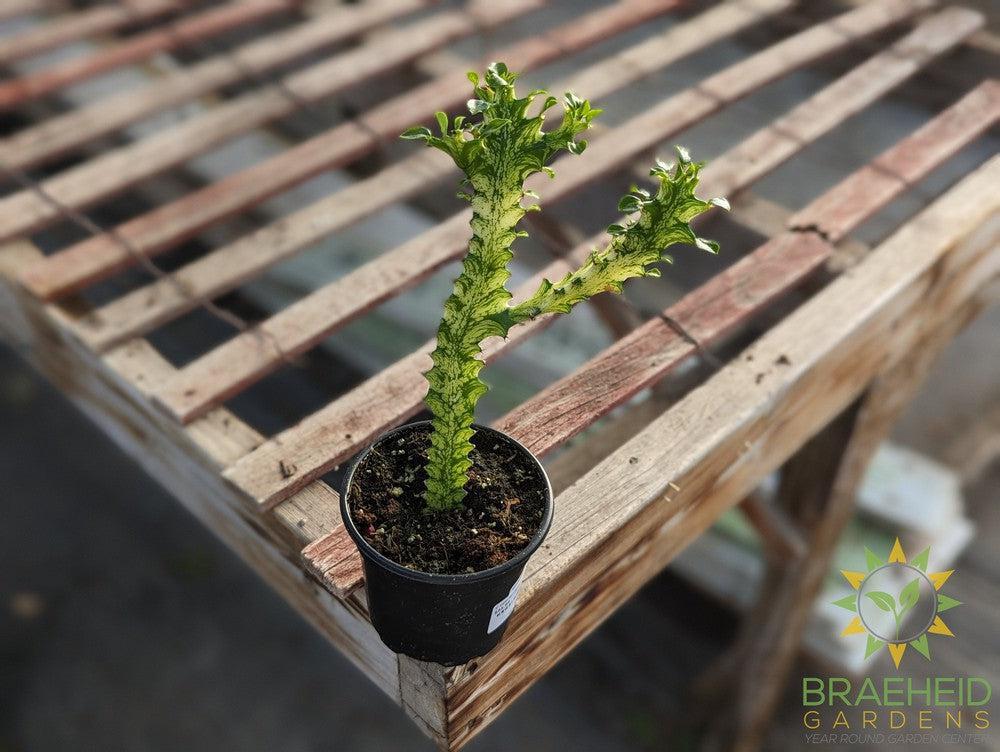
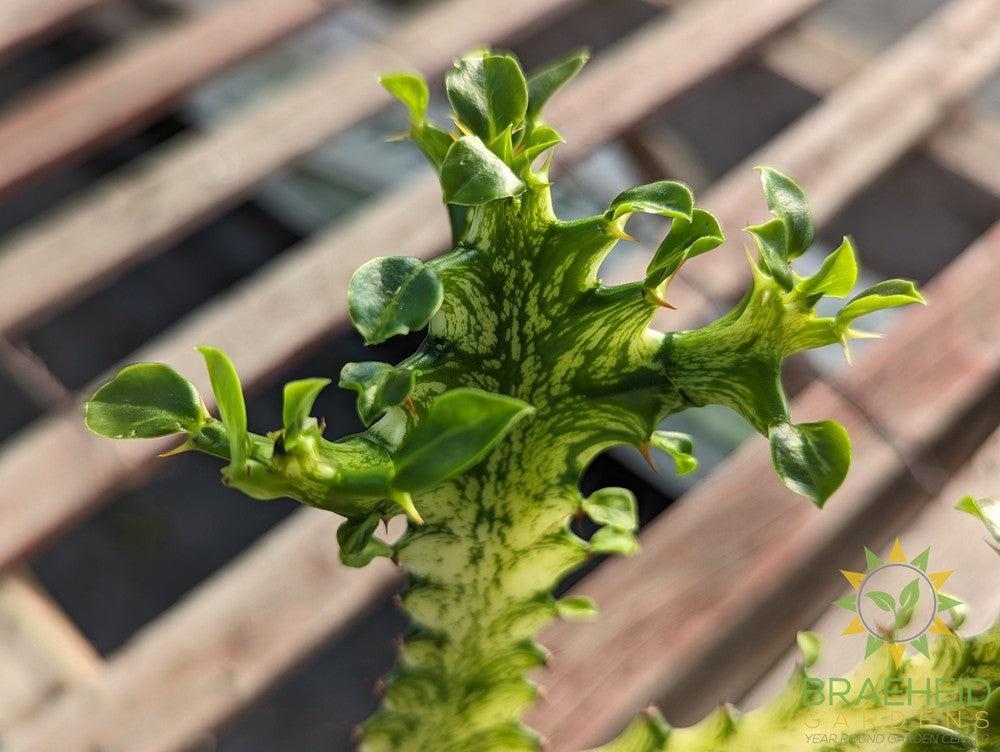
This variegated African milk tree has upright, three-sided stems marked with cream or pale green, and small leaves along the ridges. Like other Euphorbia, it is a succulent in the spurge family (Euphorbiaceae). Many euphorbias ooze a milky sap when cut or broken.
What it is: This listing is a variegated African milk tree, sold as Euphorbia trigona Variegated.
Light: Give it bright indirect light indoors (NC State Extension); this is not a low-light plant. Use a well-drained cactus or succulent mix such as our succulent and cacti soil (NC State Extension). In our dark northern Alberta winters, a grow bulb in a lamp helps.
Watering & care: Water sparingly when the mix feels dry about 2.5–5 cm (1–2 in) down, and avoid overwatering (NC State Extension). Overwatering can cause root rot (NC State Extension).
Humidity: Average household humidity is fine; University of Wisconsin Extension notes crown of thorns does well in the dry air of heated northern homes, and the same usually suits other potted euphorbias.
Temperature: Keep it in typical indoor temperatures and off cold windows. These are not frost-hardy houseplants; NC State Extension treats several of these species as outdoor plants only in very warm climates, and African milk tree should be brought in before temperatures drop below about 7 °C (45 °F) (NC State Extension).
Winter indoors: In winter, water less often and keep it off cold glass, in your brightest window or under a grow light.
Expected indoor size: The Royal Horticultural Society describes African milk tree as a houseplant or conservatory succulent with very upright stems and branches to about 1.8 m (6 ft); the same profile lists a maximum height of 2.5–4 m (8–13 ft) over 10–20 years, which is taller than most homes can comfortably hold. How large yours gets depends on light, pot size and care.
Feeding: Feed sparingly with our Cactus Fertilizer during the growing season, and ease off in winter. The Royal Horticultural Society suggests a dilute low-nitrogen feed monthly in the growing season for potted Euphorbia obesa; other succulent euphorbias likewise do better with light feeding than with a heavy dose.
Pets & pests: Toxic: NC State Extension lists African milk tree as medium-severity poisonous. The milky sap can irritate or blister skin and severely irritate eyes; if eaten, it can cause severe gastroenteritis, vomiting, diarrhea and convulsions (NC State Extension). The Royal Horticultural Society likewise lists it as an irritant to skin and eyes and harmful if eaten, and recommends gloves. Keep it out of reach of pets and children, and wear gloves when handling it. The stems are also sharply spined. Watch for mealybugs, aphids and spider mites (NC State Extension).
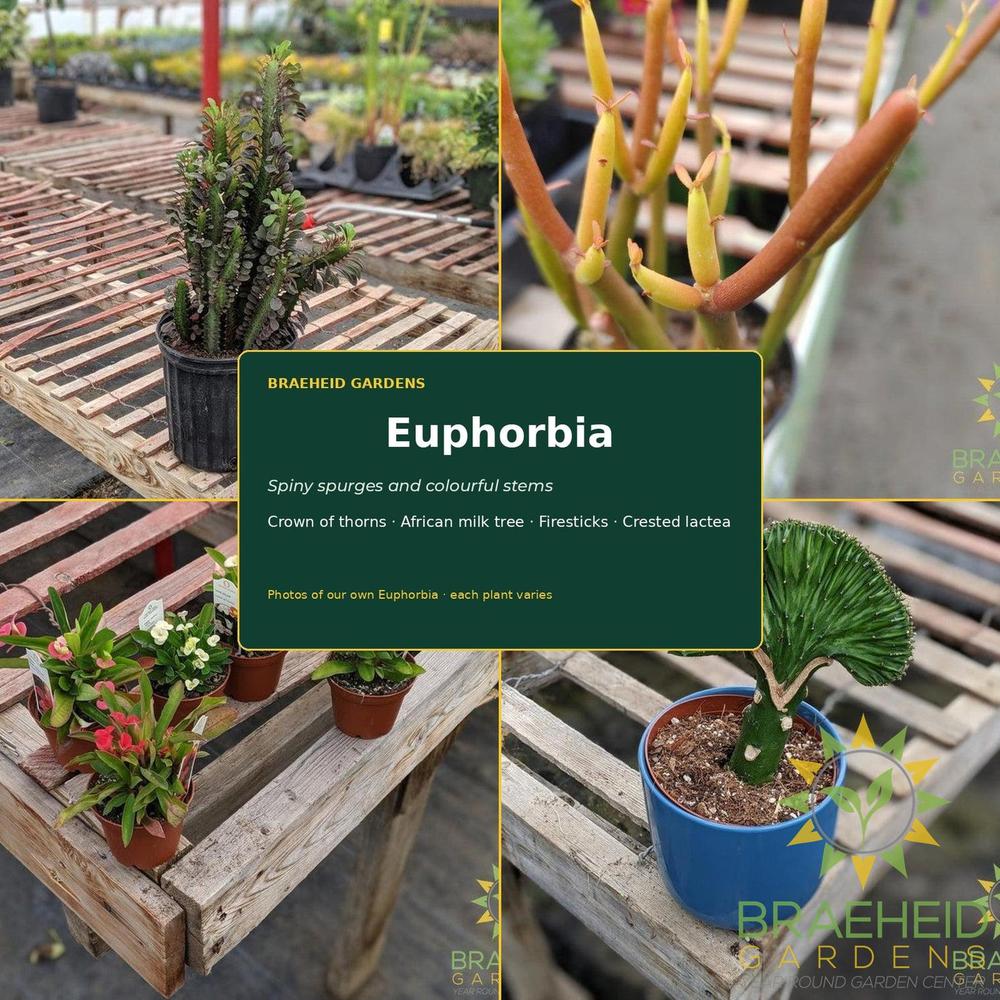
About your plant: Every plant is a little different. Size, fullness, leaf count and variegation or colouring vary from plant to plant and change with age and light, so we can't promise a particular plant size, branching, markings or flower colour. The size option (4") refers to the pot diameter. It does not guarantee an exact plant size or branching. Photos show typical plants from our greenhouse, not the specific plant you will receive. The shared gallery image shows other Euphorbia as inspiration.