
Echeveria 'Setusa Arrow'
Echeveria 'Setusa Arrow'
Couldn't load pickup availability
Description
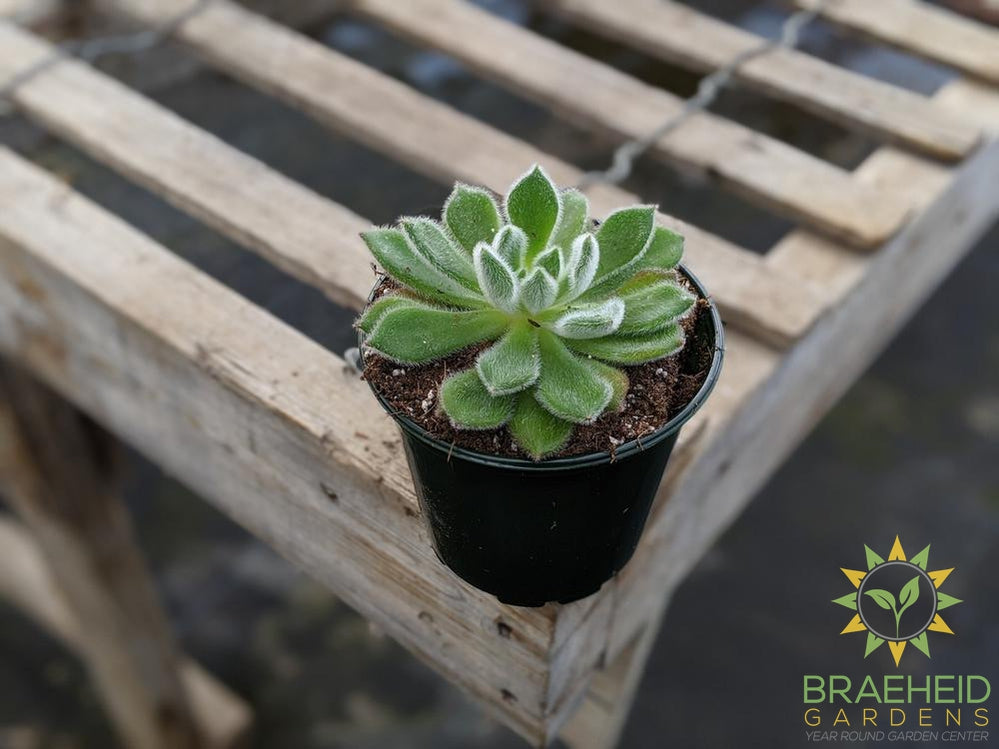
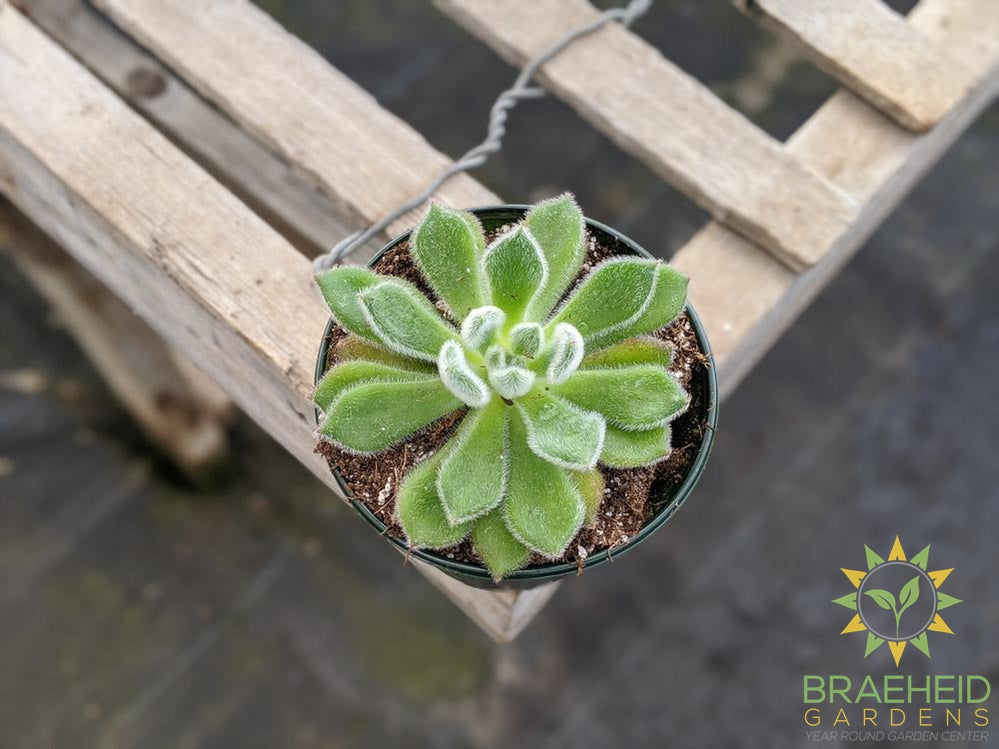
Echeveria 'Setusa Arrow' forms a rosette of pale, fleshy, somewhat pointed leaves. Like other Echeveria, it is a succulent in the stonecrop family (Crassulaceae). NC State Extension describes Echeveria as a large group of houseplant succulents with tight, fleshy rosettes.
What it is: This listing is a plant sold as Echeveria 'Setusa Arrow'. We are listing it under the name on the tag.
Light: Give it a bright, sunny windowsill; leaf colour is typically better in good light (NC State Extension). The Royal Horticultural Society recommends a standard cactus compost (our succulent and cacti soil is a good starting point), in full light with low humidity for most echeverias, or bright filtered light for 'Lola'. In lower light the rosette can stretch and open up. In our dark northern Alberta winters, a grow bulb in a lamp helps.
Watering & care: These plants need little water (NC State Extension). The Royal Horticultural Society suggests watering more freely while the plant is growing and keeping the mix only just moist, or almost dry, at other times, especially in winter. Overwatering can cause mushy leaves and root rot. Empty any saucer so the pot does not sit in water.
Humidity: Keep humidity on the low side; the Royal Horticultural Society recommends low humidity for potted echeverias. Average household air is usually fine.
Temperature: Keep it in typical indoor temperatures and off cold windows. Echeverias are not frost hardy; unless you live in a frost-free climate, they need to come indoors for winter (NC State Extension). The Royal Horticultural Society suggests keeping them above about 10 °C (50 °F).
Winter indoors: In winter, water much less often and keep it off cold glass, in your brightest window or under a grow light, so it does not stretch.
Expected indoor size: NC State Extension describes Echeveria as generally small houseplants, about 2.5 cm to 0.3 m (1 in to 1 ft) tall and about 5 cm to 0.3 m (2 in to 1 ft) wide. How large yours gets depends on the variety, light, pot size and care.
Feeding: Feed sparingly with our Cactus Fertilizer in late spring and summer. The Royal Horticultural Society suggests a dilute, low-nitrogen fertilizer fortnightly during late spring and summer for many echeverias (or a balanced liquid feed every two or three weeks for 'Lola'), and ease off in winter.
Pets & pests: The ASPCA lists Echeveria (Echeveria sp.) as non-toxic to dogs and cats. NC State Extension also tags the genus as non-toxic for cats, dogs and horses. It is still a plant, not a snack, and any plant material can upset a pet's stomach. Watch for mealybugs, aphids and vine weevil (Royal Horticultural Society). Remove spent lower leaves so they do not rot against the soil (NC State Extension).
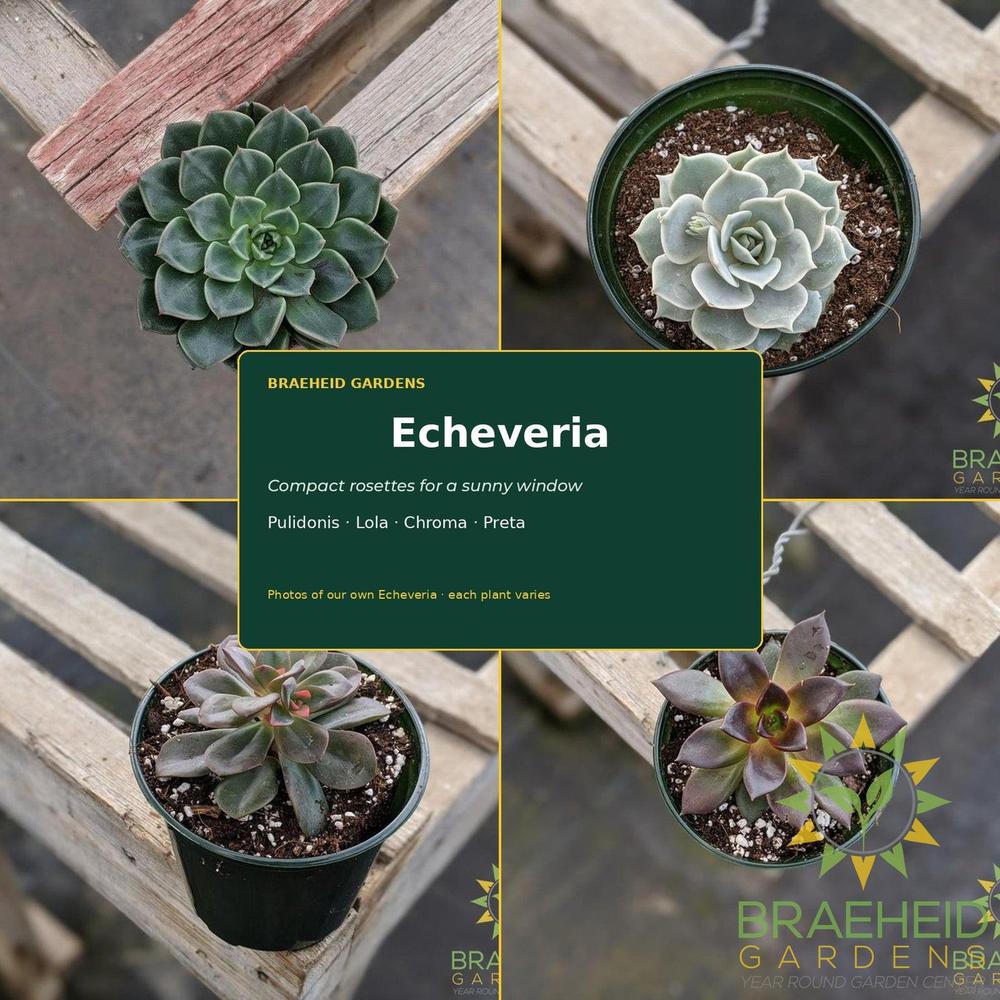
About your plant: Every plant is a little different. Size, fullness, leaf count and variegation or colouring vary from plant to plant and change with age and light, so we can't promise a particular rosette size, leaf colour, markings or fullness. The size option (4") refers to the pot diameter. It does not guarantee an exact rosette size or colour. Photos show typical plants from our greenhouse, not the specific plant you will receive. The shared gallery image shows other Echeveria as inspiration.