Crown of thorns
Crown of thorns
Couldn't load pickup availability
Description
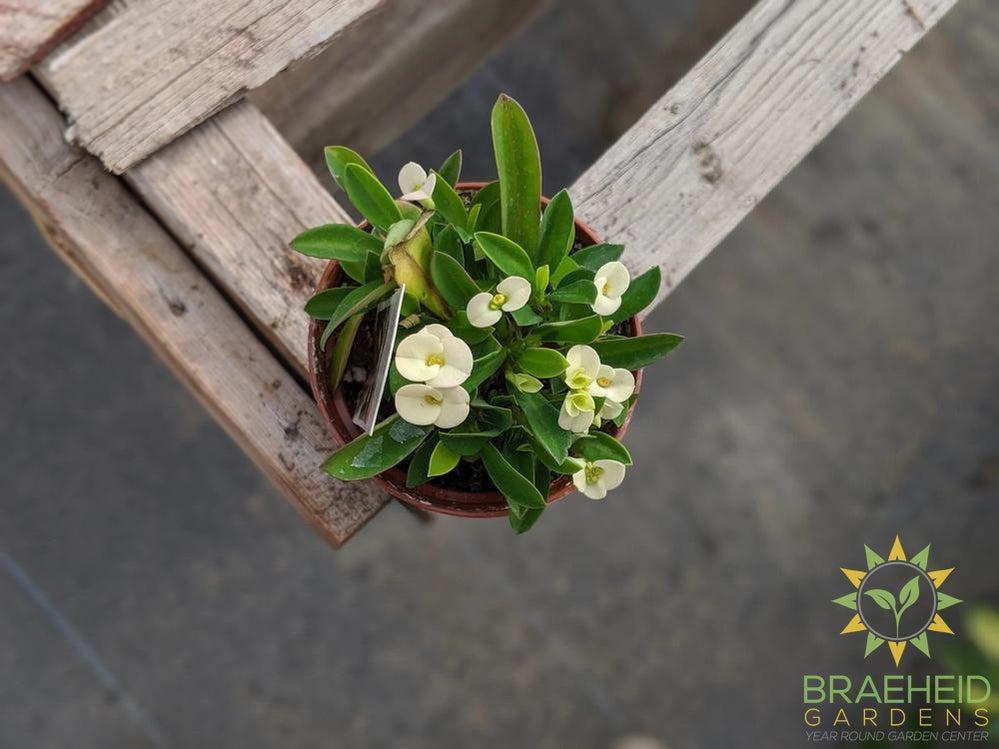
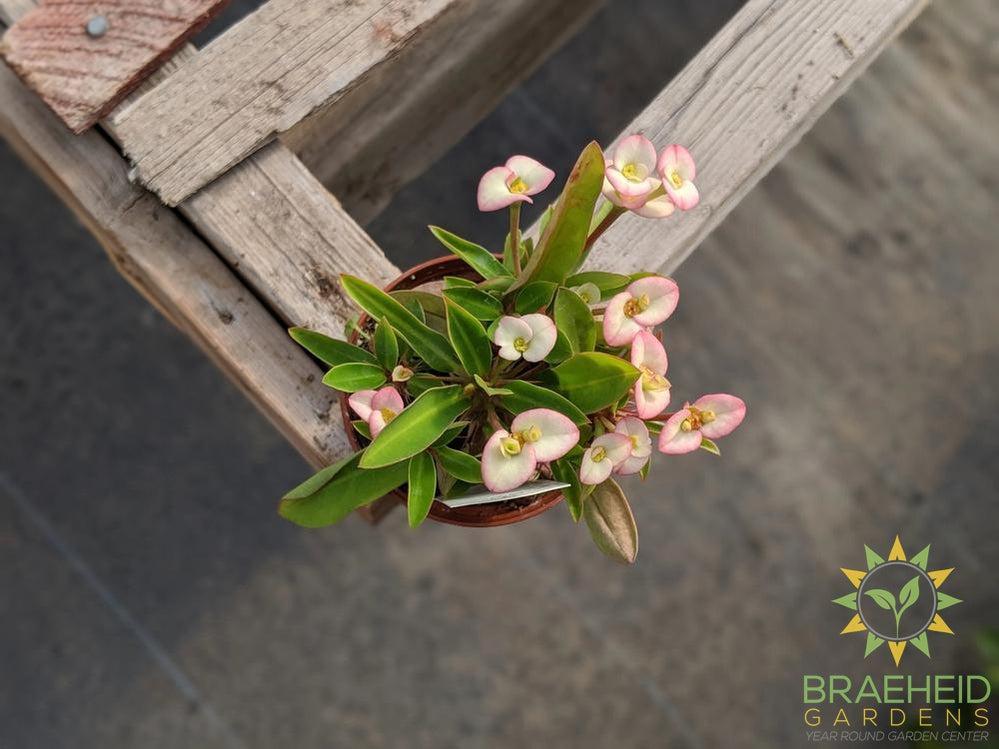
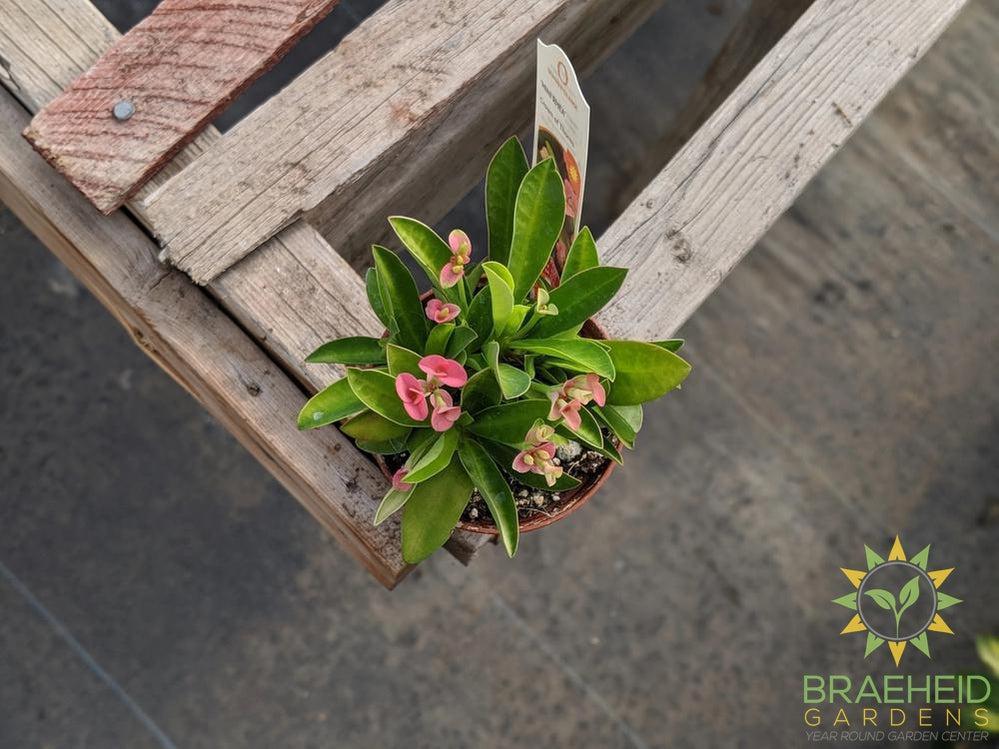
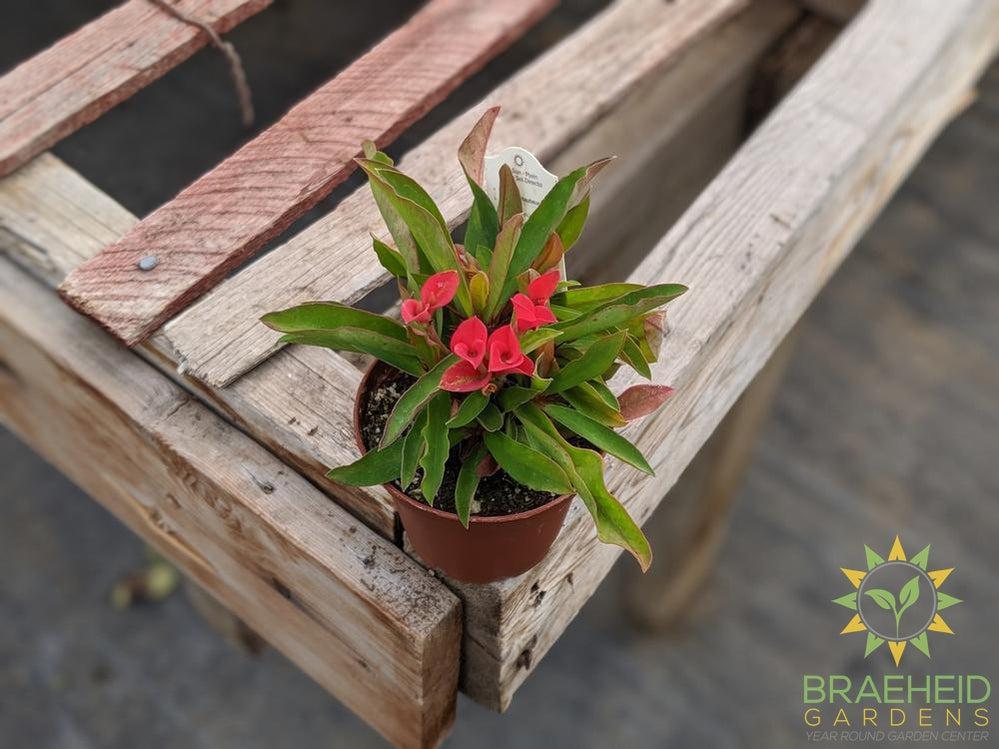
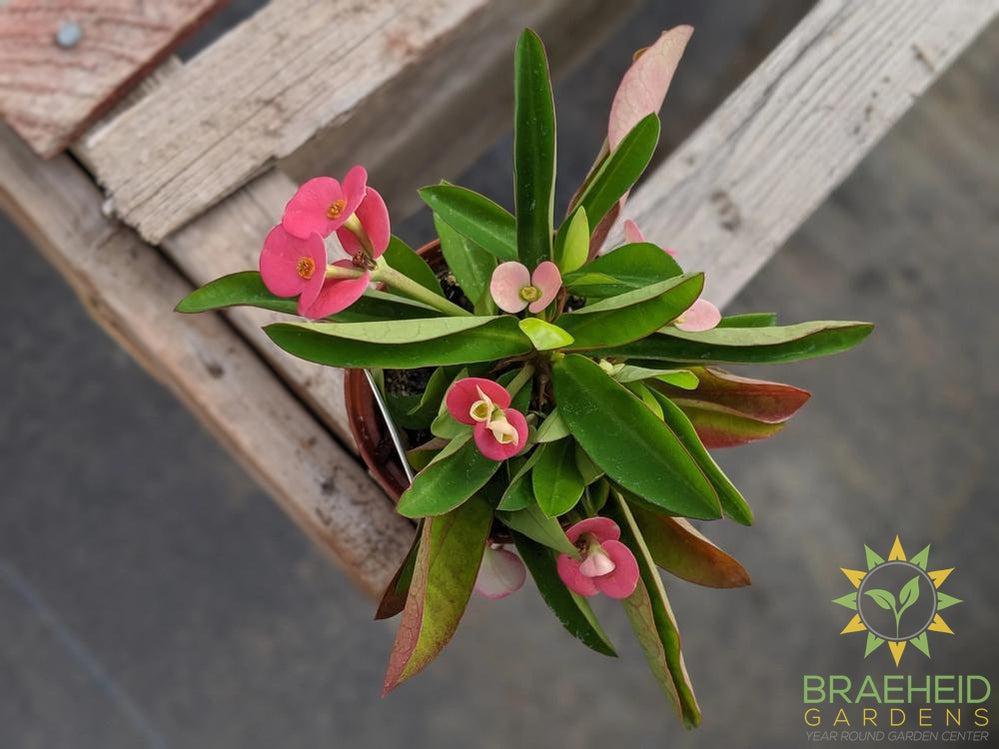
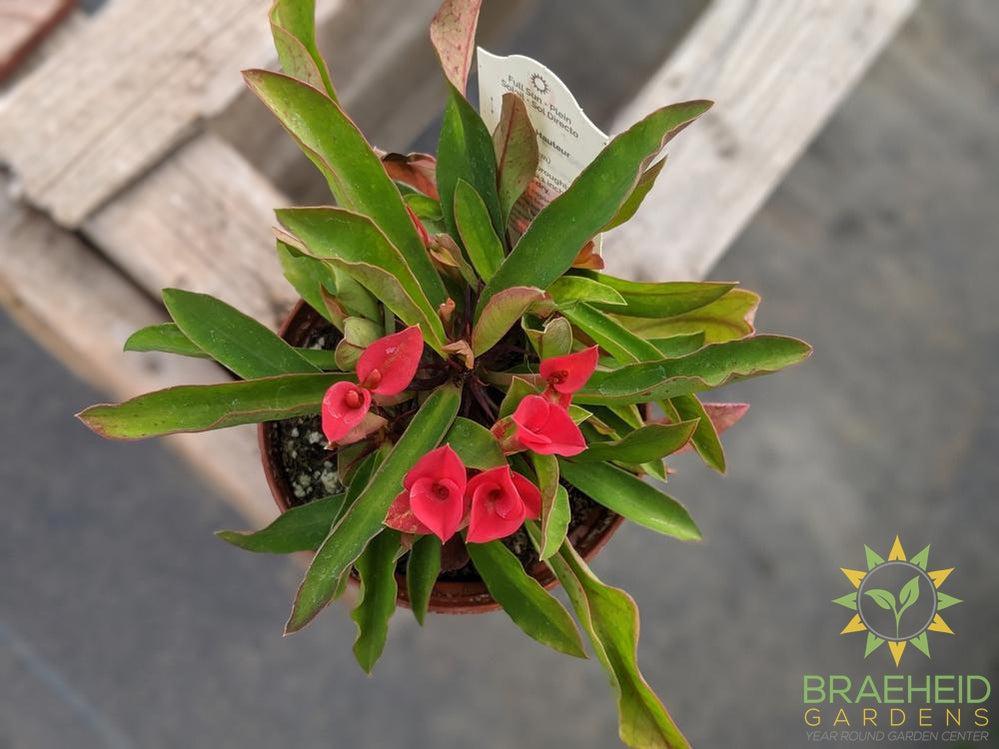
Crown of thorns is a shrubby succulent with spiny stems, bright green leaves, and showy bracts in red, pink, white or other colours around tiny flowers. Like other Euphorbia, it is a succulent in the spurge family (Euphorbiaceae). Many euphorbias ooze a milky sap when cut or broken.
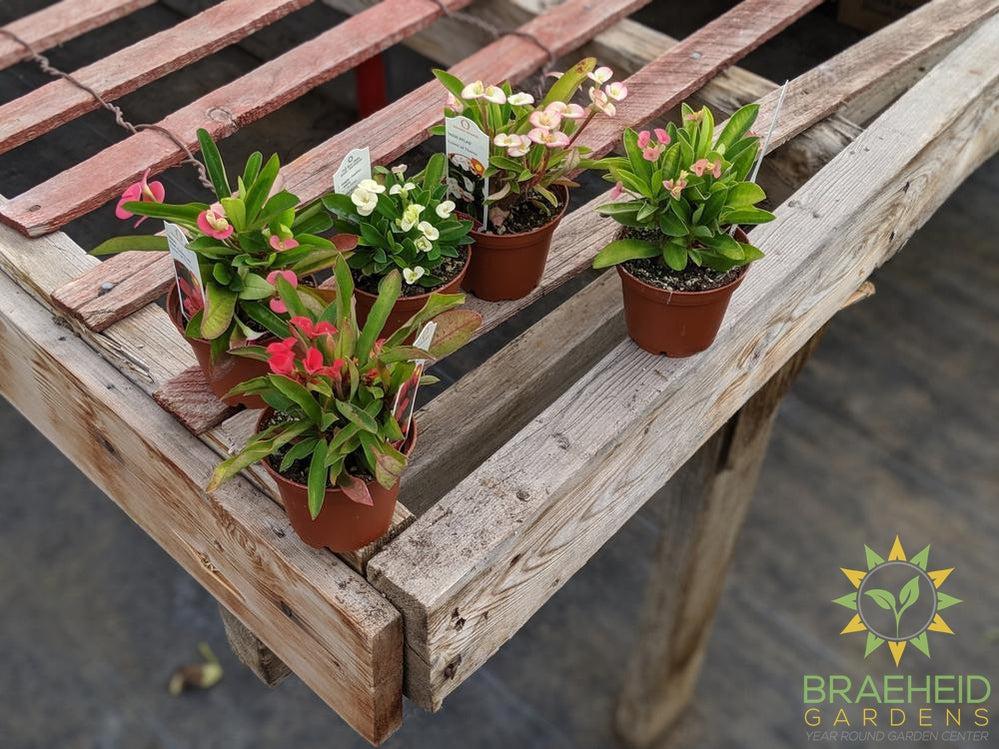
What it is: This listing is crown of thorns (Euphorbia milii). Named varieties such as the Mini selections and others in the size/variety options are sold as labelled; colour and habit vary.
Light: Give it a sunny window; NC State Extension recommends a sunny location in a soil-based potting mix, and University of Wisconsin Extension notes it prefers full, direct sun (flowering may be reduced in part shade). A well-drained mix such as our succulent and cacti soil is a good choice. In our dark northern Alberta winters, a grow bulb in a lamp helps.
Watering & care: Allow the mix to dry between thorough waterings. University of Wisconsin Extension notes that many hybrids may want more frequent watering than a typical succulent, and to fertilize only lightly in spring and summer. Overwatering can lead to rot.
Humidity: Average household humidity is fine; University of Wisconsin Extension notes crown of thorns does well in the dry air of heated northern homes, and the same usually suits other potted euphorbias.
Temperature: Keep it in typical indoor temperatures and off cold windows. These are not frost-hardy houseplants; NC State Extension treats several of these species as outdoor plants only in very warm climates, and African milk tree should be brought in before temperatures drop below about 7 °C (45 °F) (NC State Extension).
Winter indoors: In winter, water less often and keep it off cold glass, in your brightest window or under a grow light.
Expected indoor size: NC State Extension says crown of thorns typically stays under about 0.6 m (2 ft) when grown as a houseplant (it may reach about 0.9 m / 3 ft in the United States, and larger still in its native climate). How large yours gets depends on the variety, light, pot size and care.
Feeding: Feed sparingly with our Cactus Fertilizer during the growing season, and ease off in winter. The Royal Horticultural Society suggests a dilute low-nitrogen feed monthly in the growing season for potted Euphorbia obesa; other succulent euphorbias likewise do better with light feeding than with a heavy dose.
Pets & pests: Toxic: NC State Extension lists crown of thorns as low-severity poisonous, a problem for dogs, cats, horses and children, and as a contact-dermatitis plant. The milky sap can cause mild to severe skin irritation and can temporarily or permanently damage the cornea if it gets in the eyes. If eaten, it can blister the lips and mouth. Wear gloves when handling or pruning it, and keep it out of reach of pets and children. The stems are also sharply spined. Watch for mealybugs, scale, thrips and mites (NC State Extension).
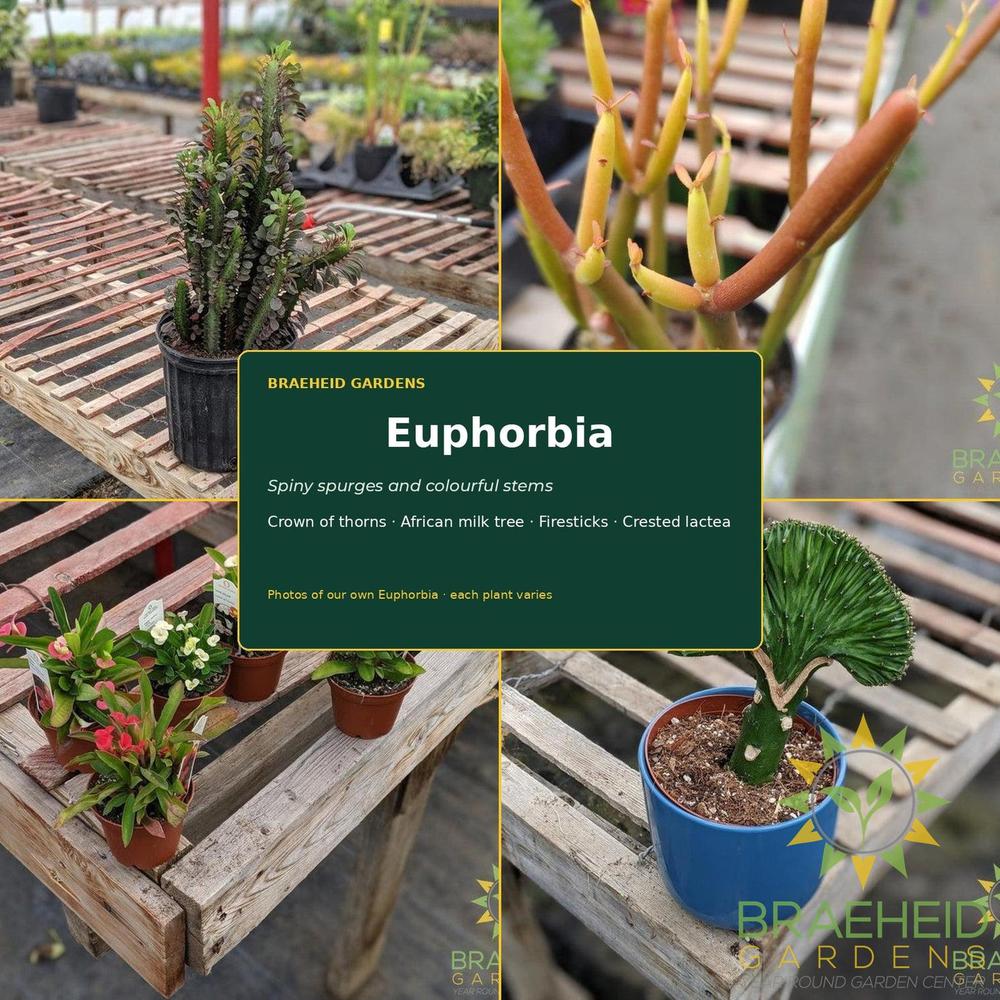
About your plant: Every plant is a little different. Size, fullness, leaf count and variegation or colouring vary from plant to plant and change with age and light, so we can't promise a particular plant size, branching, markings or flower colour. The size option refers to the pot diameter, not an exact plant size. Variety and pot color, when offered, describe the labelled selection or the pot, not a guaranteed exact appearance. Photos show typical plants from our greenhouse, not the specific plant you will receive. The shared gallery image shows other Euphorbia as inspiration.