Croton Red Mammy
Croton Red Mammy
Couldn't load pickup availability
Description
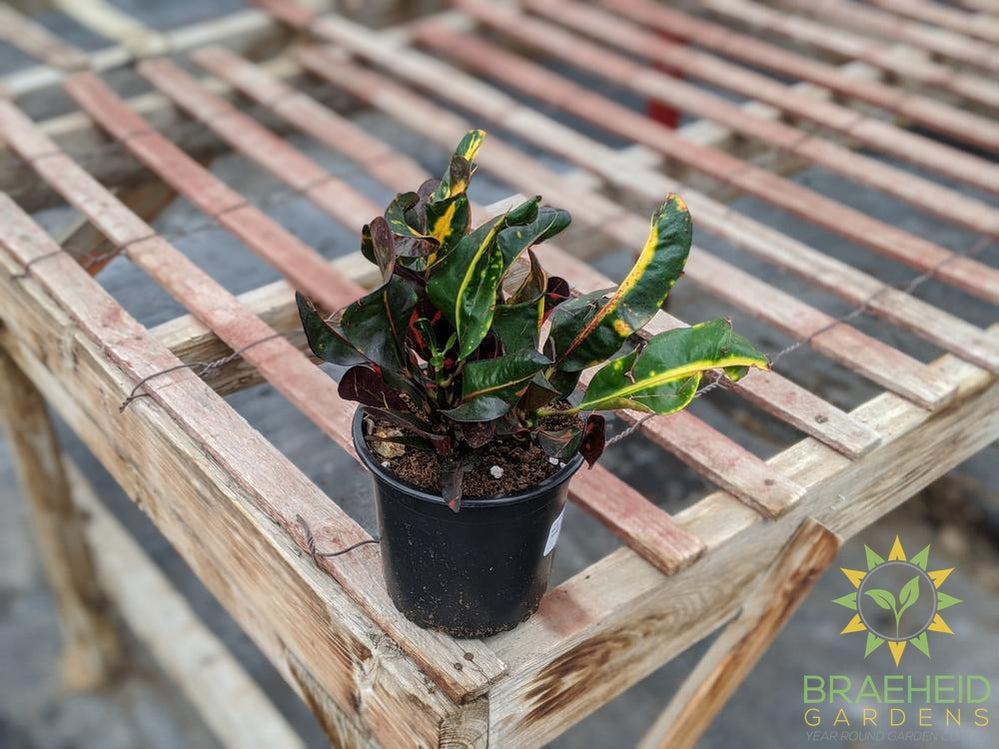
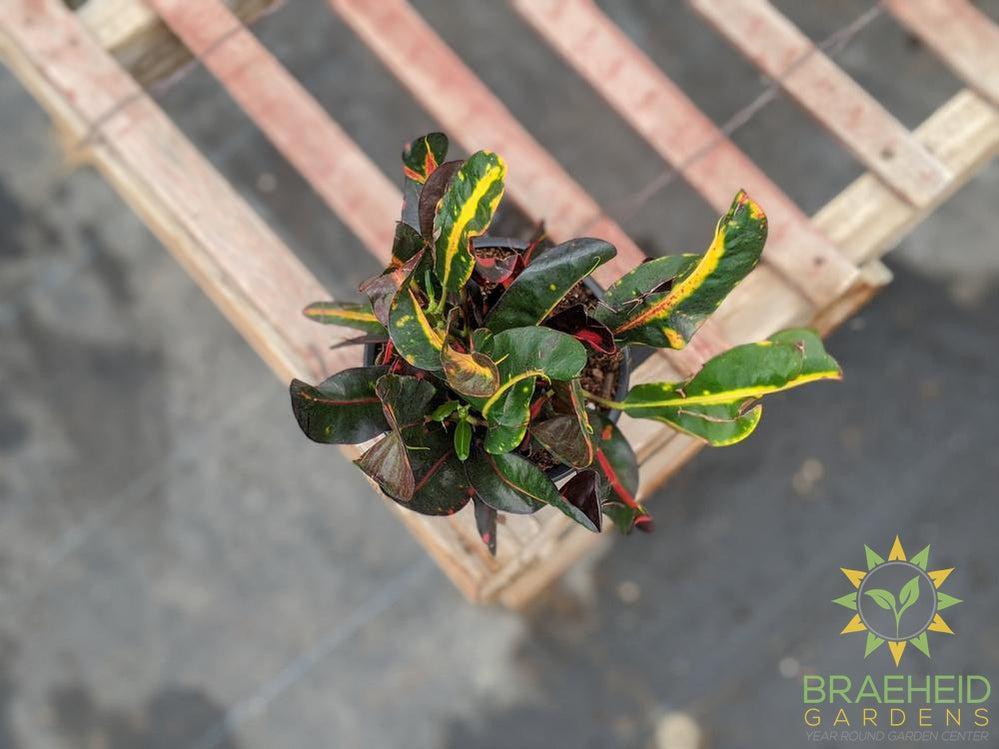
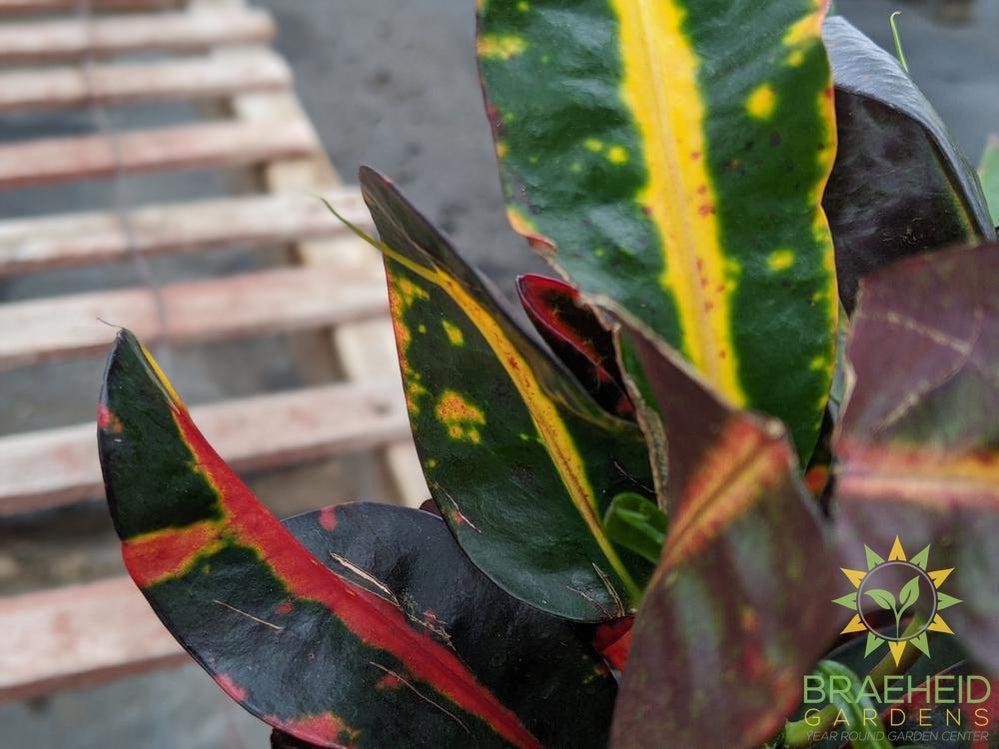
Croton Red Mammy has curled, glossy leaves in deep red, orange and green. Like other Croton, it is a woody evergreen shrub in the spurge family (Euphorbiaceae), grown for glossy, leathery leaves splashed with yellow, orange, red and pink (NC State Extension).
What it is: This listing is a plant sold as Croton Red Mammy (Codiaeum variegatum).
Light: Crotons need bright light, with some direct sun, for the best leaf colour; NC State Extension notes they prefer full sun to partial shade and may lose lower leaves in too much shade. Give it your sunniest window (south or west) in northern Alberta, and add a grow bulb in a lamp through our dark winters.
Watering & care: Use a well-drained, humus-rich potting mix. NC State Extension suggests watering liberally from spring to autumn and sparingly in winter, letting the mix dry a little between waterings.
Humidity: Crotons cope with low to medium humidity (NC State Extension); in very dry winter air, setting the pot on a tray of wet pebbles helps (NC State Extension).
Temperature: Keep it warm and out of cold drafts. NC State Extension advises bringing crotons indoors before temperatures drop to about 10 °C (50 °F), so keep it well away from frosty windows and doors.
Winter indoors: Crotons appreciate a rest with reduced watering from fall to late winter (NC State Extension). Give it the brightest spot you have or a grow light, and expect some lower leaves to drop if light is poor.
Expected indoor size: NC State Extension notes crotons can reach about 2.4 m (8 ft) in their native tropics but more commonly about 0.9 m (3 ft) indoors. How large yours gets depends on light, pot size and care.
Feeding: Feed with our Schultz All Purpose Plant Food about once a month from March to September; stop in winter.
Pets & pests: Toxic: NC State Extension lists croton as poisonous (low severity), containing diterpene esters, with nausea and vomiting if large amounts are eaten. Its milky sap can irritate skin and soft tissue and permanently stains fabric, so wash your hands after handling it and keep it out of reach of pets and children. The ASPCA does not list croton. Spider mites are the main pest (NC State Extension).
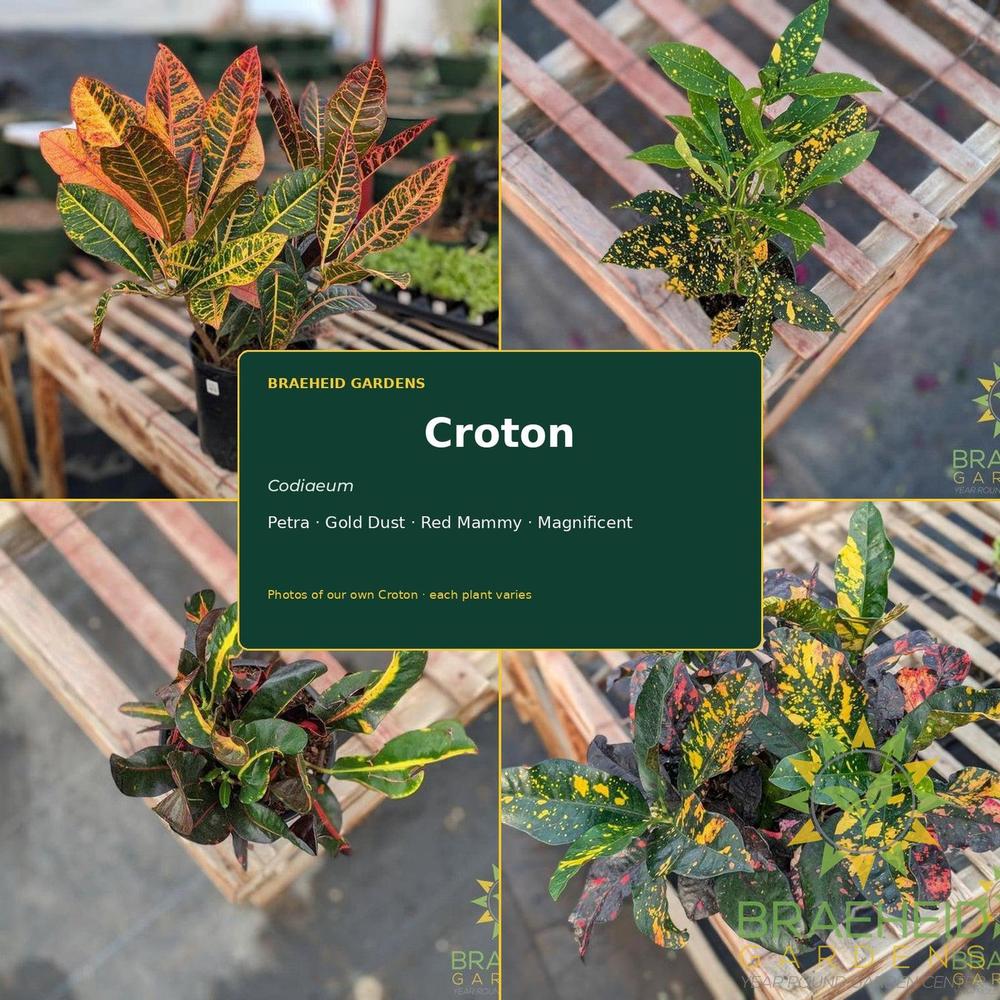
About your plant: Every plant is a little different. Size, fullness, leaf count and variegation or colouring vary from plant to plant and change with age and light, so we can't promise a particular height, leaf shape, spotting or leaf colour. The size option (4", 6") refers to the pot diameter or listed container. It does not guarantee an exact plant height, leaf count or colour. Photos show typical plants from our greenhouse, not the specific plant you will receive. The shared gallery image shows other Croton as inspiration.