Boston Fern - Hanging Basket
Boston Fern - Hanging Basket
Couldn't load pickup availability
Description
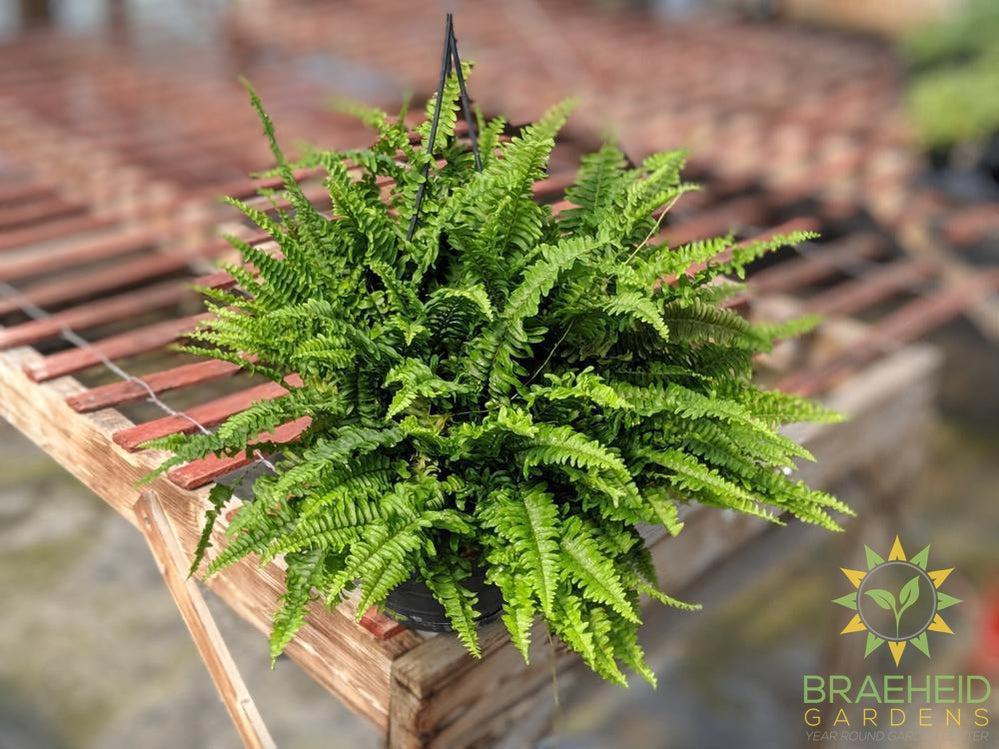
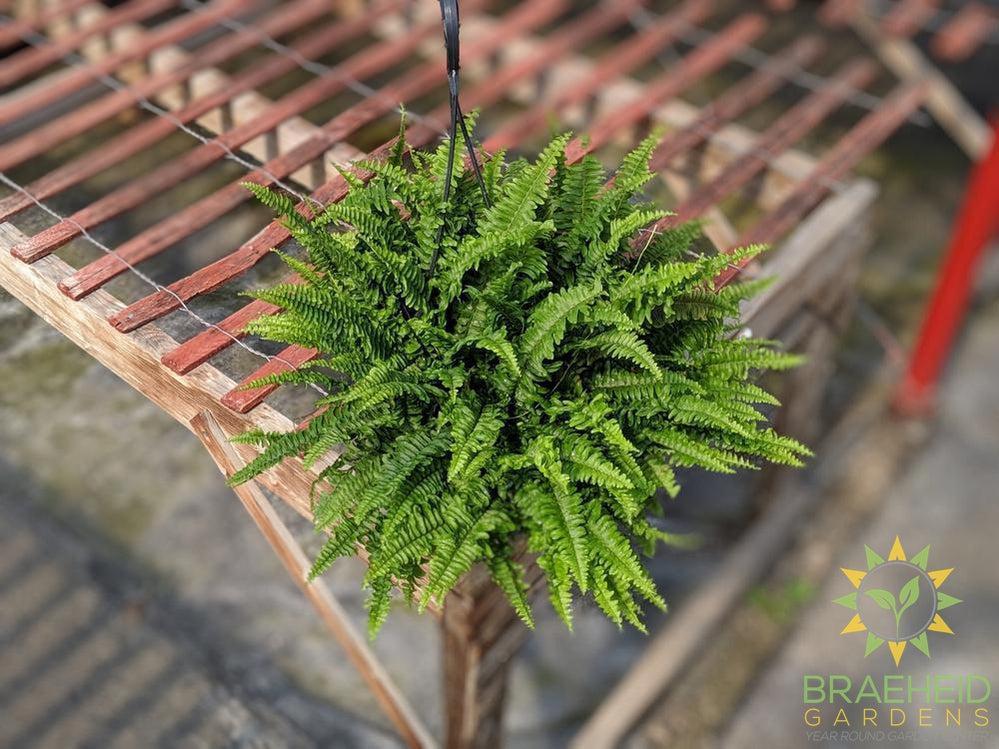
This hanging basket is a Boston fern (Nephrolepis exaltata). Like other Ferns, they are sold in our Ferns collection. Most are true ferns, in families such as the polypody family (Polypodiaceae) or the spleenwort family (Aspleniaceae). A few listings, sold as asparagus ferns, are not true ferns at all; NC State Extension places those in the asparagus family (Asparagaceae).
What it is: This listing is a Boston fern (Nephrolepis exaltata) in a hanging basket, a use NC State Extension specifically recommends.
Light: Give it bright, indirect light and warmth of about 16–21 °C (60–70 °F) (NC State Extension). A grow bulb helps in our dark winters. Use a moist, well-drained mix, and never let the soil dry out completely (NC State Extension).
Watering & care: Keep the mix moist at all times during the growing season; it should never be allowed to dry out (NC State Extension). In winter, reduce watering because the plant is dormant, and overwatering can lead to root rot (NC State Extension). Empty any saucer so the pot does not sit in water.
Humidity: This fern needs high humidity (NC State Extension). NC State Extension mentions kitchens, bathrooms or a tray of wet pebbles; a humidifier is a better choice than a pebble tray in our dry indoor winter air.
Temperature: NC State Extension lists USDA zones 10a to 13b and notes it is commonly grown as a houseplant in cooler zones. Keep it off cold glass and out of cold drafts.
Winter indoors: Reduce watering in winter so the mix does not stay soggy (NC State Extension). Keep it in a bright, frost-free window or under a grow bulb.
Expected indoor size: NC State Extension describes Boston fern as 2 to 3 feet in height and width, with fronds 2 to 3 feet long. The cultivar 'Bostoniensis' is listed as growing up to 3 feet tall and as wide. A plant in a smaller pot will be more compact until it is grown on.
Feeding: Feed lightly during the growing season with our Schultz All Purpose Plant Food, and ease off in winter.
Pets & pests: The ASPCA lists Boston Fern (Nephrolepis exaltata 'Bostoniensis') as non-toxic to dogs and cats. NC State Extension also tags the species as non-toxic for cats, dogs and horses. It is still a plant, not a snack. Do not mistake the brown spore dots on the undersides of fronds for insects (NC State Extension). Scale or spider mites can appear if the air is too dry; watch also for Florida fern caterpillar (NC State Extension).
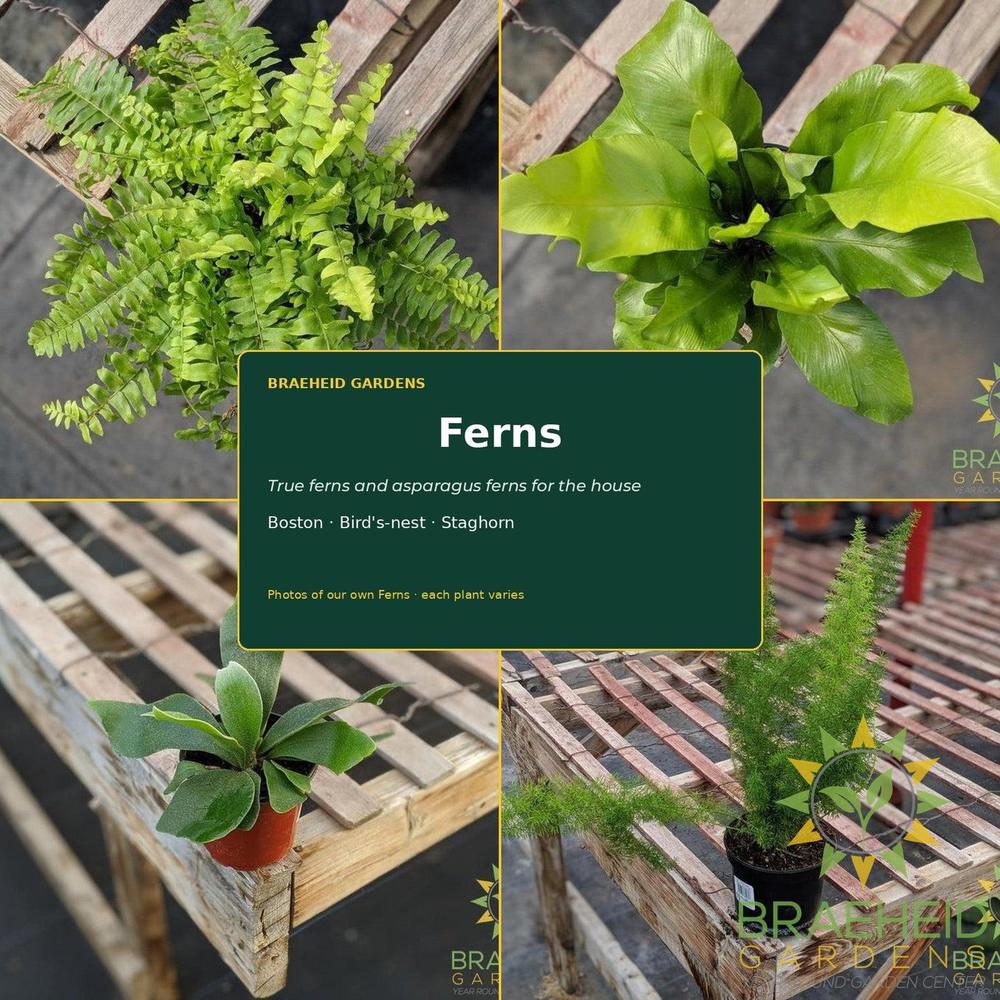
About your plant: Every plant is a little different. Size, fullness and leaf count vary from plant to plant and change with age and light, so we can't promise a particular frond length, fullness or colour. The options listed (6", 8", 10") refer to the pot or container size. They do not guarantee an exact frond length, fullness or colour. Photos show typical plants from our greenhouse, not the specific plant you will receive. The shared gallery image shows other Ferns as inspiration.