Bloodleaf plant
Bloodleaf plant
Couldn't load pickup availability
Description
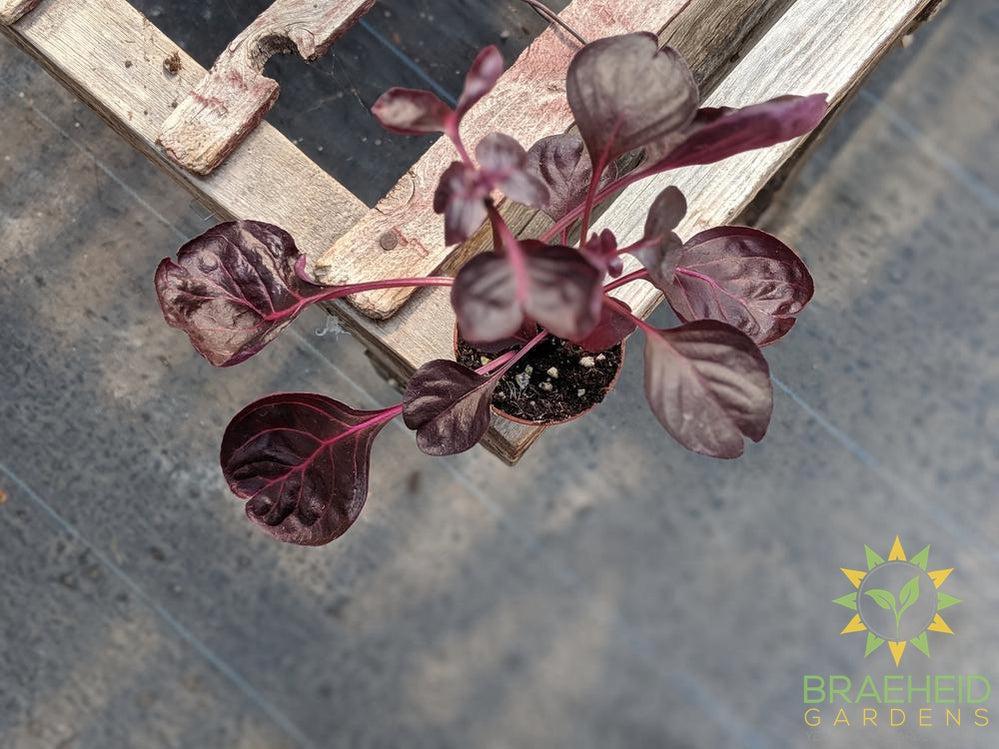
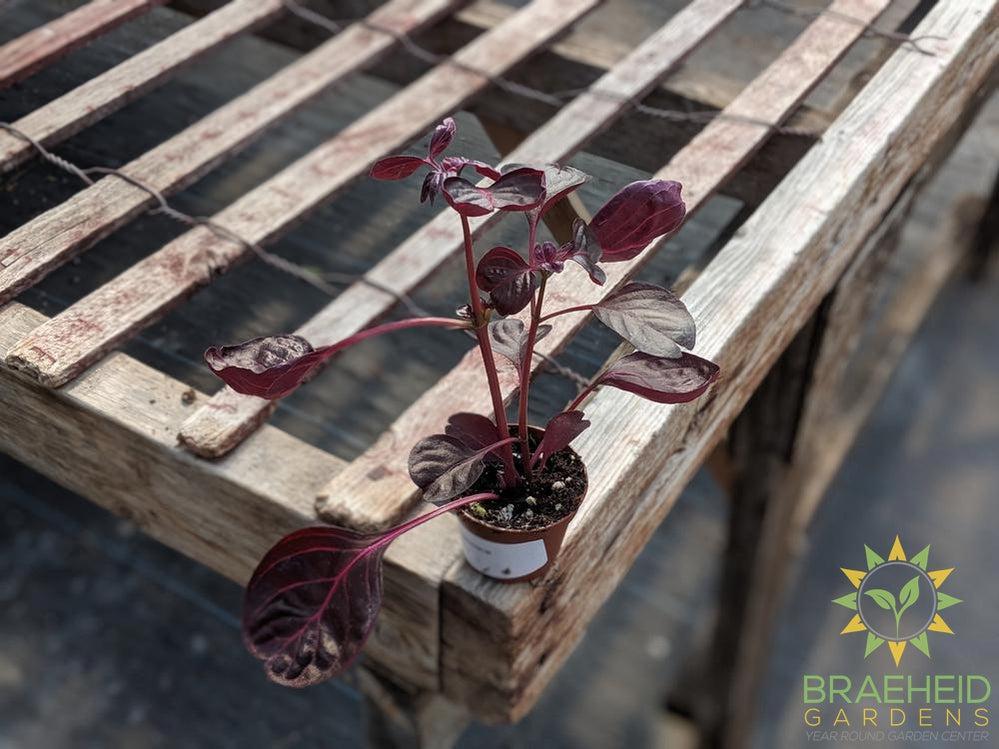
Bloodleaf is grown for its reddish-purple leaves. Like other Iresine, they belong to the amaranth family (Amaranthaceae). NC State Extension lists bloodleaf as Iresine diffusa f. herbstii (previously Iresine herbstii), a short-lived perennial from Peru grown for reddish-purple leaves.
What it is: This listing is bloodleaf, also called beefsteak plant or chicken gizzard. NC State Extension lists it as Iresine diffusa f. herbstii (previously Iresine herbstii) in the amaranth family (Amaranthaceae).
Light: Give it full sun, or the brightest light you can, so the leaves keep their colour (NC State Extension). A grow bulb helps in our dark northern Alberta winters if a sunny window is not enough.
Watering & care: Keep the mix evenly moist but not soggy, and empty any saucer. Cut back on water during cooler seasons (NC State Extension).
Humidity: Average household air is often tolerated. A humidifier can help if our dry indoor winter air browns the leaf edges, and is a better choice than a pebble tray.
Temperature: NC State Extension lists USDA zones 10 to 12, and treats it as an annual or a houseplant in cooler climates. It can stand outside in summer and should come in before cold nights. Keep it off cold glass.
Winter indoors: Keep it in your brightest frost-free window or under a grow bulb, and water more sparingly than in summer.
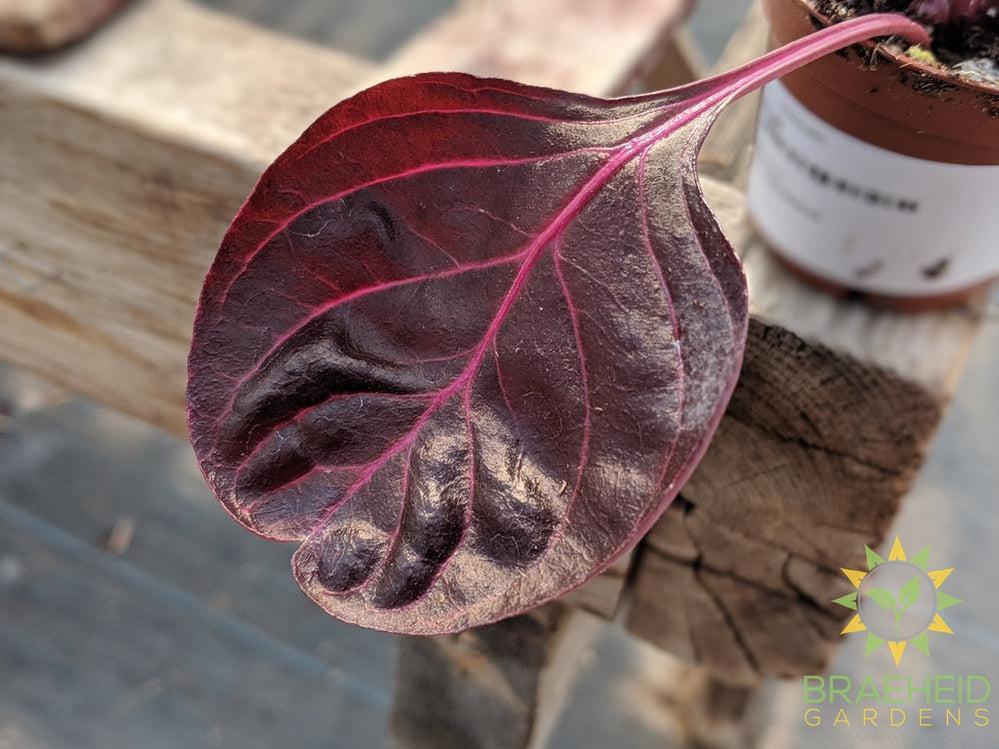
Expected indoor size: NC State Extension says that in its native habitat it can grow 5 feet tall and 3 feet wide. The dimensions table is 1 to 1½ feet tall and 1 to 3 feet wide, and the same page says to pinch the tops to encourage bushiness and keep the plant under 3 feet. A potted houseplant is often in that shorter range. The oval leaves are reddish-purple with lighter veins, up to about 4 inches long, on red stems (NC State Extension).
Feeding: Feed lightly during the growing season with our Schultz All Purpose Plant Food, and ease off in winter. Trimming off flower buds helps the plant put its energy into the foliage (NC State Extension).
Pets & pests: The ASPCA lists Bloodleaf (Iresine herbstii, also called chicken gizzard or Joseph's coat) as non-toxic to dogs, cats and horses. NC State Extension similarly tags the plant as non-toxic for dogs, cats and horses. It is still a plant, not a snack. Watch for aphids and spider mites; it can also get powdery mildew (NC State Extension).
About your plant: Every plant is a little different. Size, fullness and leaf count vary from plant to plant and change with age and light, so we can't promise a particular plant size or leaf colour. The options listed (2-1/2", 4") refer to the pot or container size. They do not guarantee an exact plant size or leaf colour. Photos show typical plants from our greenhouse, not the specific plant you will receive. The shared gallery image shows other Iresine as inspiration.