Baltic Blue Pothos
Baltic Blue Pothos
Couldn't load pickup availability
Description
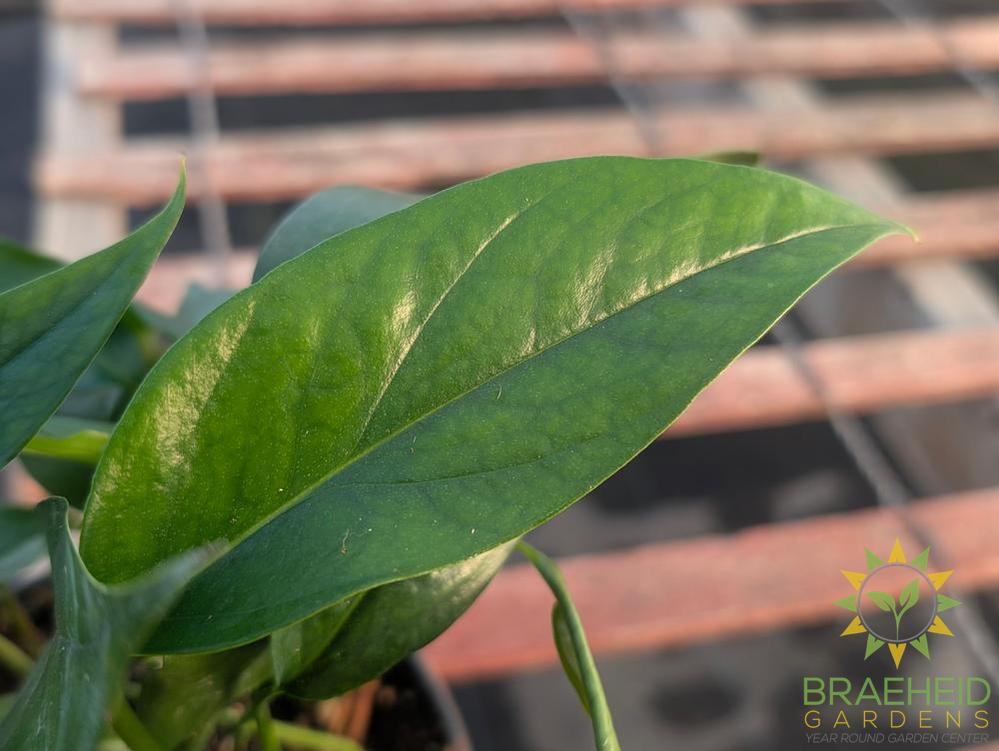
Baltic Blue is a pothos whose rich green leaves take on a blue cast and develop splits early. Like all pothos, it is a member of the arum family (Araceae).
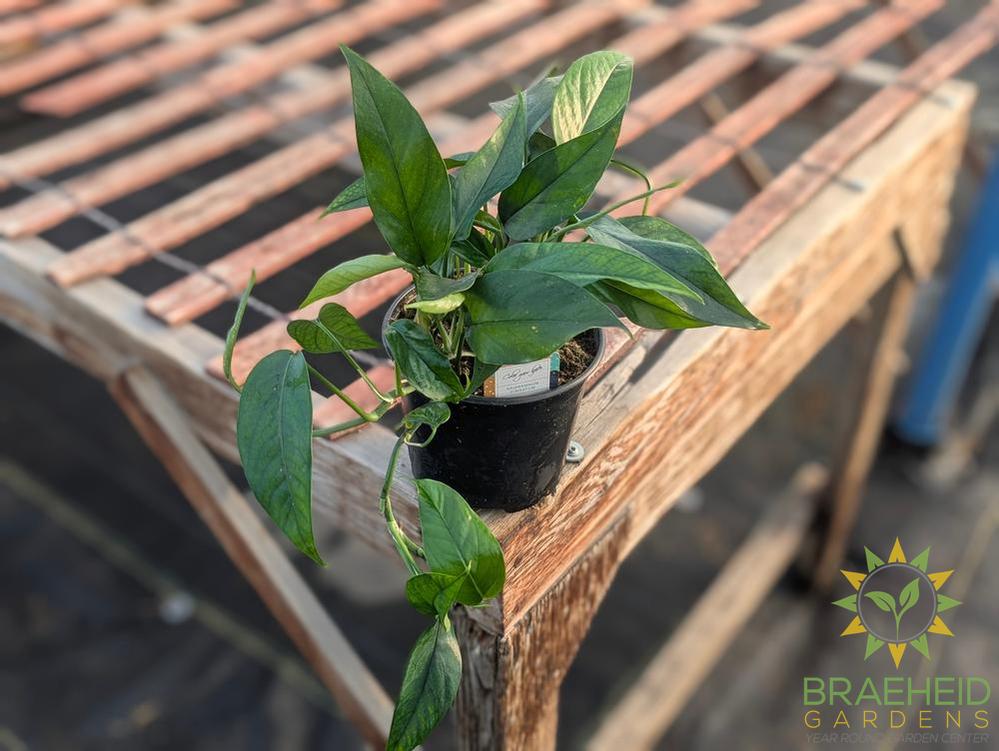
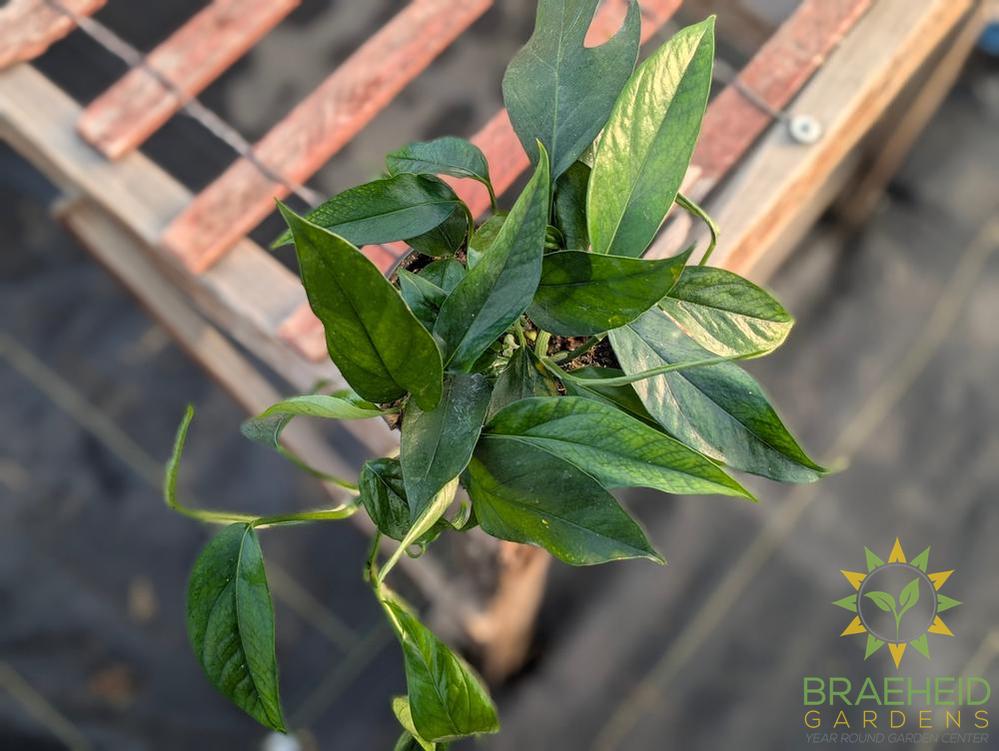
What it is: This listing is Epipremnum pinnatum 'Baltic Blue', a selection with rich green leaves that develop a bluish cast as they mature and tend to form splits (fenestrations) earlier than other pothos (Costa Farms). It is different from Cebu Blue, which is more silvery (Costa Farms). Our photos show elongated, dark green leaves, some already split.
Light: It grows best in medium to bright light; very strong light can make the leaves greener and less blue (Costa Farms). Keep it out of strong direct sun, which can scorch the leaves (Clemson HGIC). A grow bulb in a nearby lamp can help through dark winters.
Watering & care: Use an airy, well-draining mix. Water thoroughly, then let the mix dry before watering again (Clemson HGIC). Overwatering can cause root rot and yellowing leaves (Clemson HGIC). Repot every year or two, when roots show through the drainage holes or the pot is crowded (Clemson HGIC).
Humidity: Pothos tolerates average home humidity but prefers 50–70% (Clemson HGIC). A room humidifier is the most effective way to raise humidity; a pebble tray gives only a small, local boost.
Temperature: Keep it warm: about 16–21 °C (60–70 °F) at night and 21–29 °C (70–85 °F) by day (Clemson HGIC). In winter, keep it away from cold windowsills, drafts and heating vents (Clemson HGIC).
Expected indoor size: Costa Farms says Baltic Blue can climb or trail more than 6 feet (about 1.8 m) long over time, and makes larger leaves when it climbs in a bright spot. Young plants suit a tabletop; grown up a pole it can become a floor plant, and pinching back new growth keeps it compact (Costa Farms). How long it grows depends on light, warmth, pot size and care.
Feeding: Feed with a balanced houseplant fertilizer about every other month in spring and summer, and stop in winter (Clemson HGIC). Our Schultz All Purpose Plant Food works at the label dilution.
Pets: Pothos is toxic to cats, dogs and people if chewed or eaten: it contains calcium oxalate crystals that irritate the mouth and stomach (Clemson HGIC). Its sap can irritate sensitive skin. Keep it out of reach of pets and children.
About your plant: Every plant is a little different. Size, fullness and leaf count vary from plant to plant and change with age and light. The size option (6") refers to the pot diameter. It does not guarantee an exact plant height, trail length or leaf count. Photos show typical plants from our greenhouse, not the specific plant you will receive. The shared gallery image shows other pothos as inspiration.