Exposed Root Ficus Ginseng Bonsai
Exposed Root Ficus Ginseng Bonsai
Couldn't load pickup availability
Description
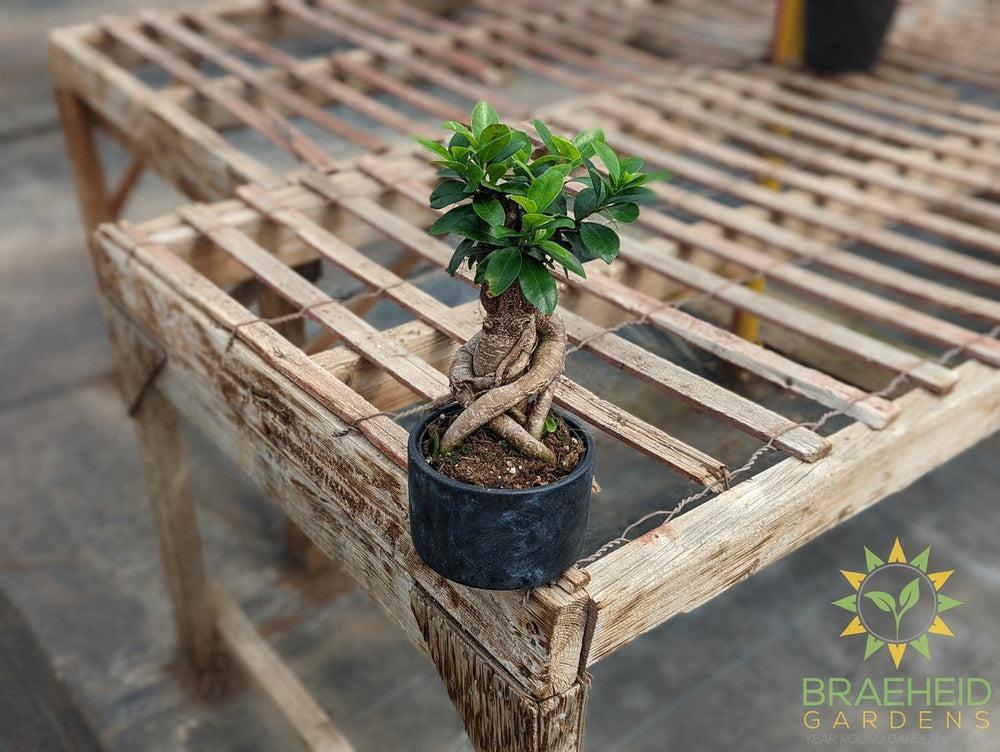
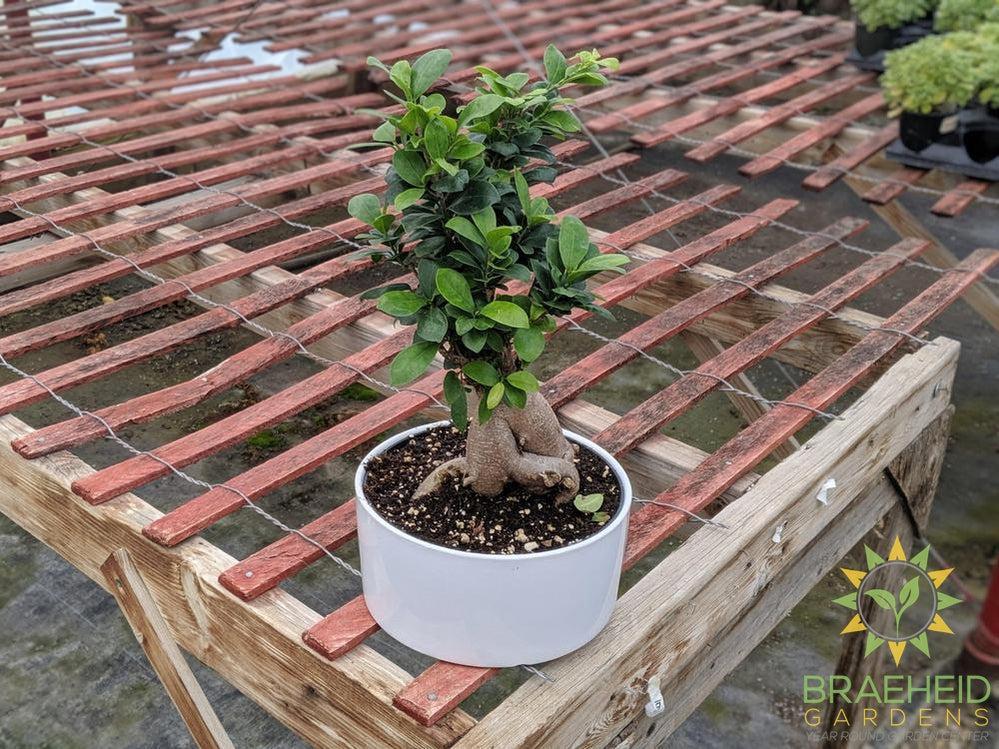
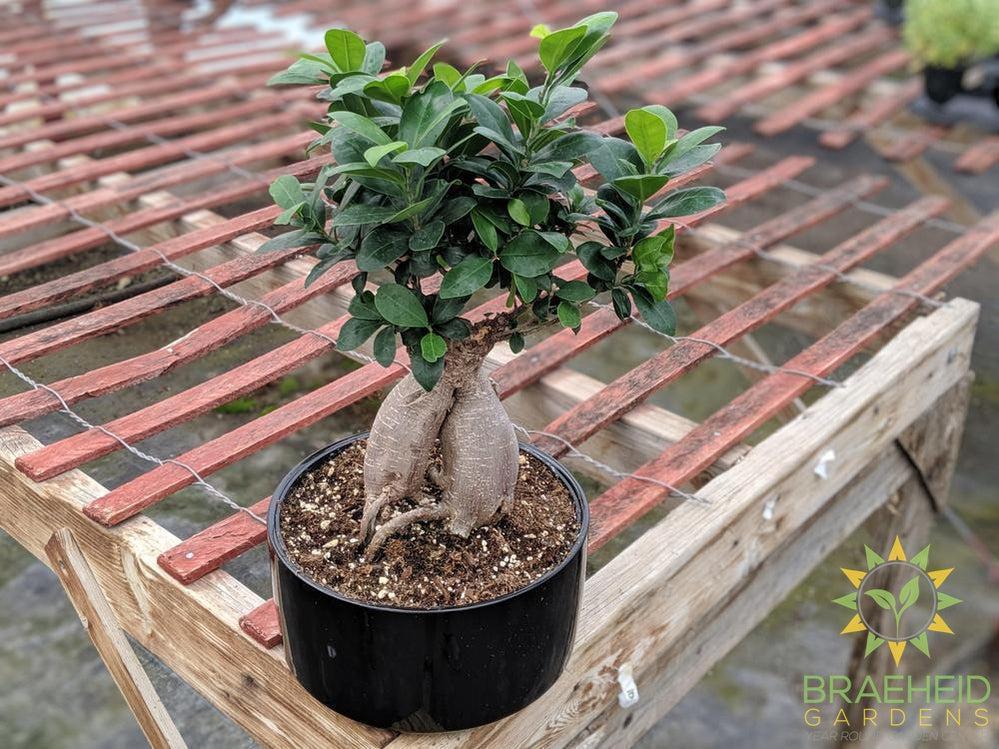
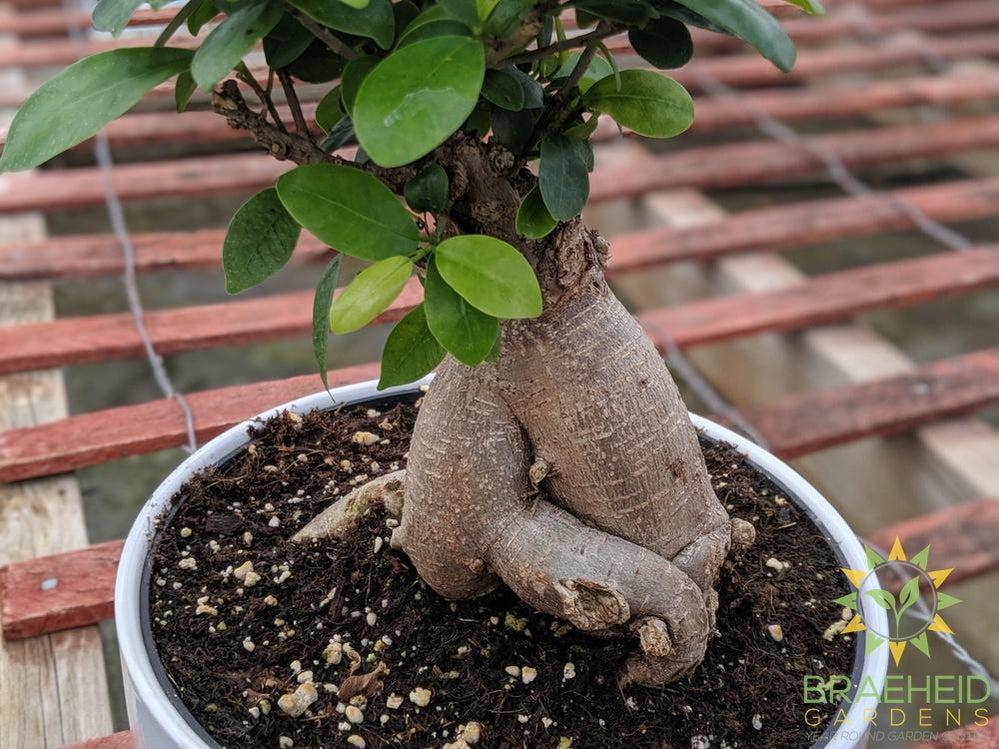
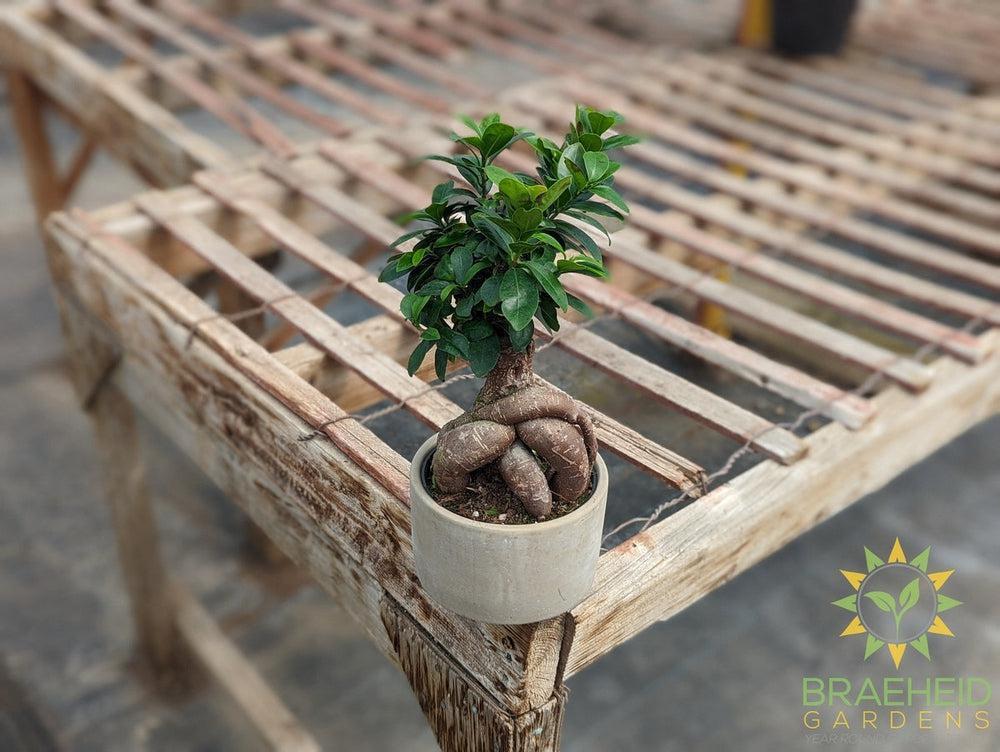
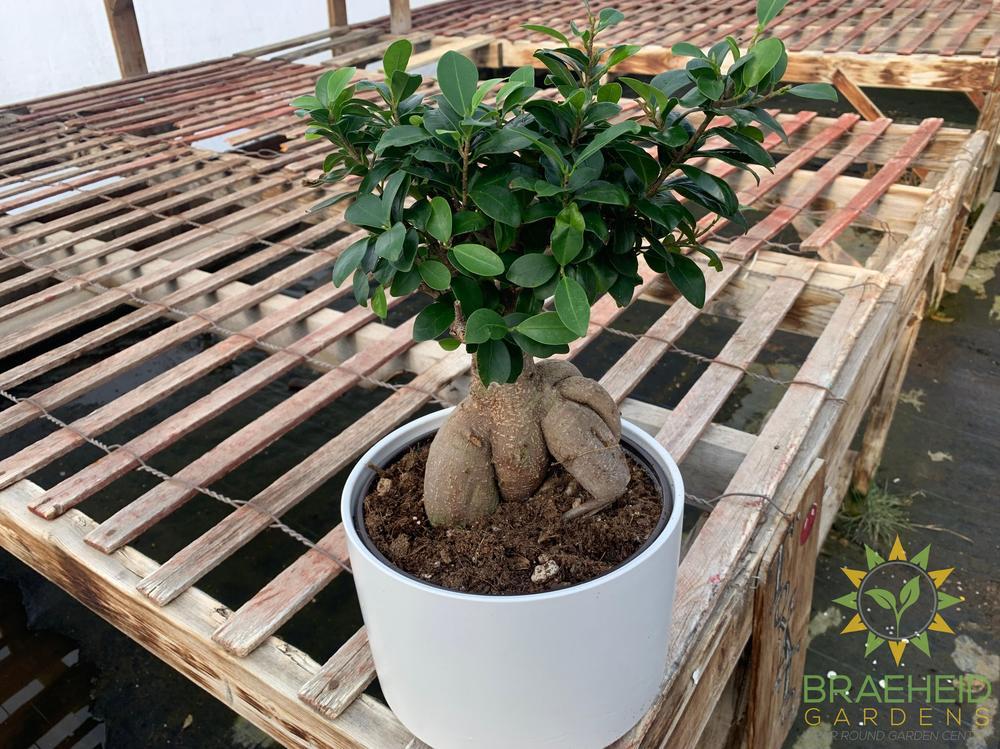
Ginseng ficus bonsai has a thick, exposed root base and a small leafy crown. Like other Ficus, it belongs to the mulberry family (Moraceae).
What it is: This listing is Ficus microcarpa 'Ginseng' (ginseng ficus / Chinese banyan), often grown as bonsai (NC State Extension). Our photos show plants with thick exposed roots and a compact canopy.
Light: Bright light and a warm spot suit ginseng ficus; NC State Extension notes a sunny, warm location with consistent moisture (NC State Extension). A grow bulb helps if the window light is weak.
Watering & care: Keep moisture consistent without leaving the pot soggy; bonsai pots dry faster than deep nursery pots. Empty saucers after watering.
Humidity: Medium home humidity is usually fine; very dry air can stress leaves (NC State Extension). A room humidifier helps in winter; a pebble tray gives only a small, local boost.
Temperature: Keep it warm and away from cold drafts; NC State Extension suggests temperatures above about 13 °C (55 °F) for common indoor Ficus (NC State Extension). Clemson HGIC suggests roughly 16–18 °C (60–65 °F) nights and 24–27 °C (75–80 °F) days for rubber plants, avoiding sudden drops.
Winter indoors: In winter, keep it away from cold windows, drafts and heating vents, water less often as growth slows, and still check the mix before watering. Avoid moving it often if it is a weeping fig, which can drop leaves after a move.
Expected indoor size: Grown as a compact bonsai or tabletop plant rather than a full outdoor tree. Keep it pruned to the size that suits your space. How large yours stays depends on pruning, pot size, light and care, and we can't promise a particular height or root shape.
Feeding: Feed lightly in spring and summer while it is growing (Clemson HGIC); our Schultz All Purpose Plant Food works at a light dilution. Ease off in fall and winter.
Pets & pests: The milky latex sap can irritate skin; gloves are wise when pruning (NC State Extension; Clemson HGIC). Ficus is toxic to dogs, cats and horses if chewed or eaten (ASPCA; NC State Extension). Keep it out of reach of pets and children. Watch for scale, mealybugs, spider mites, thrips and aphids (NC State Extension).
About your plant: Every plant is a little different. Size, fullness and leaf count vary from plant to plant and change with age and light; young plants may not yet show mature leaf features, so we can't promise a particular leaf size or shape. The size option (6", 8") refers to the pot diameter. It does not guarantee an exact plant height, trail length or leaf count. Photos show typical plants from our greenhouse, not the specific plant you will receive. The shared gallery image shows other Ficus as inspiration.