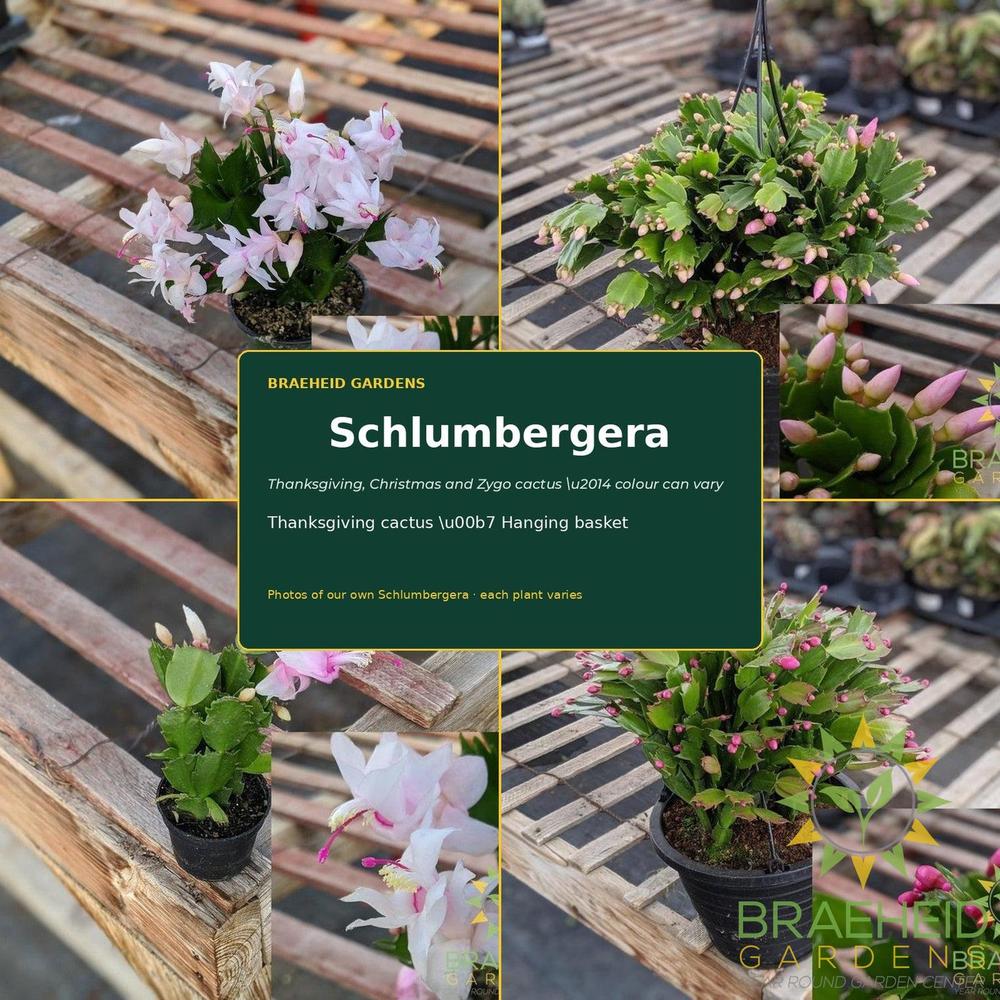
Thanksgiving Cactus
Thanksgiving Cactus
Couldn't load pickup availability
Description
This listing is sold as a Thanksgiving cactus, or Zygo cactus. Like other Schlumbergera, they belong to the cactus family (Cactaceae). NC State Extension describes Thanksgiving cactus (Schlumbergera truncata, also called Zygocactus) as an epiphytic rainforest cactus from southeastern Brazil, grown for winter flowers and flattened, spineless stems.
What it is: This listing is sold as a Thanksgiving cactus, also called a Zygo cactus. NC State Extension lists Thanksgiving cactus as Schlumbergera truncata (previously Zygocactus truncatus), and distinguishes it from Christmas cactus (Schlumbergera × buckleyi) by the pointed stem margins and more upright flowers. The same page notes that most plants sold in stores today are sterile hybrids of Christmas and Thanksgiving cactus. We have not assigned each plant in this listing to a single species.
Light: Give it bright light in winter, but keep it out of harsh, direct sun; NC State Extension prefers partial shade, and says summer sun can yellow the stems and direct sunlight can scorch them. University of Wisconsin Extension recommends bright, indirect light, or a bright window that is not in strong sun for more than a few hours in the morning. A grow bulb helps in our dark northern Alberta winters. Use a moist, well-drained cactus or succulent mix, such as our succulent and cacti soil (NC State Extension).
Watering & care: Keep the mix moist but never soggy, and empty any saucer. Avoid overwatering; root rot is the main disease problem (NC State Extension). University of Wisconsin Extension notes that frequent watering is fine in a very well-drained mix, and that some growers water a little less in August and September, then resume when the flower buds start to swell.
Humidity: These rainforest cacti want higher humidity than desert cacti (NC State Extension). In our dry indoor winters a humidifier is a better choice than a pebble tray. Give the plant some air movement, because gray mold can appear when humidity is high and the air is still (NC State Extension).
Temperature: NC State Extension prefers about 70 to 80°F, and lists USDA zones 10 to 12; in colder zones it must be grown as a houseplant. University of Wisconsin Extension says they thrive at daytime temperatures of about 75 to 80°F, with a minimum of about 55 to 60°F, and cannot tolerate frost. Keep it off cold glass. It can stand outside only after frost risk has passed, in light shade.
Winter indoors: Keep it in a bright, frost-free window or under a grow bulb, out of harsh sun. To set flower buds in the fall, NC State Extension and Clemson Extension both ask for a long, uninterrupted dark night — at least 13 hours (Clemson says 14). Street lights or indoor lamps can stop buds from forming. Sudden temperature changes, drafts, dry mix or a change in light can also make buds drop (NC State Extension).
Expected indoor size: NC State Extension describes a bushy, pendulous plant up to 12 inches tall and 24 inches wide (the dimensions table is 9 to 12 inches tall and 1 to 2 feet wide). A hanging basket will cascade; a smaller pot is often more compact. Flowers are usually in late November and can last about five weeks, and a plant may bloom again as the days lengthen in February (NC State Extension).
Feeding: When new growth starts in the spring, feed monthly with our Schultz All Purpose Plant Food, and reduce feeding in the fall and early winter (NC State Extension).
Pets & pests: NC State Extension tags Thanksgiving cactus as non-toxic for dogs and cats. The ASPCA lists Christmas Cactus (Schlumbergera bridgesii, also called Easter cactus) as non-toxic to dogs, cats and horses. Because our pots may include more than one holiday-cactus type, we are citing both listings. It is still a plant, not a snack. Watch for aphids, spider mites, scale and mealybugs; overwatering causes root rot (NC State Extension).
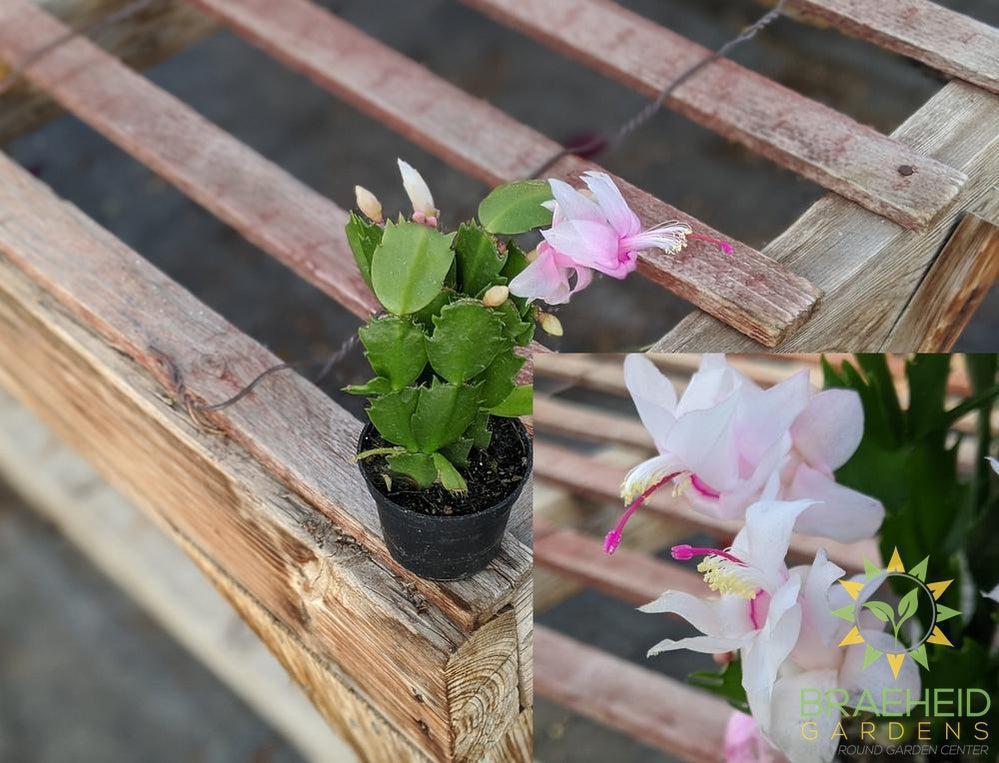
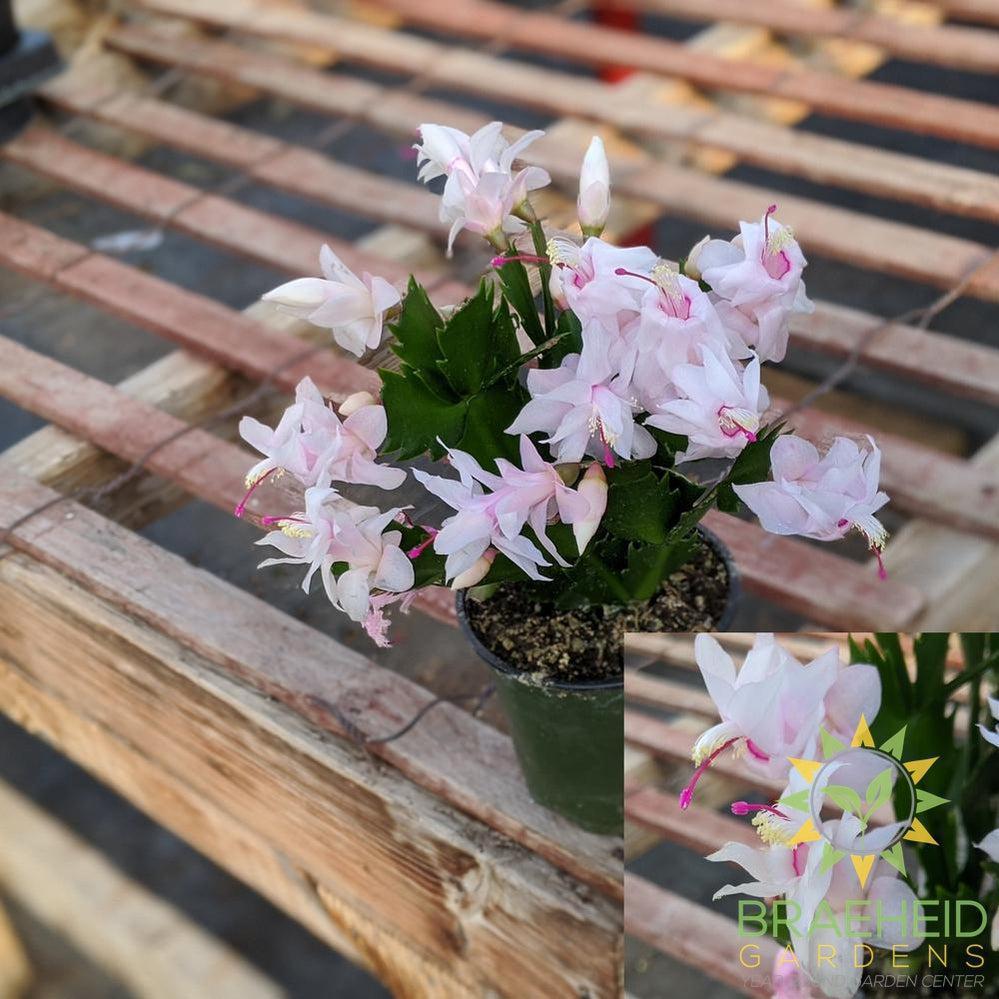
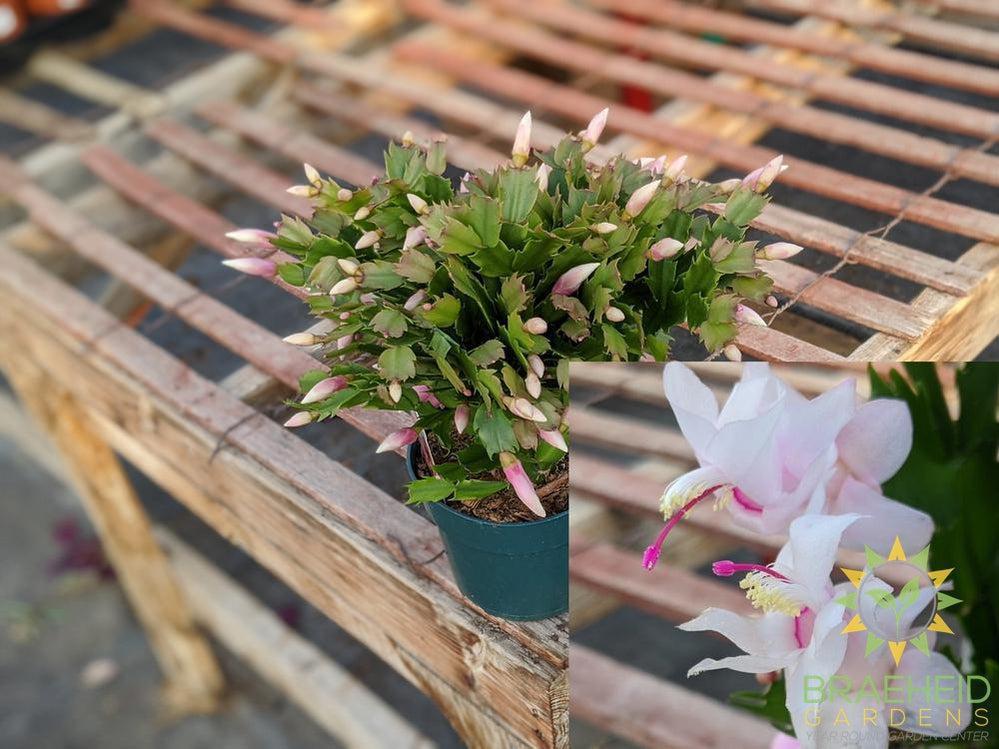
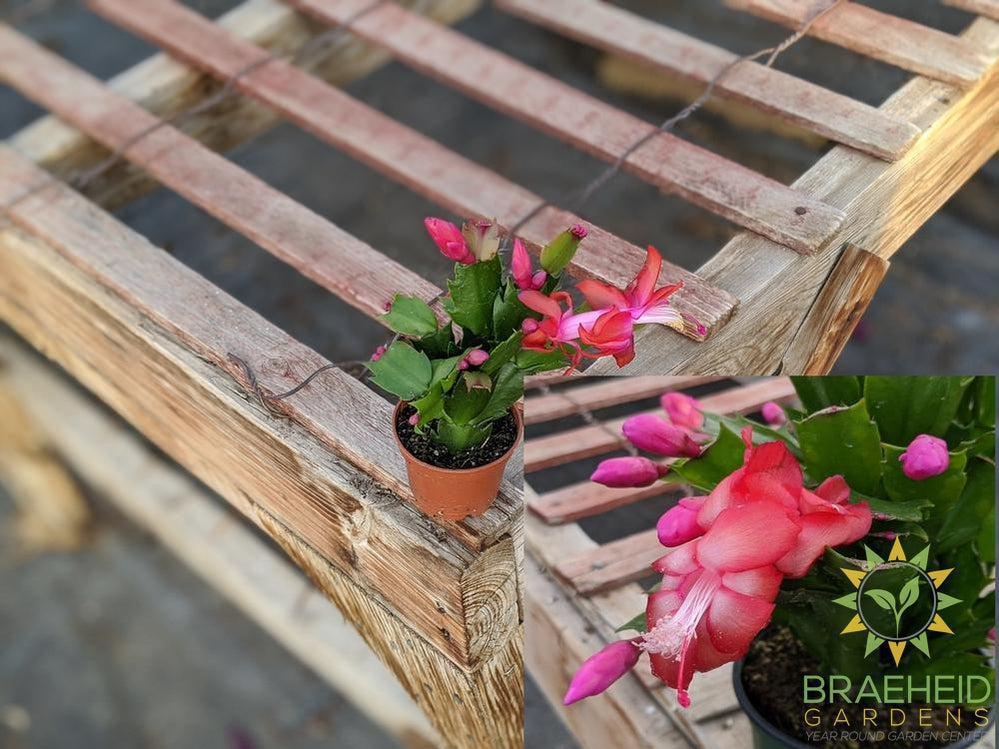
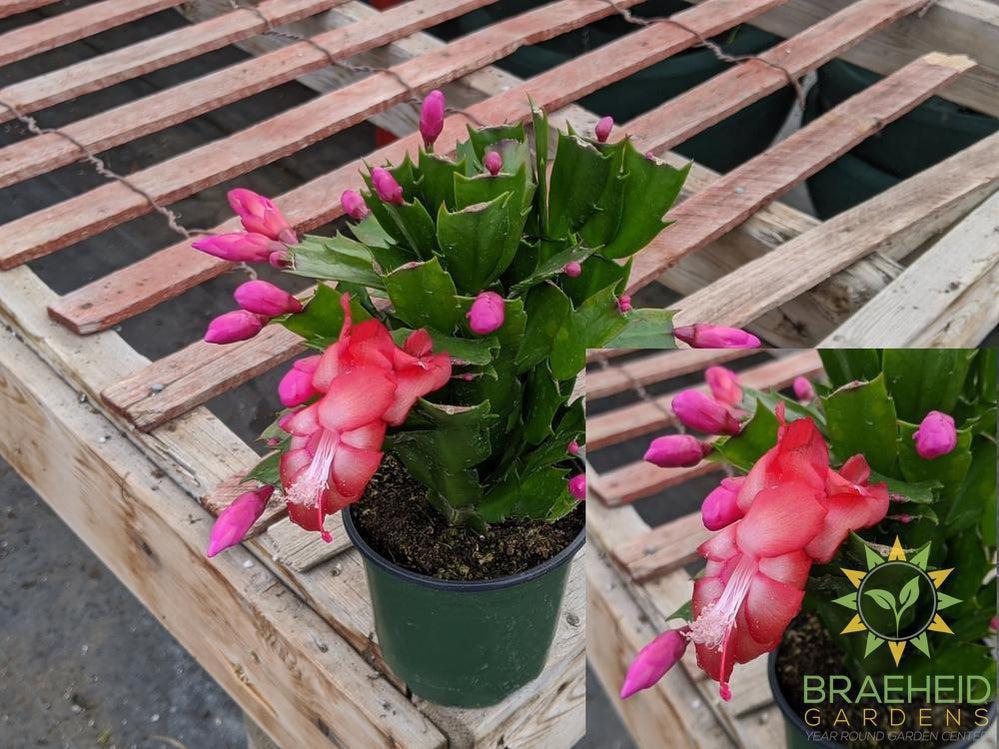
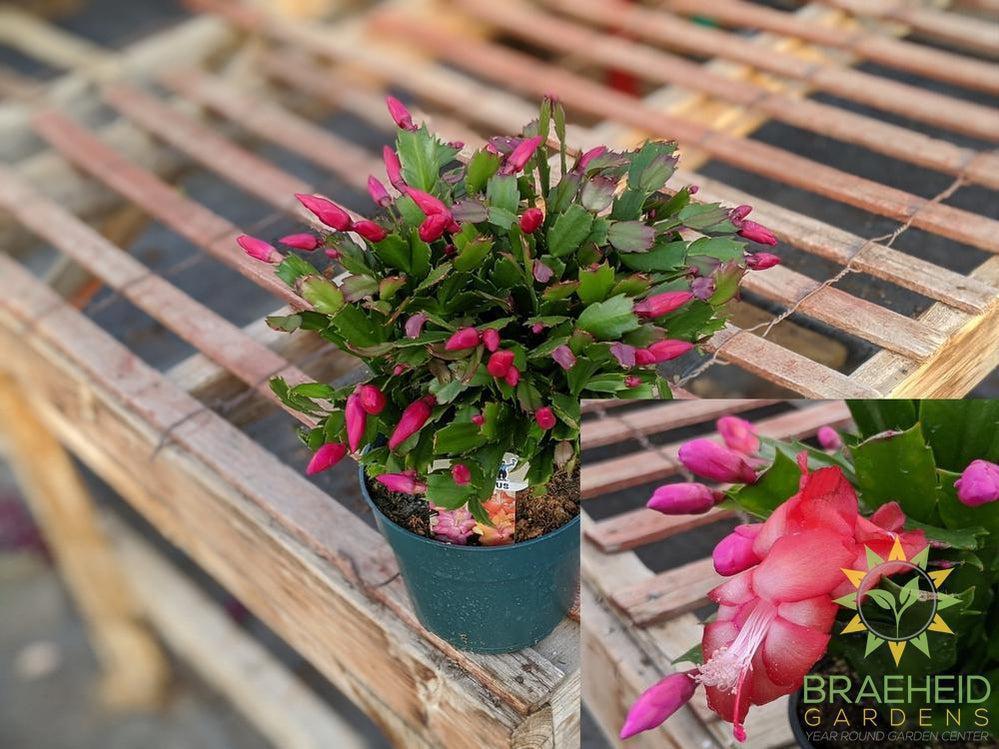
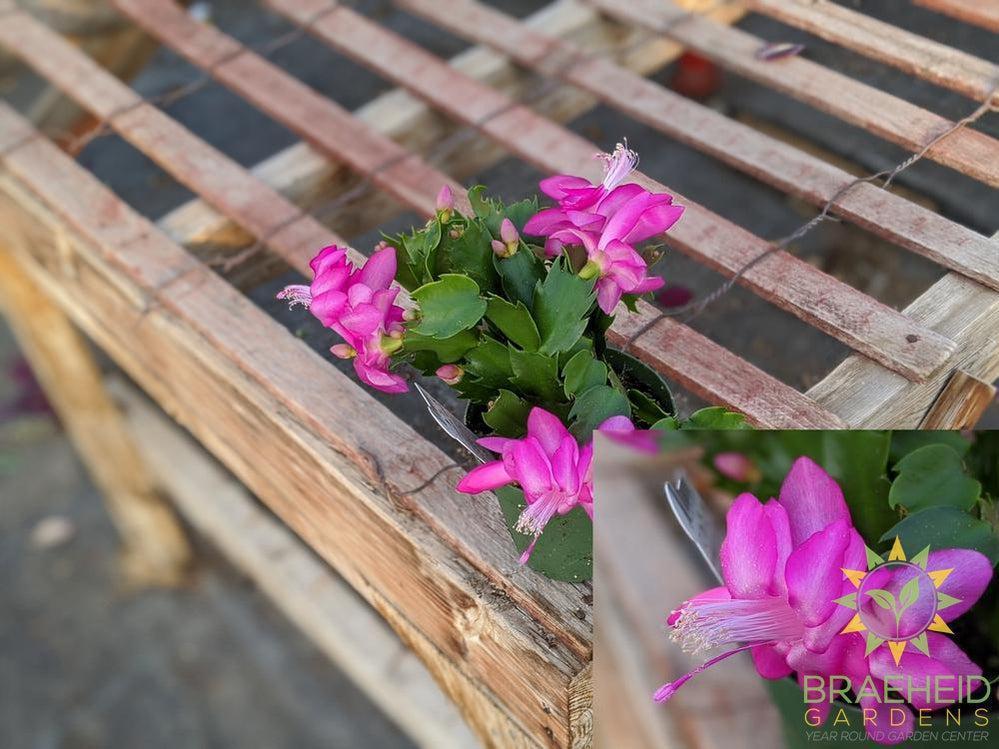
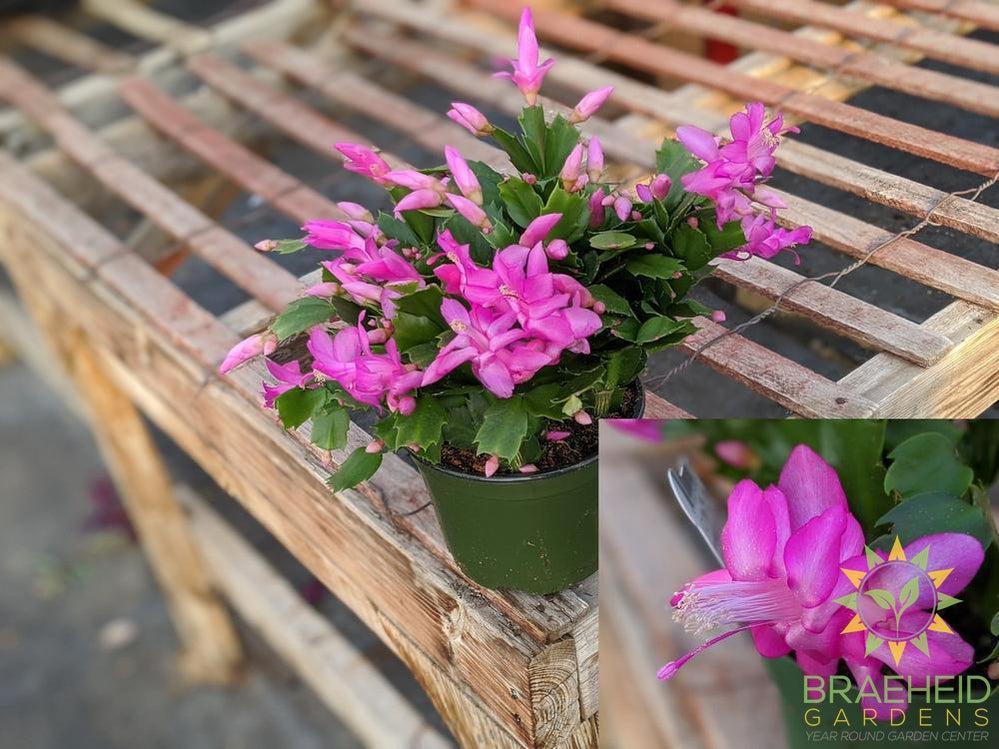
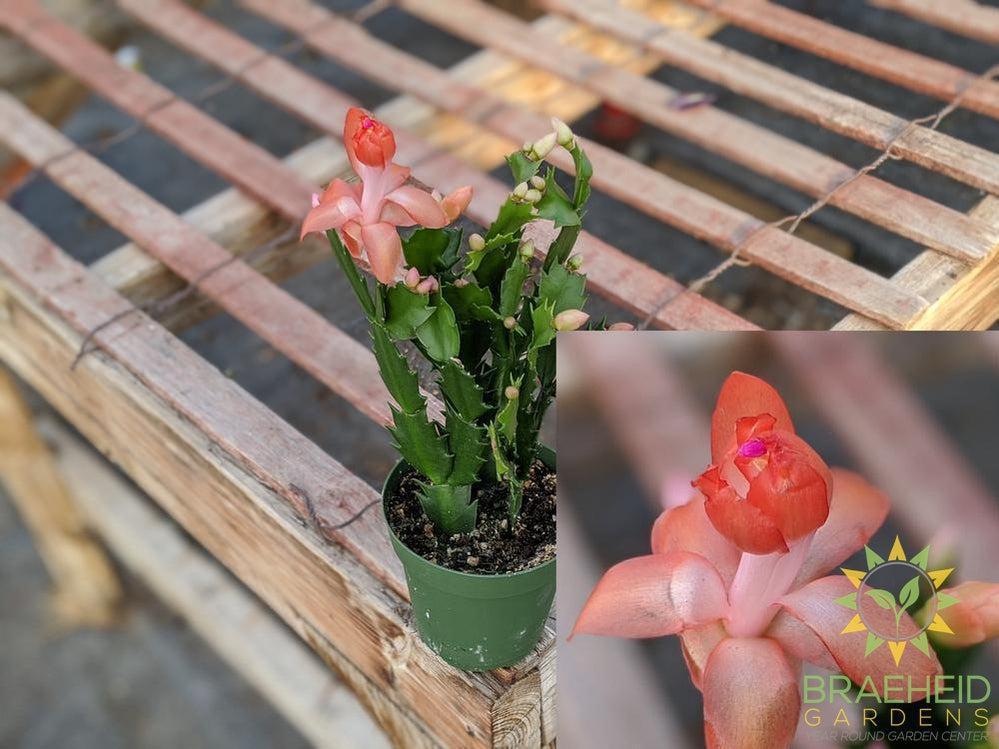
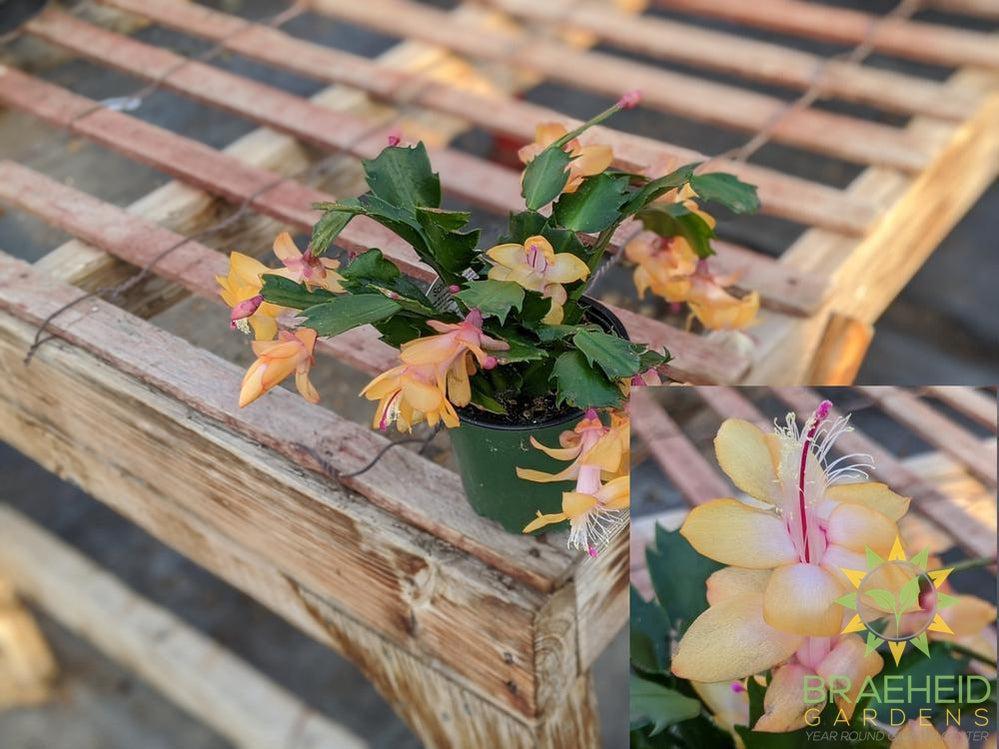
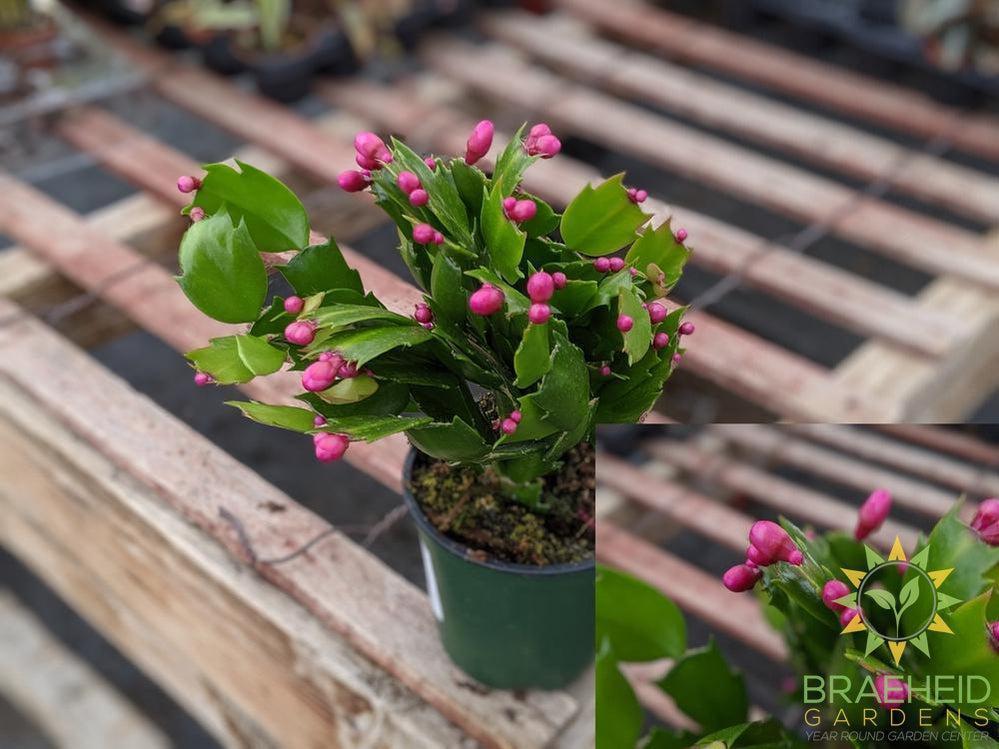
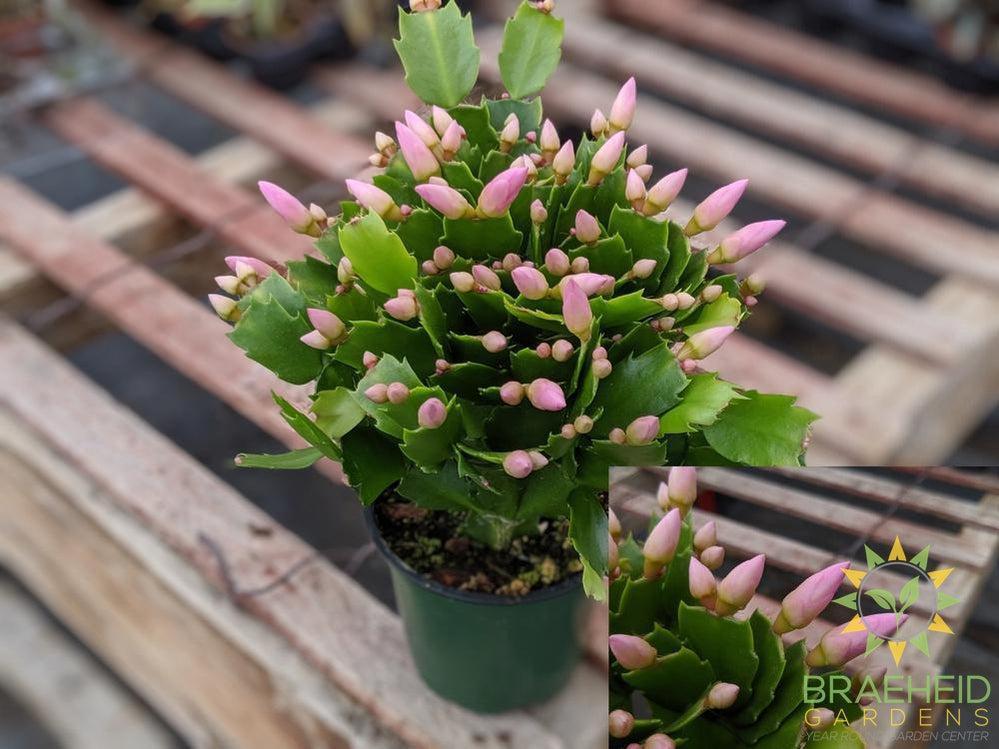
About your plant: Every plant is a little different. Size, fullness and leaf count vary from plant to plant and change with age and light, so we can't promise a particular plant size or flower colour. The Size options refer to the pot or container size; they do not guarantee an exact plant size. The Color options are the colours we try to offer, but they do not guarantee the flower colour you will receive — please read our identification note. Photos show typical plants from our greenhouse, not the specific plant you will receive. The shared gallery image shows other Schlumbergera as inspiration. Our existing listing carried this identification note, which we are keeping: we try our hardest to I.D. our Zygo cactus. Young flower buds come out light pink and can change to the true colour closer to opening. You may receive a different colour flower, or a pot that has a mixture of Easter, Christmas and Thanksgiving cactus. We do know the difference between Christmas/Thanksgiving and Easter cactus, but they may be grown with cuttings of more than one kind. We do not offer refunds or exchanges on Christmas Cactus.