Spanish Moss - Usneoides Tillandsia
Spanish Moss - Usneoides Tillandsia
Couldn't load pickup availability
Description
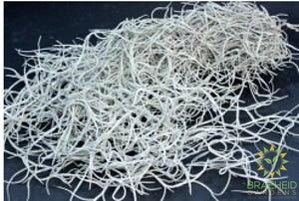
Spanish moss is a trailing air plant that forms hanging strands. Like other Tillandsia, it is an air plant: an epiphytic bromeliad in the pineapple family (Bromeliaceae) that takes in water and nutrients through scales on its leaves (NC State Extension).
What it is: This listing is Tillandsia usneoides (Spanish moss), listed in our title as Usenoides (NC State Extension).
Light: Air plants need bright light. NC State Extension notes most species are easy houseplants but need high light levels, especially to flower, and that the sunniest window in a home is usually not too much sun for most of them. A grow bulb helps through dark northern winters.
Watering & care: Air plants take up water through their leaves rather than their roots. NC State Extension recommends regular watering, at least once a week, by soaking the whole plant or rinsing it under running water. Shake off extra water and let it drain so water doesn't sit in the centre of the rosette, since crown rot is a common problem (NC State Extension).
Humidity: Air plants like humidity, and dry indoor winter air means they may need water more often. A bright bathroom or a well-ventilated terrarium can help; good air circulation lets them dry between waterings.
Temperature: Tillandsia are tropical or warm-temperate plants (NC State Extension). Keep them in ordinary warm rooms, away from cold windows and drafts, and protect them from frost.
Winter indoors: In winter, move it to your brightest spot or add a grow light, keep it away from cold glass and heating vents, and check it more often, since dry indoor air dries it out faster.
Expected indoor size: Spanish moss forms hanging strands; NC State Extension lists it at roughly 25–90 cm (10 in–3 ft) long and up to about 60 cm (2 ft) wide over time. How long yours gets depends on light, watering and humidity.
Feeding: Feeding is optional. A light feed made for epiphytes, such as our Epiphyte Delight, can be used in spring and summer while it is growing; follow the label.
Pets & pests: We couldn't find Tillandsia on the ASPCA toxic or non-toxic plant lists. The ASPCA lists related bromeliads such as Neoregelia and Guzmania as non-toxic to dogs and cats, but chewing any plant can upset a pet's stomach, so keep air plants out of reach of pets and children. Watch for mealybugs and scale (NC State Extension).
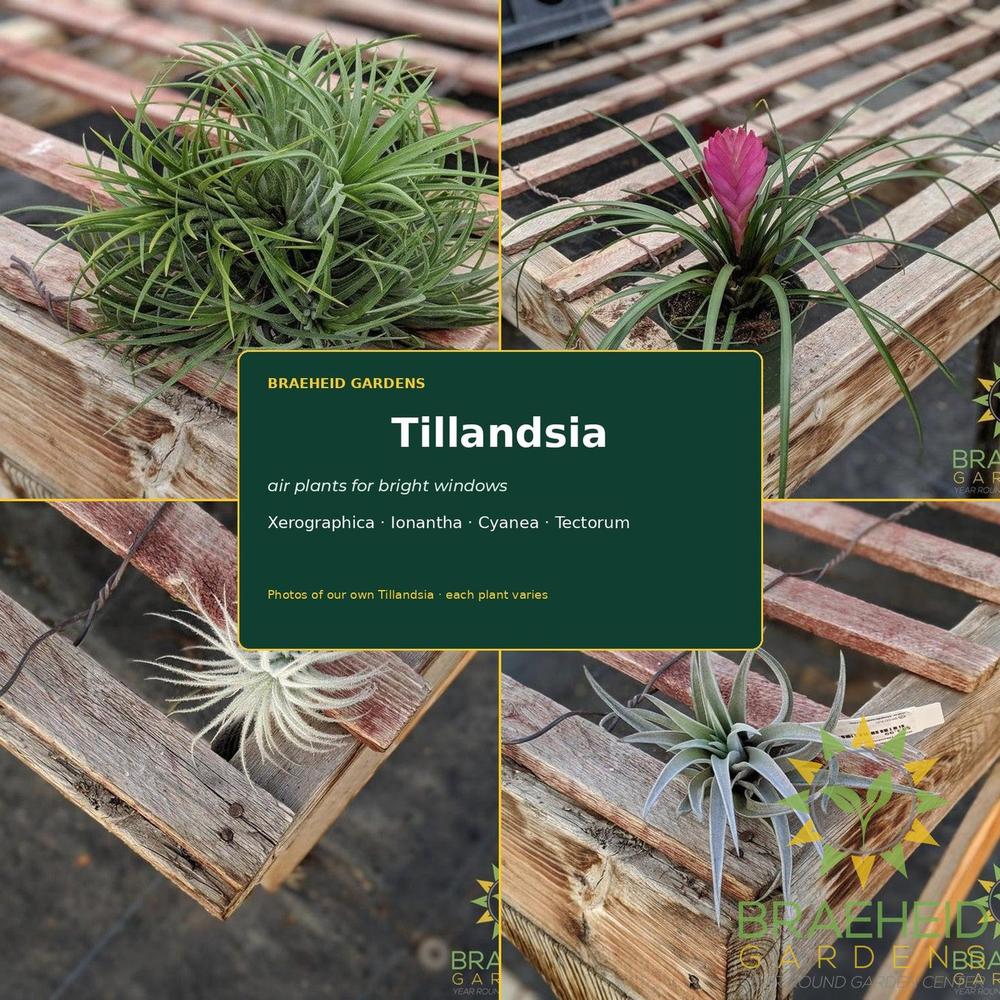
About your plant: Every plant is a little different. Size, fullness and leaf count vary from plant to plant and change with age and light, so we can't promise a particular size, shape or colour. The option (Mexicano, Peruano) refers to the type listed. It does not guarantee an exact strand length or amount. Photos show typical plants from our greenhouse, not the specific plant you will receive. The shared gallery image shows other Tillandsia as inspiration.